After the handshakes in Shanghai: what do Gabon-China agreements really mean for the public?
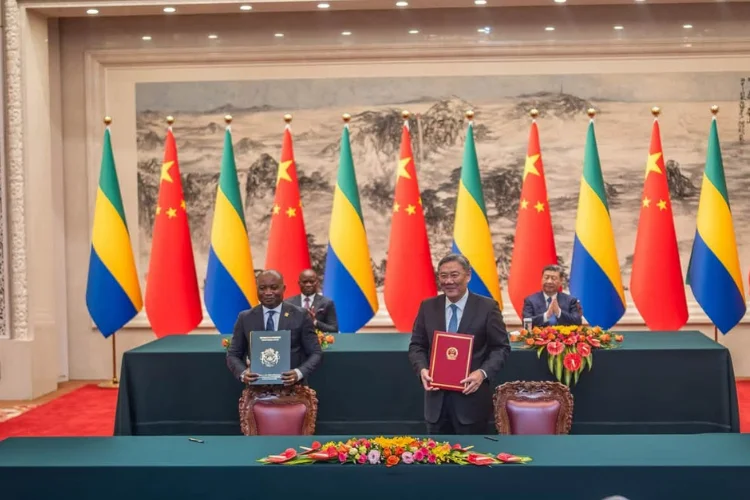
When Gabon and China inked a fresh slate of economic, technological, and infrastructure deals in Shanghai on November 5, the ink was barely dry before public debate kicked off. While officials tout industrial acceleration and job creation, analysts and citizens alike are asking: will these China-backed partnerships deliver real change—or remain a stack of unkept promises?
The agreements—spanning smart security, AI education, railway components, and iron ore processing at Bélinga—have ignited a national conversation about technology transfer, local hiring, and economic sovereignty. As the dust settles, the focus is shifting from ceremonial signings to practical accountability.
AI in classrooms and smart cities: Huawei’s role under the microscope
Three memoranda with tech giant Huawei highlight the human face of these deals. The most visible is the digital modernization of public universities, including the equipping of Brice Clotaire Oligui Nguema University with cutting-edge AI tools. Proponents argue these investments will prepare Gabonese youth for tomorrow’s job market. Critics, however, question whether the curriculum will prioritize local talent or import foreign expertise without sufficient knowledge sharing.
Key initiatives include:
- Smart public safety systems to enhance urban security
- AI-focused training equipment at national universities
- Digital infrastructure upgrades across higher education
Public reaction has been mixed. While youths in Libreville celebrate expanded access to tech education, skeptics point to past projects where promised benefits never materialized.
Bélinga iron ore project: infrastructure goldmine or another white elephant?
The Bélinga iron ore deposit, long seen as Gabon’s industrial crown jewel, is back on the agenda. New agreements target railway networks, wagon manufacturing, and energy infrastructure to support extraction. A letter of intent involving the Gabonese government, Eramet Comilog, and Sinohydro—PowerChina’s infrastructure arm—signals serious intent.
Supporters highlight the project’s potential to spark a mining boom, create thousands of jobs, and reduce reliance on raw mineral exports. Detractors warn of environmental risks and profit repatriation, arguing that without strict oversight, foreign stakeholders could extract value while Gabon bears the costs. The debate now centers on who controls the supply chain—and who benefits.
From paper pledges to concrete results: the accountability challenge
For Gabonese officials, the deals represent a turning point in the country’s industrialization drive. For citizens, the test will be in execution. “We’ve seen agreements before,” says a Libreville economist. “The question is no longer about the papers signed in Shanghai, but about performance on the ground.”
Three critical tests lie ahead:
- Local job creation: Will contracts mandate Gabonese hiring and training?
- Technology transfer: Will Chinese firms share expertise or simply deploy foreign staff?
- Economic leakage: Will profits stay in Gabon or flow back to Beijing?
Public skepticism is growing. Social media is awash with calls for transparency, while civil society groups demand independent audits of future projects. The government has responded with pledges of regular progress reports—an acknowledgment, perhaps, of the need to rebuild trust.
Whose industrialization is it anyway? The sovereignty question
At its core, the Gabon-China partnership debate is about economic sovereignty. Can a nation industrialize through foreign investment without surrendering control of its strategic sectors? Or will Gabon find itself in a new form of dependency—this time, to its second-largest trading partner?
Some analysts compare the current wave of deals to earlier resource-for-infrastructure swaps, where Gabon exchanged raw materials for roads and ports—only to see long-term gains flow to foreign firms. Others argue that with smart policy, these partnerships could be transformative. The difference, they say, will come down to negotiation strength and enforcement capacity.
As the public debate intensifies, one thing is clear: Gabon’s industrial future is no longer just a government agenda. It’s a national conversation—and the outcome will shape the country for decades to come.