
Gabon : La République et les autels
Libreville, Saturday, June 13, 2026 — During significant periods of political transformation, nations frequently seek stability not only within their established institutions but also deep within the collective conscience of their citizenry.
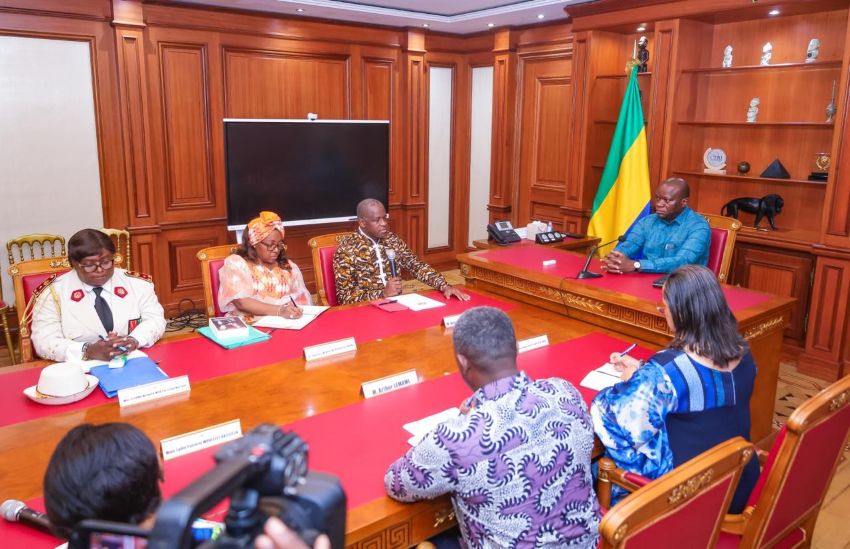
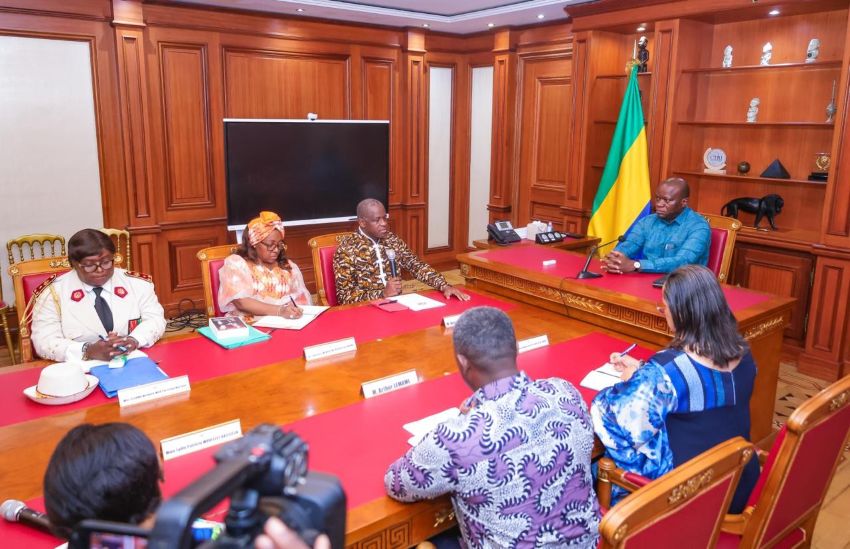
In Gabon, the recent meeting between President Brice Clotaire Oligui Nguema and Reverend Louis Sylvain Allogo Engo, the esteemed president of the Evangelical Church of Gabon, transcends mere official protocol. This encounter highlights a crucial, often underestimated, facet of modern governance: the strategic role of religious denominations in solidifying national stability, fostering social cohesion, and shaping the emerging Vème République.
As Gabon actively pursues its institutional restructuring following a period of political transition, the ongoing dialogue between the State and spiritual leaders emerges as an indispensable tool of governance. Across the African continent, religious organizations frequently wield a social influence that often surpasses that of many public administrations. Consequently, this Friday’s audience at the Presidential Palace carries profound political, social, and symbolic weight.
Religious Institutions: Unsung Partners in Stability
The audience extended to the president of the Evangelical Church of Gabon is part of a broader strategy of consultation with the nation’s moral forces. For decades, religious faiths have occupied a central position in the daily lives of Gabon’s people, actively contributing to education, social welfare, healthcare, youth mentorship, and community mediation.
From the Head of State’s perspective, these institutions are more than just spiritual bodies; they serve as vital local conduits capable of promoting essential values such as civism, solidarity, and collective responsibility.
This dynamic is not unique to Gabon. Throughout Africa, religious organizations play a decisive role in preventing social tensions and maintaining civil peace. Their inherent capacity to mobilize populations grants them considerable influence over civic behavior.
The presence of the Vice-President of the Government at this significant meeting further underscores the strategic importance attributed to these discussions. The State now openly acknowledges that the strength of its institutions relies not solely on legal frameworks but equally on its ability to sustain continuous dialogue with the foundational forces that shape society.
Secularism as a Framework for Renewed Cooperation
One of the most noteworthy aspects of this gathering was the clear message conveyed by the President of the Republic, Brice Clotaire Oligui Nguema. He emphatically reaffirmed his dedication to a balanced collaboration between the Republic and religious denominations, strictly adhering to the principles of secularism.
This clarification holds particular significance. It signals a commitment to preserving the mutual autonomy of public institutions and religious organizations while simultaneously fostering their cooperation on matters of general public interest.
In contemporary democracies, secularism does not imply an absence of dialogue between the State and faith communities. Rather, it guarantees a framework where each operates within its sphere of competence while collectively contributing to the common good.
The Evangelical Church of Gabon stands as a significant entity within the national religious landscape. With a presence across the entire territory, it has consistently supported the country’s social evolution for generations. Reverend Louis Sylvain Allogo Engo, its president, recalled during this audience the institution’s crucial role in providing spiritual guidance to the nation during pivotal moments in its recent history.
This mutual recognition underscores a relationship built on trust and a shared understanding of the challenges confronting the nation.
Human Development at the Core of the Partnership
Beyond institutional considerations, discussions also focused on the upcoming national synod of the Evangelical Church of Gabon, scheduled to take place from July 20 to 26, 2026, at Baraka Mission.
The request for support from religious leaders and the principled agreement from the Head of State exemplify a broader vision of development. This vision extends beyond infrastructure, economy, or investments to encompass moral guidance, civic education, and community cohesion.
Such a perspective aligns with contemporary human development objectives championed by numerous international organizations. The most resilient societies often succeed in harmonizing economic performance, institutional stability, and robust social capital.
By dedicating specific attention to spiritual stakeholders, the Gabonese government sends a powerful message: one of governance that acknowledges national modernization is forged not solely within administrative offices but equally within the communities where collective values are cultivated.
Ultimately, this audience serves as a symbol of the Vème République’s chosen methodology—one that prioritizes dialogue, consultation, and the pursuit of a lasting national consensus. In a world increasingly marked by identity divisions and social tensions, Gabon’s commitment to strengthening the bridges between public institutions and spiritual forces could well form one of the most enduring foundations for its future stability.

More Stories
Is Chad truly heading towards political appeasement?
Bradley Barcola will adapt faster than Florian Wirtz at Liverpool, says Jermaine Pennant
Togo eyes nuclear power to secure future energy sovereignty