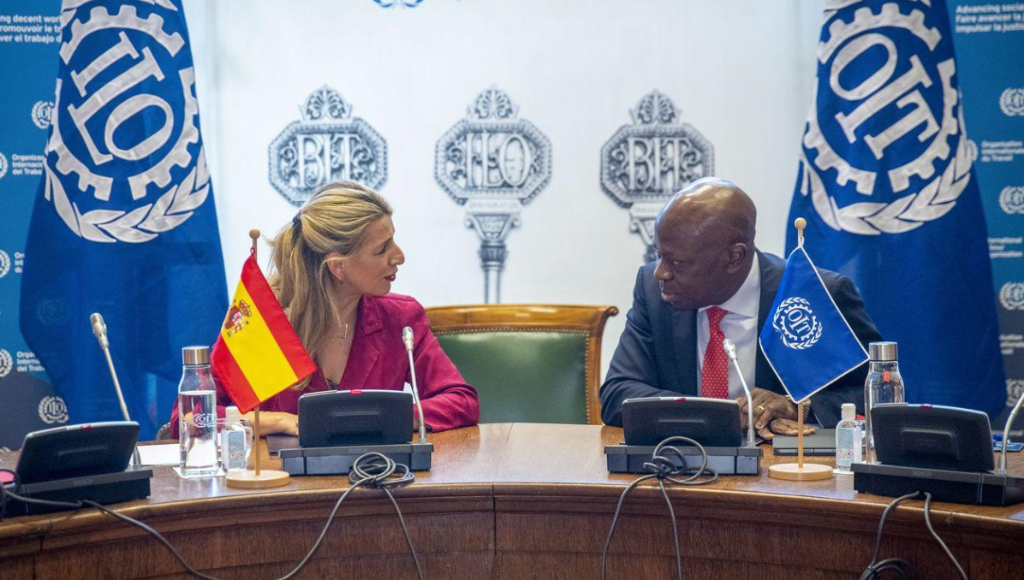
In a historic turn of events, Gilbert Houngbo has secured a second term as Director-General of the International Labour Organization (ILO), but not without a dramatic conclusion that reshaped the election landscape. The unexpected withdrawal of Spain’s Yolanda Díaz just days before the vote transformed a potential battle into a walkover, leaving the Togolese leader poised for five more years at the helm of the UN’s labour watchdog. Yet behind the quiet corridors of power, the controversy surrounding his administration refuses to fade.
The sudden exit of Díaz, who initially positioned herself as a reformist challenger, raised more questions than it answered. Her decision not only cleared the path for Houngbo’s automatic re-election on November 16, 2026, but also amplified public criticism of the ILO’s internal and financial health—raising alarm bells across the global labour movement.
From confronting rival to orchestrating exit: Yolanda Díaz’s abrupt U-turn
The Spanish Labour Minister’s late withdrawal after a heated pre-election campaign sent shockwaves through the international labour community. Díaz, a prominent voice in progressive labour policies in Europe, had positioned herself as a champion for workers’ rights and inclusive governance. Yet rather than risk deepening divisions within the labour movement, she chose to step aside, citing concerns over the ILO’s trajectory under Houngbo’s leadership.
Her withdrawal wasn’t just symbolic—it was strategic. With the backing of two major stakeholders—the International Trade Union Confederation (ITUC) and the International Organisation of Employers (IOE)—Houngbo’s re-election odds soared. Díaz’s decision to forgo the race may have prevented a fracture, but it also left unanswered questions about the real state of governance within the world’s oldest UN agency.
Key reasons behind Díaz’s withdrawal:
- Growing discontent over financial mismanagement: Díaz alleged that the ILO was grappling with its worst financial crisis in decades, exacerbated by delayed or unpaid contributions from key member states, including the United States.
- Weakened social dialogue internally: The ILO, created to promote social justice and tripartite dialogue, was accused of falling short on both fronts, with staff unions raising concerns over consultation and workplace conditions.
- Pressure to preserve unity: Despite strong reservations about Houngbo’s leadership, Díaz prioritized averting a prolonged leadership battle that could further destabilize the labour movement.
Financial turbulence and structural strain: the cost of inaction
The ILO’s budget woes are more than a footnote—they’re a warning. With mounting deficits and austerity measures looming, staff cuts and budget reductions have become inevitable. But according to Díaz, these measures were misdirected: instead of protecting the core mission of the ILO—protecting workers’ rights and fostering dialogue—they risked undermining the very foundation of the organization.
Her critique struck a chord. The ILO, which has long prided itself on being a neutral forum for governments, employers, and unions, is now accused of failing to uphold its own standards internally. Staff representational bodies have openly challenged restructuring plans, warning that cost-cutting measures could erode trust and morale.
Why the US debt matters
At the heart of the financial crisis is a significant arrears issue. The United States, one of the largest contributors to the ILO’s budget, has accumulated substantial unpaid dues. This funding shortfall has forced the organization into austerity mode, but critics argue that austerity without strategic reform will only deepen the crisis.
The paradox is stark: an agency charged with fighting inequality and protecting workers is itself struggling to meet its financial obligations and maintain social cohesion within its own walls.
Houngbo’s second act: leadership under scrutiny
With no challenger on the ballot, Gilbert Houngbo begins his second term with a veneer of authority. Yet his legitimacy is not universal. The absence of an electoral contest does not erase the criticisms, nor does it guarantee a smooth second act. The real test lies ahead: can the ILO recover financially without compromising its social mission? Can it rebuild confidence among its staff and global partners?
Houngbo’s first term was marked by reform attempts and internal tensions. His second will demand nothing short of a transformation. The global labour landscape is changing—gig economies, remote work, and rising inequality are reshaping workers’ realities worldwide. If the ILO is to remain relevant, it must address its own internal fractures, restore financial stability, and reaffirm its role as a beacon of social justice.
A call for transparency and reform
Workers’ representatives and staff unions are calling for greater transparency in decision-making and a return to inclusive governance. The restructuring measures implemented under Houngbo’s first term—while aimed at financial sustainability—have been met with resistance. Without meaningful dialogue and real reform, the ILO risks becoming irrelevant precisely when its mission is most needed.
What’s next for the ILO under Houngbo’s leadership?
The coming years will determine whether Houngbo’s second term marks a turning point or another chapter of stagnation. Key challenges include:
- Restoring financial health: Addressing arrears from major contributors and implementing sustainable budget strategies.
- Strengthening internal governance: Rebuilding trust with staff unions and enhancing social dialogue within the organization.
- Reaffirming global relevance: Aligning the ILO’s policies with the realities of modern work, including digital labour and informal economies.
For Houngbo and the ILO, the stakes couldn’t be higher. A second term won without a vote may signal legitimacy, but it does not assure success. The true test will be whether this moment becomes a turning point—or just another chapter in a struggling institution’s history.
Final thought: Legitimacy versus leadership
While Houngbo’s re-election was uncontested, the concerns raised by Díaz and others remain. The ILO’s future hinges on more than winning votes—it depends on winning back the trust of workers, governments, and employers who look to it as a model of social justice. Without real reform and transparency, Houngbo’s second term could begin with a hollow victory.