From raw beans to retail shelves: Ivory Coast’s bold cocoa shift takes center stage
As the world’s top cocoa producer, Ivory Coast leveraged its spotlight at Eurochocolate 2026 in Perugia to showcase a dramatic pivot from exporting raw beans to manufacturing premium chocolate products. The move, framed as a strategic bid to capture higher margins, has ignited global discussions over who truly benefits from the continent’s cocoa wealth.
Pérouse’s historic square transformed into ivorian cocoa showcase
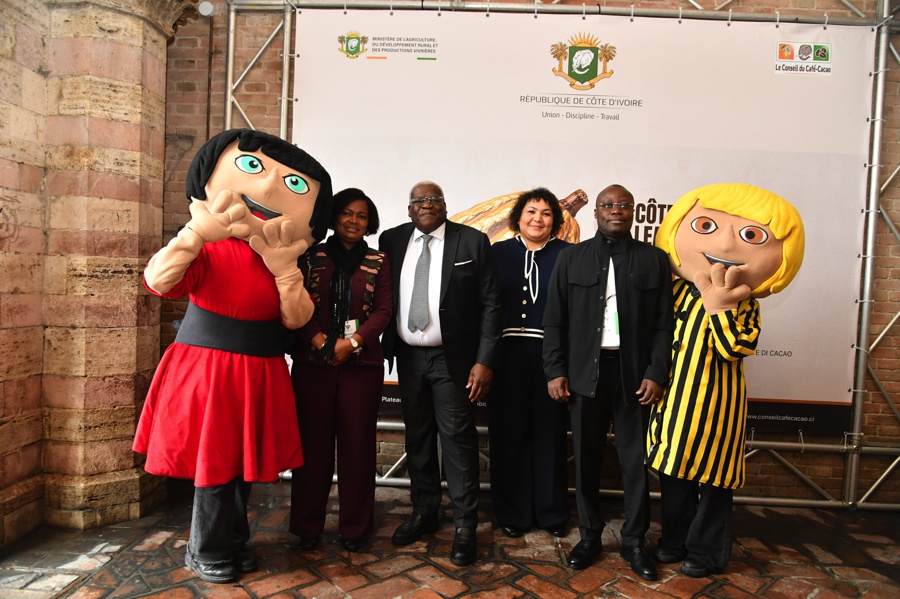
The 32nd edition of Eurochocolate, held November 13–14 under the medieval arches of Loggia dei Lanari in central Perugia, saw Ivory Coast occupy a prominent position. The Ivorian delegation, led by the Conseil du Café-Cacao and comprising chocolatiers, roasters, and regional producers, set up shop in the heart of the festival’s central hub, drawing immediate attention from Italian confectionery experts and visitors alike.
The pavilion was more than a display of finished chocolate bars; it was a statement of capacity. Ivory Coast’s booths were designed to highlight the country’s capacity to produce high-value finished goods—moving beyond the export of unprocessed cocoa beans and directly competing with European manufacturers in the premium segment.
Local rhythms and global ambitions: how culture met commerce
Among the festival’s most striking features was the “Terrasse d’Abidjan,” a rooftop space overlooking the Umbrian valley toward Assisi. The venue pulsed with contemporary Ivorian beats—from Joséy and Didi B to Serge Beynaud, Roseline Layo, and Himra—blending art, culture, and commerce in a vivid display of national pride. The evening concluded with a choreographed performance by the delegation’s artisans and roasters, symbolizing a fusion of tradition and innovation.
Eugenio Guarducci, founder of Eurochocolate, called Ivory Coast’s participation a “historically significant milestone.” He emphasized the potential to bridge two worlds: West Africa’s cocoa powerhouse and Italy’s global reputation for high-end pastry and processing technology. The goal? To turn technological exchange and industrial investment into tangible growth on Ivorian soil.
Three decades in the making: the man behind the Ivorian-Italian cocoa bridge
The collaboration didn’t happen overnight. For nearly 30 years, Ivorian-Italian journalist and presenter Laurent De Bai has championed stronger economic and cultural ties between the two nations through cocoa. His relentless networking with producers, policymakers, and festival organizers laid the foundation for this landmark presence—a moment he helped envision long before it became reality.
De Bai’s vision wasn’t merely about trade; it was about reshaping perceptions. By showcasing Ivorian craftsmanship and innovation under Italy’s prestigious culinary spotlight, he sought to challenge the narrative that African cocoa must always be exported raw. The 2026 event signaled a pivotal shift: Africa is ready to refine, brand, and sell its own chocolate.
Public reaction: praise, skepticism, and calls for justice
The Ivorian pavilion drew both applause and criticism. Supporters hailed it as a bold step toward economic sovereignty and value addition. Critics, however, questioned whether local communities would see real benefits or if the transformation would predominantly enrich international partners. Social media exploded with debates over fair pricing, equitable supply chains, and the environmental cost of expanded cocoa farming.
Activists pointed out that while Ivory Coast processes more cocoa domestically than ever, most profits still flow to foreign-owned processing plants. Others argued that without stronger labor protections and sustainable sourcing policies, the shift could deepen exploitation rather than alleviate it.
What’s next: from festival glow to factory ground
Now that the spotlight has dimmed in Umbria, the real work begins. The Eurochocolate showcase was just the opening act. The next phase involves translating goodwill into binding agreements, securing technology transfers, and launching pilot processing plants in Ivory Coast’s cocoa-growing regions.
Industry insiders anticipate a wave of Italian investment in local facilities, with a focus on bean-to-bar production and export-ready confections. The government has signaled support through tax incentives and infrastructure development, aiming to position Ivory Coast as a global player in fine chocolate by 2030.
Yet questions linger. Will smallholder farmers gain better prices? Will environmental safeguards prevent deforestation and soil depletion? And will the new chocolate brands from Ivory Coast find shelf space in European supermarkets, or remain niche luxury items?
One thing is clear: Ivory Coast is no longer content being just a bean supplier. It wants to be a brand. And the fallout from Eurochocolate 2026 may well determine whether that dream becomes reality—or remains a promise deferred.