The release of the International Debt Report 2026 on November 5 has laid bare the mounting strain on Cameroon’s external finances. In 2025 alone, the country poured the equivalent of 1,101 billion FCFA—$1.896 billion—into servicing its foreign debt, up from 1,023 billion FCFA the previous year. This 12.3% surge in dollar terms was driven primarily by capital amortizations, which jumped 19.7% to $1.38 billion, while interest payments dipped slightly to $510 million. By December 31, the total external debt stock had climbed 10.5% to $17.57 billion, or roughly 9,812 billion FCFA.
Debt repayments squeeze foreign revenue further
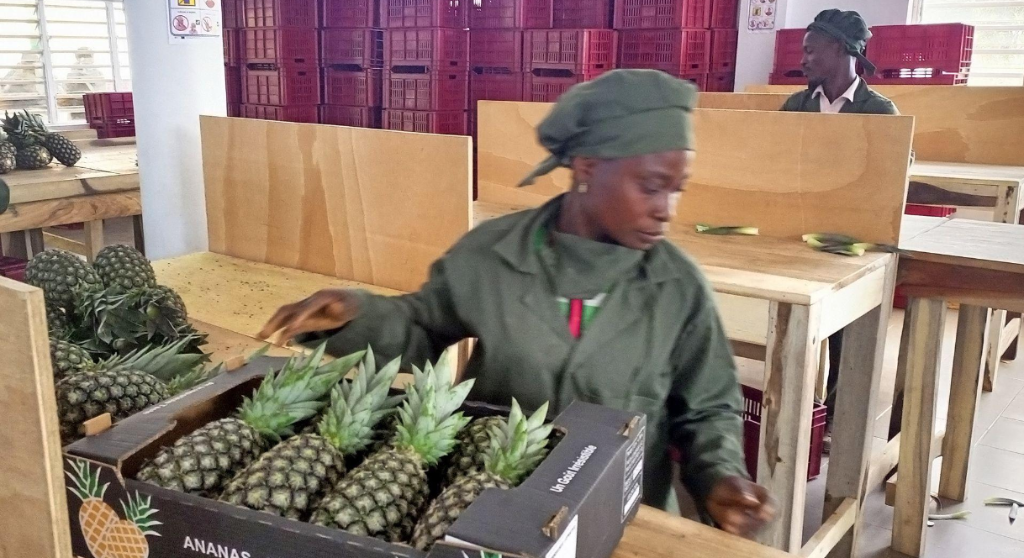
The debt service ratio, closely watched by the World Bank and IMF, has worsened significantly. External debt repayments now consume 22.1% of Cameroon’s earnings from exports, services, and primary income—up from 19.1% in 2024. These foreign receipts themselves shrank by 2.9% to $8.57 billion, signaling a shrinking external revenue base. Structural declines in oil production—ongoing since the mid-2010s—and weaker cycles in cocoa and timber exports have eroded foreign currency inflows, even as hydrocarbons and agro-industry remain Cameroon’s main foreign exchange earners.
The 2025 spike in principal repayments stems largely from a concentration of maturities on commitments made in the early 2010s, particularly loans from Asian bilateral creditors that funded the Kribi port, the Memve’ele dam, and major road networks. Eurobonds issued in 2015 and refinanced in 2021 have also entered their peak repayment phases. On the multilateral side, IMF repayments surged to $130.4 million in 2025, compared with $84.3 million a year earlier, a direct consequence of pandemic-era borrowing facilities.
Public investment bears the brunt of debt strain
Public finances are under unprecedented pressure. Net inflows of new external financing plummeted 32.8% in 2025 to $624 million, while net transfers—calculated after interest payments—fell 71.5% to just $113 million. Effectively, Cameroon is no longer a net recipient of foreign borrowing; it has become a net payer. While neighboring Gabon and Republic of the Congo face similar constraints within the Central African Economic and Monetary Community (CEMAC), Cameroon remains the most exposed by sheer volume.
This foreign exchange squeeze is already affecting capital spending. Budget execution data for the first quarter of 2026 shows a 27.7% year-on-year drop in public investment. This aligns with the austerity measures embedded in the ongoing IMF program and the rising burden of combined domestic and external debt service—external debt alone is projected to require over 600 billion FCFA in repayments in 2026 on the regional public debt market.
Post-Biya budget test looms large
The International Debt Report 2026 confirms the trajectory outlined in the joint IMF-World Bank debt sustainability analysis of March 9, 2026, and the Fund’s October 1 statement. Yaoundé remains classified as at high risk of debt distress, despite debt being deemed manageable over the medium term. While external debt stands at 30.3% of gross national income, it represents a daunting 205.1% of foreign revenue—a far more telling vulnerability than the headline ratio suggests.
The years 2026 and 2027 are set to test Cameroon’s fiscal resilience like never before. As the country prepares for its first leadership transition in four decades, every franc diverted to debt service tightens the squeeze on social spending, wages, and security priorities. The next administration’s room to maneuver will hinge on three levers: renegotiating select bilateral loans, reviving issuance on the BEAC regional bond market, and broadening the non-oil tax base.