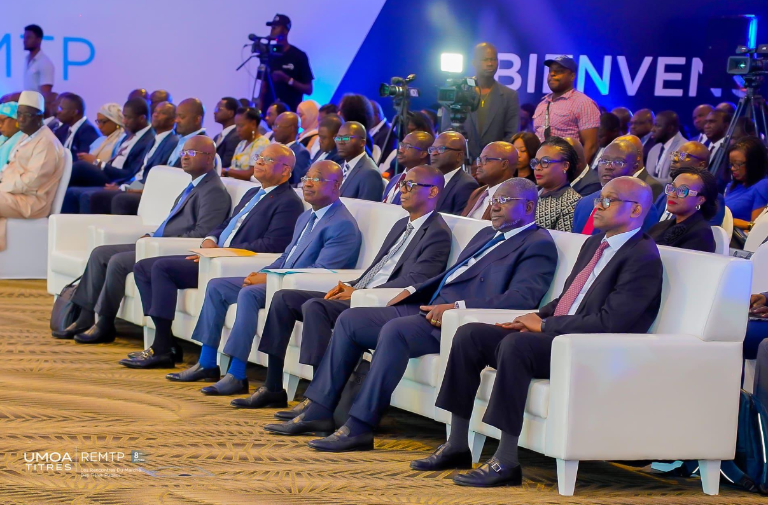
The Cameroonian economic landscape this week has become a battleground for public opinion, with debates over financial sovereignty, industrial safety and structural reform dominating the national discourse. As stakeholders assess the damage from recent crises, the question on everyone’s lips is: what next? The answers emerging from this week’s developments suggest both challenges and unexpected opportunities for the Central African nation.
Financial sovereignty under scrutiny: Afriland First Bank’s bold move
Local banking institutions are taking center stage in Cameroon’s push for economic autonomy. Afriland First Bank’s unprecedented capital increase has been framed not just as a financial milestone, but as a strategic declaration of independence from Western financial institutions. Unlike many of its peers, the bank reportedly achieved this growth without admitting new foreign investors or diluting local ownership—signaling a new era in domestic financial decision-making.
Reactions from the business community
Economic observers note that this capital injection could accelerate lending to domestic industries, particularly those struggling to access credit. The move aligns with government efforts to redirect financial flows toward local value creation rather than remaining dependent on external funding mechanisms.
Competition crisis: the informal sector’s fight against Chinese imports
The alarm bells are ringing louder for Cameroon’s informal economy. Recent data highlights the devastating impact of cheap Chinese textile imports—totaling 230 billion FCFA in the last quarter—which have flooded local markets, outcompeting domestic manufacturers. This asymmetry has forced collaboration between the Cameroon Employers’ Federation (Gecam) and the Ministry of Small and Medium-sized Enterprises (Minpmeesa) to develop a joint 2027-2030 roadmap.
Why formalization matters:
- Formal PMEs account for only 17% of total bank credit in Cameroon, despite representing 90% of economic activity.
- Chinese firms operating in Cameroon often establish as individual establishments (Ets), creating low-value commercial models that extract profits without substantial local reinvestment.
- The proposed reforms aim to integrate informal businesses into the formal economy, granting them access to credit and market stabilization tools.
A tale of two business models
While Cameroonian PMEs struggle to gain traction, their Chinese counterparts thrive in Cameroon’s economy. Analysts warn that these foreign businesses—often operating with minimal startup capital—are capturing quick profits without contributing to long-term economic growth through infrastructure or job creation.
Infrastructure and currency reforms: modernizing the economy
The push for economic modernization is gaining momentum through two critical initiatives:
- Currency overhaul: The Central African States’ Bank (BEAC) is accelerating the demonetization of old banknotes, signaling a shift toward more transparent and efficient monetary systems.
- Road infrastructure: Presidentially approved funding of 129 billion FCFA for the Yaoundé bypass road—and the appointment of a new Director-General to the Road Fund—are being hailed as vital steps toward reducing logistical bottlenecks and improving trade corridors.
The human cost of industrial failure: Metafrique Steel tragedy
The week’s darkest moment came with the deadly explosion and fire at Metafrique Steel S.A.’s plant in Douala’s Bassa industrial zone. The incident claimed five lives and left 12 to 16 workers with severe burns, prompting immediate suspension of operations pending investigations.
The fallout:
- Industrial safety concerns: Questions are being raised about workplace regulations and enforcement in Cameroon’s manufacturing sector.
- Economic impact: Metafrique Steel, a key player in Cameroon’s metallurgy industry, faces potential disruptions to production that could ripple through the construction and automotive supply chains.
What happens now?
As the nation mourns its losses, labor unions and industry leaders are calling for stricter workplace safety protocols and better corporate oversight. Meanwhile, the government is under pressure to balance industrial growth with worker protection.
Key economic figures: the CEMAC debt dilemma
This week’s most staggering revelation came from the CEMAC bond market: an outstanding debt of 11.0167 trillion FCFA across six member states. While this figure underscores the region’s financial integration, it also highlights a critical imbalance.
Why the Treasury prefers monetary markets:
- Speed: Governments can raise funds in as little as 45 days through monetary markets, compared to 6–8 months on the Douala Stock Exchange (BVMAC).
- Cost efficiency: Borrowing costs are typically 2% lower via monetary channels than through bond issuance on the regional stock exchange.
Person of the week: Samuel Njanga Kondo Ngande
The reelection of Samuel Njanga Kondo Ngande as President of the Syndicat des Industriels du Cameroun (Syndustricam) has thrust the veteran industrialist back into the national spotlight. His new three-year mandate includes the rollout of the “CAP Industrie 2029” initiative, aimed at revitalizing Cameroon’s manufacturing base through innovation, workforce development and strategic partnerships.
What lies ahead for Cameroon’s economy?
The week’s events have exposed deep-seated fissures in Cameroon’s economic framework—from industrial fragility to financial dependency. Yet, they have also revealed a glimmer of resolve:
- Local financial resilience: The banking sector’s capital growth signals growing confidence in Cameroon’s financial independence.
- Strategic industrial partnerships: The Gecam-Minpmeesa alliance offers a roadmap to integrate informal businesses into the formal economy.
- Infrastructure investment: Modernized currency systems and road networks could unlock new growth potential.
With public debate intensifying and stakeholders uniting around shared solutions, Cameroon stands at a crossroads. The coming months will reveal whether this week’s turmoil catalyzes lasting change—or deepens existing vulnerabilities.