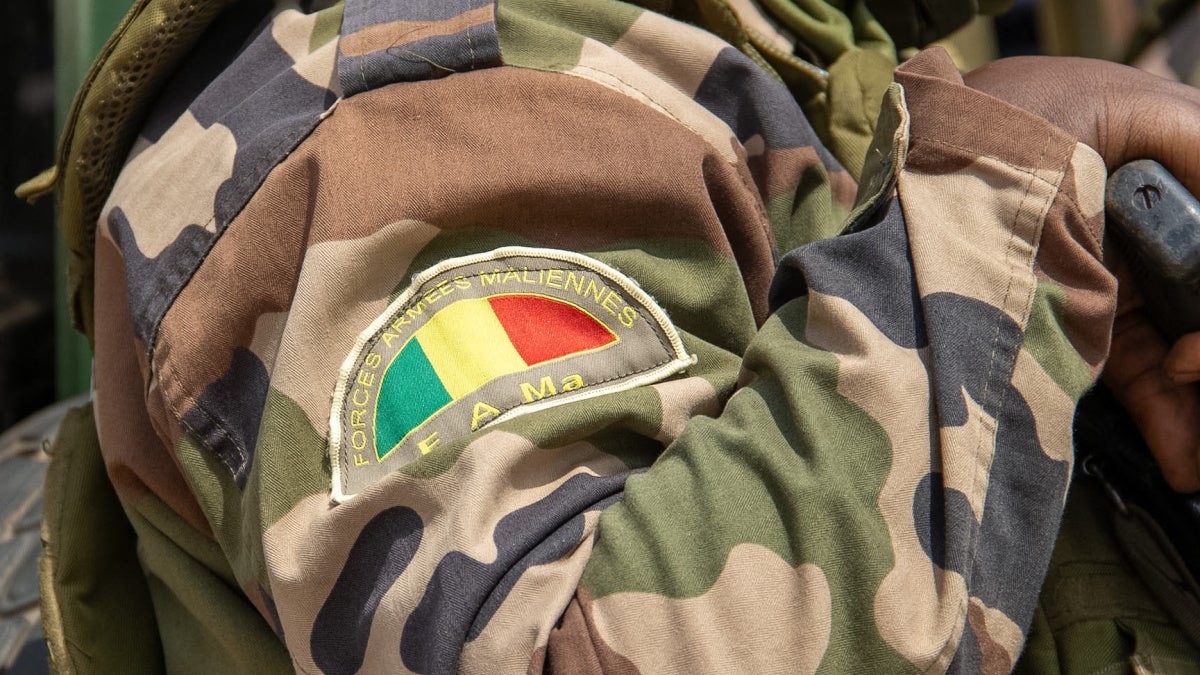
Bamako — Soldiers of the Malian Armed Forces and allied militias executed at least 31 civilians in two villages in the Ségou region during early October, burning homes and leaving a trail of devastation in areas under pressure from ongoing conflict.
The first incident occurred on October 2 in Kamona, where military forces accompanied by Dozos—traditional hunters predominantly from the Bambara ethnic group—allegedly targeted male villagers. Survivors reported that armed men in camouflage uniforms and Dozos wearing traditional attire and amulets arrived in at least seven pickup trucks and three armored vehicles, later burning 10 homes. Witnesses stated that armed individuals had warned residents of the military’s approach, prompting many to flee. Those unable to escape were allegedly rounded up and shot. No clashes were reported between the military and Islamist groups in the area.
« The October massacres in Ségou are just the latest atrocities linked to the Malian army and its allied militias, » said a local activist who requested anonymity. « Authorities must conduct a thorough, impartial investigation and hold those responsible accountable. »
By October 13, the violence had spread to Balle, 55 kilometers away, where soldiers and Dozos killed nine men and one woman. Survivors described soldiers conducting door-to-door searches, assaulting villagers, and executing civilians. At least 100 cattle were stolen, and the attackers set fire to homes. The victims, aged 22 to 67, were found shot and, in some cases, mutilated. A 55-year-old woman was reportedly killed after confronting the soldiers about their treatment of the villagers.
The Malian military claimed its October 13 operation in Balle was a « reconnaissance mission » that « neutralized around 20 terrorists » and seized weapons. However, residents disputed this, stating the village had been under the control of the Group for the Support of Islam and Muslims (JNIM), an Al-Qaeda-affiliated group, for years. « We pay zakat to them each year, » said a local elder. « They settle disputes; there are no soldiers or police here. The army doesn’t distinguish between us and them. »
Since 2012, Mali has grappled with armed Islamist groups, leading to thousands of civilian deaths and displacing over 400,000 people. The JNIM escalated its siege on Bamako in September, cutting off fuel supplies to the capital and forcing the military junta to suspend education nationwide. International humanitarian law prohibits attacks on civilians, summary executions, and the destruction of property. Perpetrators of war crimes may face prosecution under the Rome Statute, though Mali’s withdrawal from the International Criminal Court (ICC) in September 2023 complicates accountability efforts.
The African Union (AU) has faced criticism for its limited response to the crisis. Analysts argue the AU’s Peace and Security Council must prioritize Mali, strengthening diplomatic efforts and coordinating regional action to address abuses by all parties.
Local leaders and human rights observers continue to document violations, urging immediate action to protect civilians caught in the crossfire of Mali’s prolonged conflict.