
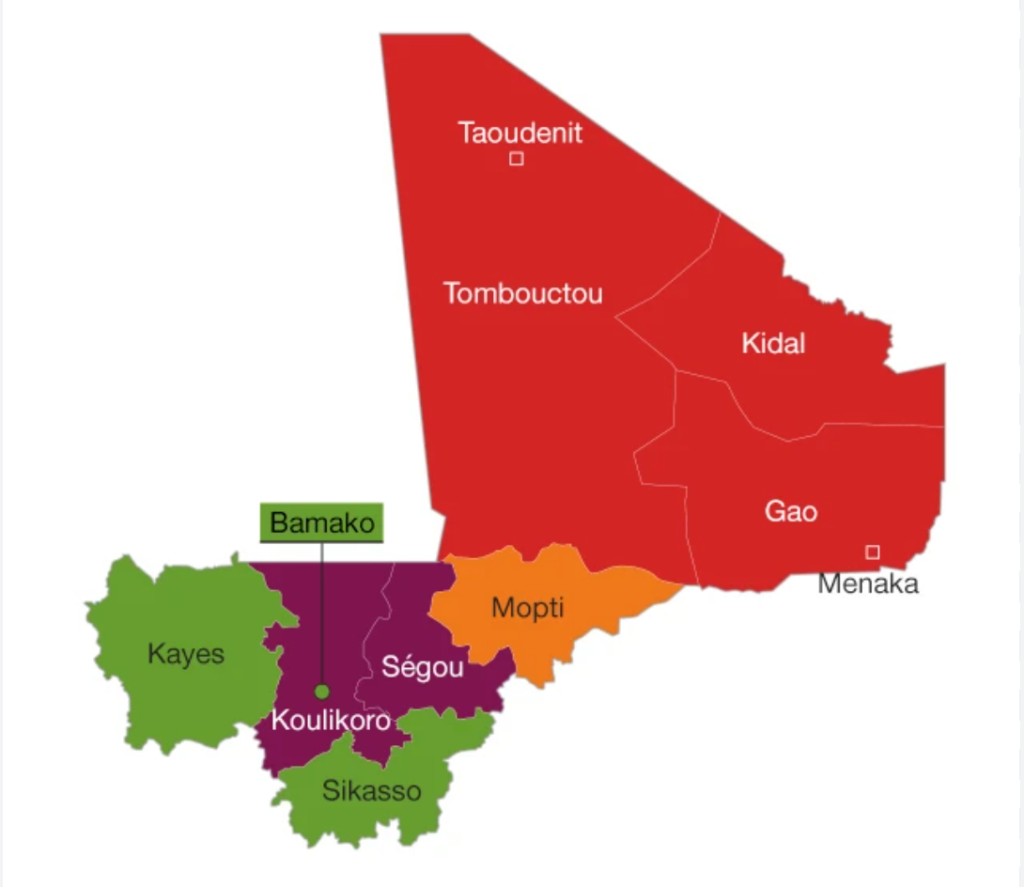
The Malian capital, Bamako, is experiencing a rare moment of relief as two critical convoys—one laden with fuel and the other with heavy weaponry—pushed through hostile territory to reach the city. Yet while these breakthroughs ease immediate pressures on the capital’s infrastructure, the country’s central belt remains locked in a brutal security crisis, with jihadist groups tightening their grip and forcing civilians into desperate displacement.
Bamako’s lifelines: fuel and arms convoys rewrite the rules of survival
After weeks of uncertainty over supply chains and fuel shortages that threatened daily life, Bamako breathed easier in late July. The arrival of two logistical triumphs—first a massive fuel convoy, then a heavy arms shipment—proved that new supply routes can outmaneuver terrorist threats when strategic planning meets execution.
The fuel convoy, which crossed into Bamako on July 24, consisted of hundreds of tanker trucks. Despite the JNIM’s usual blockades in the Kayes region, these vehicles completed their journey without incident, securing a lifeline for the capital’s power plants, hospitals, and transportation networks. The successful transit marked a tactical win against the extremist group’s attempts to choke off essential resources.
The following day, Bamako welcomed a military hardware convoy that had taken an unconventional path from Lomé (Togo), bypassing Guinea entirely. Instead, the shipment traveled through Burkina Faso before entering Mali via Sikasso, establishing a new West African military corridor. The cargo, reportedly offloaded from the Russian cargo vessel Mikhail Britnev, included advanced weaponry intended to bolster the Malian Armed Forces (FAMa) and their Russian partners in Africa Corps. The delivery featured an array of combat vehicles: 3 BMP-2 infantry fighting vehicles, 8 BMP-3s, 14 mine-resistant ambush-protected (MRAP) vehicles, 4 BTR-82 troop carriers, 2 anti-aircraft defense systems, plus a fleet of logistics trucks and tactical motorcycles. This infusion of firepower signals a shift in the government’s capacity to project force beyond its urban strongholds.
The RN16 bloodbath: how jihadists turn Mali’s roads into death traps
While Bamako enjoys this reprieve, the central regions of Mali continue to suffer under relentless jihadist pressure. The national road RN16, a critical artery linking Mopti to Gao, has become a killing zone. On July 25 and 26, a joint FAMa and Africa Corps convoy, en route from Sévaré to Gao, faced a coordinated ambush near Hombori. The JNIM deployed multiple improvised explosive devices (IEDs) along the Wami to Agoufou stretch, destroying or disabling several vehicles in the column. The attack underscored the extremists’ deep territorial control and the ongoing struggle for the Malian military and its allies to protect secondary supply routes.
The JNIM’s reach extends beyond RN16. Reports from the same period confirm another ambush targeting a Malian military convoy between Niafunké and Tonka, as well as a counteroffensive north of Niono on July 26, which repelled an Africa Corps advance. These incidents highlight the asymmetric warfare tactics employed by the group, which continue to erode stability in central Mali.
Kouakourou’s fall: a humanitarian catastrophe unfolds
The collapse of security in the Djenné district reached a tragic turning point on July 19, when the JNIM seized the local military camp in Kouakourou. The loss was more than symbolic—it severed a key government foothold and left civilians exposed to the extremists’ rule. Aerial strikes followed on July 21, with the military claiming to have neutralized five jihadists and destroyed a logistics vehicle. Yet, despite the air campaign’s intensity, ground forces were unable to retake the town, which remains under full terrorist control.
The human cost of this failure is staggering. Thousands of residents, stripped of protection and facing escalating violence, have abandoned their homes and farmlands in Kouakourou. Their flight adds to the already overwhelming burden on neighboring communities in Mopti, where displaced populations overwhelm local resources and strain humanitarian responses. The exodus is a stark reminder of the JNIM’s ability to displace communities with impunity, leaving behind a trail of abandoned livelihoods and broken social structures.
A strategic puzzle with no easy answers
The Malian government’s recent logistical achievements in Bamako contrast sharply with the ongoing insurgency’s stranglehold on the countryside. On paper, the arrival of Russian-supplied armored vehicles and heavy weaponry should shift the balance of power. But in practice, the JNIM’s asymmetric tactics—ambushes, IEDs, and targeted assassinations—continue to fragment territory and undermine the state’s authority.
The question remains: Can these new assets translate into lasting territorial gains beyond the capital’s perimeter? With the rainy season complicating movement and the JNIM adapting constantly, the next few weeks will be decisive. For now, the paradox persists: Bamako’s lifelines are secure, but central Mali’s heartland remains trapped in a cycle of violence, displacement, and despair.



More Stories
Mali: près de 80 soldats tués dans l’attaque de Dioura
Côte d’Ivoire : le Burida prépare une distribution record de 795,4 millions FCFA
Paris FC vs Lyon: kick-off time and TV channel for the Ligue 1 matchday 4 clash