
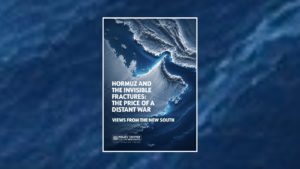
An in-depth study by the Policy Center for the New South (PCNS) reveals that Morocco stands out as one of the North African economies most exposed to an oil crisis triggered by tensions in the Strait of Hormuz. The findings are part of a comprehensive analysis published in the collective work titled Hormuz and the Invisible Fractures: the Price of a Distant War, which examines the far-reaching geopolitical, economic, and security implications of the Iran-United States-Israel conflict.
Global energy flows and regional vulnerabilities
The Strait of Hormuz, a critical maritime chokepoint, serves as a vital artery for global energy and trade. Nearly a third of the world’s seaborne oil transits through this narrow passage, alongside significant volumes of liquefied natural gas, fertilizers, and other essential commodities. Any disruption in this corridor could send shockwaves through international markets, with North African nations—particularly Morocco—facing heightened risks due to their reliance on energy imports and trade-dependent sectors.
The PCNS report underscores how a 20% spike in global oil prices, sparked by a crisis at Hormuz, would disproportionately impact the Moroccan economy. Using input-output economic modeling, researchers identified key vulnerabilities in agriculture, construction, transportation, and energy-intensive industries. These sectors, already sensitive to fuel and electricity costs, would bear the brunt of higher energy expenses, potentially stifling growth and increasing inflationary pressures.
A tale of two neighbors: Morocco vs. Egypt
While Morocco’s economic fabric appears fragile in the face of such a shock, neighboring Egypt may experience a more balanced outcome. The study suggests that Egypt, as a net exporter of hydrocarbons, could partially offset losses through increased oil revenues. Meanwhile, Tunisia’s economy is projected to remain relatively stable, though sector-specific disparities—such as tourism and manufacturing—could still face turbulence.
Beyond economics: redefining global power structures
The conflict has also accelerated shifts in the international order, as highlighted by contributors including Abdelhak Bassou, Ferid Belhaj, and Ian Lesser. Belhaj argues that the crisis exposes the erosion of traditional cooperation mechanisms and deterrence strategies, signaling a more fragmented global system. Meanwhile, Lesser points to deepening transatlantic divisions over military intervention and crisis management, particularly between the United States and European allies.
Other experts, such as Hafez Ghanem and Rida Lyammouri, explore the ripple effects on African energy security, the fragile balances in the Sahel, and the growing role of critical minerals in reshaping geopolitical alliances. The PCNS report frames the conflict as a catalyst for long-term disruptions in supply chains, energy markets, and global governance, urging states to adapt their strategies accordingly.
The study serves as a stark reminder of how interconnected economies remain vulnerable to geopolitical flashpoints. For Morocco, the findings underscore the urgent need to diversify energy sources, strengthen domestic industries, and enhance resilience against external shocks.


More Stories
Is Chad truly heading towards political appeasement?
Bradley Barcola will adapt faster than Florian Wirtz at Liverpool, says Jermaine Pennant
Togo eyes nuclear power to secure future energy sovereignty