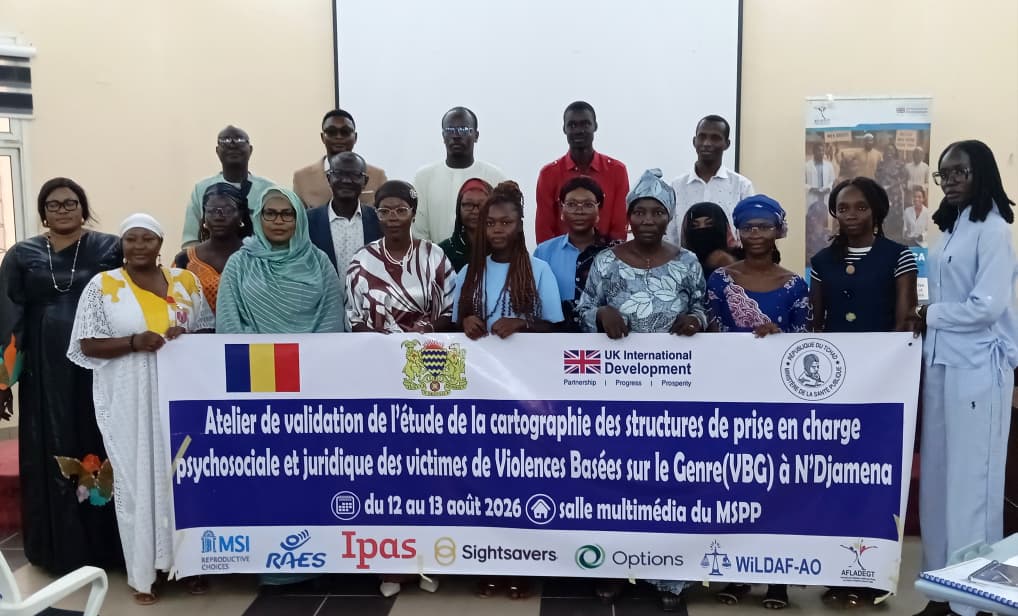
In a significant step toward strengthening response systems for survivors of gender-based violence (GBV), the Chadian Association of Women Leaders for Gender Equality and Access to Rights (AFLADEGT) is convening a pivotal validation workshop in N’Djamena from August 12 to 13, 2026. The event centers on reviewing and finalizing a groundbreaking mapping study of legal and psychosocial support services available to GBV survivors.
The initiative, developed under the WISH 2-WACA project, aims to streamline survivor referrals and enhance coordination among service providers. Over two days, participants—including government officials, civil society representatives, technical and financial partners, and specialized agencies—will assess and refine the findings of this critical mapping exercise.
Empowering survivors through accessible resources
During the opening session, AFLADEGT President Wouténé Mélissa emphasized the transformative potential of the mapping tool. She stressed that this isn’t just another document but a strategic instrument for guiding survivors to appropriate services, fostering inter-agency collaboration, and advocating for policy improvements.
« Survivors deserve immediate clarity on where to seek help, which services to access, and how to receive tailored support, » she asserted. « This mapping ensures no one is left navigating the system alone. »
Critical gaps uncovered in GBV service delivery
The study reveals stark disparities in service availability across N’Djamena, with less than 11% of identified survivors receiving formal legal assistance. Key challenges include:
- The prevalence of informal dispute resolutions;
- Insufficient awareness among survivors about available services;
- Weak referral mechanisms between sectors;
- Uneven service coverage across city districts, particularly in securing confidential, safe spaces for victims.
« These findings must translate into actionable solutions, » stressed Dr. Kadidja Amadaye Abgrene, Director of Reproductive Health. She highlighted government efforts—such as strengthening legal frameworks and launching multisectoral service centers—but acknowledged persistent hurdles in judicial support and resource allocation.
From data to decisive action
Both leaders underscored the need to leverage this mapping to:
- Optimize survivor referrals across sectors;
- Prioritize under-resourced areas;
- Mobilize additional human and material resources;
- Inform policy decisions to close existing gaps.
The workshop marks a turning point in Chad’s GBV response, turning data into a roadmap for justice, healing, and systemic change.