
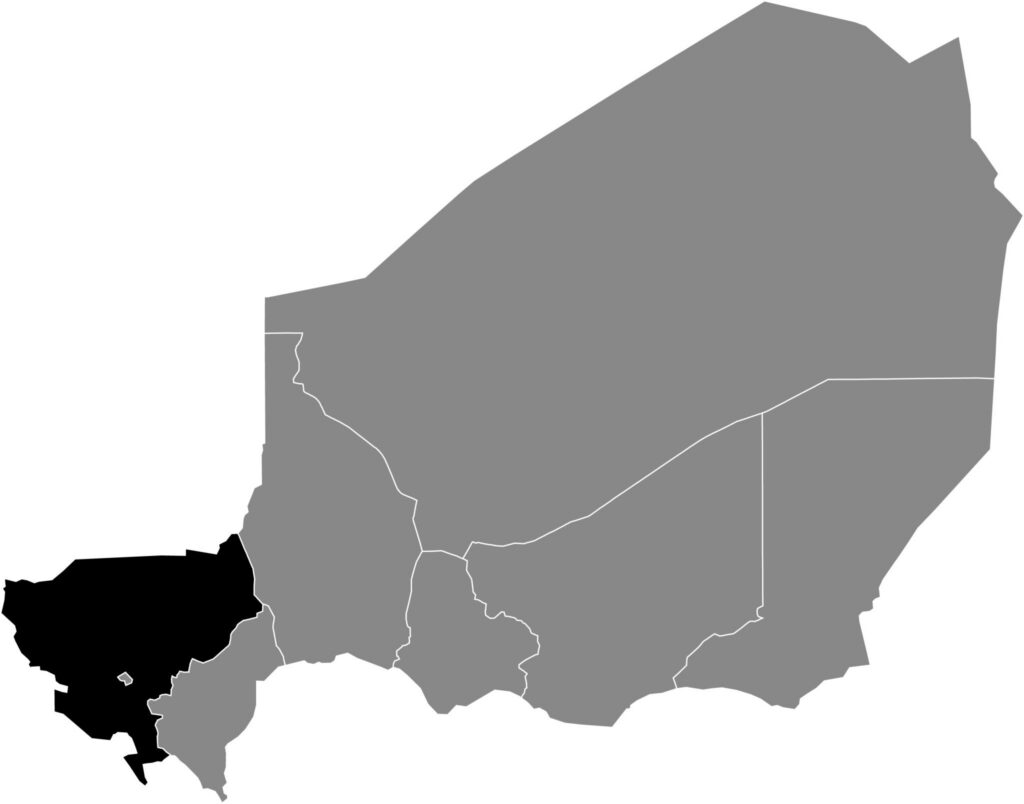
Black highlighted location map of the Nigerien Tillabéri region inside gray map of the Republic of Niger
What began as a solemn gathering of mourning and solidarity ended in devastation. On July 24, the village of Chinagodrar, nestled in the northern reaches of the Tillabéri region, was struck by two military drone strikes during a funeral ceremony. Local accounts confirm the attacks targeted a large crowd of villagers gathered to pay respects to a grieving family, resulting in at least seven fatalities and multiple injuries.
The assault has left the already beleaguered community in a state of shock. Survivors describe scenes of terror—families scattered in panic, victims struck while attempting to help the wounded, and a village thrown into disarray by the sudden violence.
The ‘three borders’ region: a hotspot of ongoing conflict
The Tillabéri region has long been a flashpoint for violence in Niger. Bordering both Mali and Burkina Faso, it lies at the heart of the so-called ‘three borders’ zone, where clashes between security forces and jihadist armed groups frequently erupt.
In response to the persistent threat, Nigerien authorities have intensified military operations, increasingly relying on surveillance and combat drones. While these strikes enable rapid responses against suspected hostile targets, their deployment in areas with dense civilian presence raises serious concerns about intelligence accuracy and target verification.
In villages where funerals, markets, and religious gatherings draw large crowds, incomplete or unconfirmed intelligence significantly heightens the risk of tragic misidentification.
A second strike deepens the tragedy
Witnesses report that the first explosion shattered the funeral gathering, sending mourners into a frenzied escape. As relatives and neighbors scrambled to evacuate the wounded, a second strike reportedly hit minutes later, further escalating the death toll and injuries.
Several survivors were reportedly struck during the second blast, while nearby homes sustained damage. Survivors recount a scene of utter chaos—screams filling the air, families fleeing in all directions, and emergency responders struggling to navigate an already isolated area.
Human cost and shattered communities
The provisional death toll stands at seven, though local sources warn the number could rise as critically injured victims remain in unstable condition. Among the dead are villagers who had simply come to attend the funeral, deepening the sense of injustice within the community.
Beyond the lives lost, the attack has left families shattered and a population grappling with profound psychological trauma. In a region already ravaged by relentless attacks from armed groups, this incident has amplified fears of being caught between the brutality of terrorists and the unintended consequences of military operations meant to protect them.
Questions over drone strike protocols
This tragedy has reignited debates over the rules governing drone operations in counter-insurgency efforts. Experts emphasize that international humanitarian law demands constant distinction between military targets and civilians, along with rigorous precautions before any strike is authorized.
Human rights organizations have long highlighted that aerial operations in densely populated areas require flawless intelligence to minimize civilian harm. Yet in this case, the absence of a transparent official account has only fueled speculation and distrust among locals.
Residents are demanding clarity: Who was the intended target? How was the operation authorized? What measures will be taken if civilian casualties are confirmed? Without answers, skepticism toward military operations continues to grow.
Eroding trust between communities and security forces
The fallout from this incident extends beyond immediate casualties. In regions plagued by chronic insecurity, public trust in security forces is a critical asset—one that facilitates intelligence sharing and cooperation with authorities.
Each incident involving civilian harm risks deepening distrust, complicating future military efforts, and reinforcing feelings of abandonment among rural communities already worn down by years of conflict.



More Stories
Mali: près de 80 soldats tués dans l’attaque de Dioura
Côte d’Ivoire : le Burida prépare une distribution record de 795,4 millions FCFA
Paris FC vs Lyon: kick-off time and TV channel for the Ligue 1 matchday 4 clash