A decisive shift collides with domestic realities
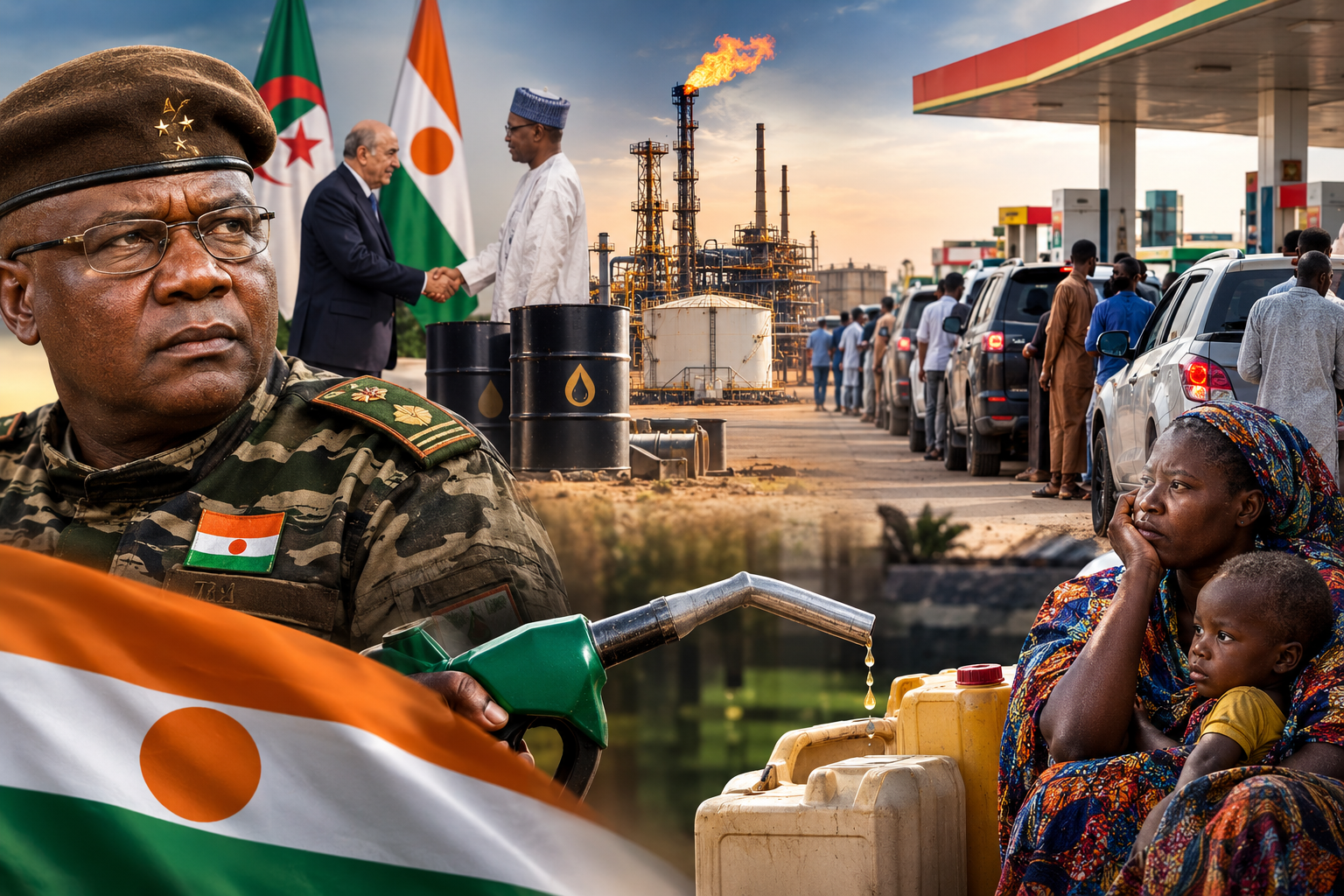
The recent security alignment with Algeria marks a definitive pivot in the foreign policy of Niamey, generating significant geopolitical momentum. However, this decisive shift is abruptly colliding with a stark internal crisis. While the government champions national sovereignty through high-profile strategic partnerships, a critical turning point has emerged at home: how can a nation endowed with substantial petroleum reserves face such severe domestic supply disruptions that paralyze everyday life?
The paradox of production and distribution
The contradiction is impossible to overlook. Niger possesses considerable hydrocarbon wealth and has invested in extraction and processing infrastructure. Yet, the domestic market remains highly vulnerable to supply shocks. When fuel availability falters, the momentum of the entire economy stalls. Long queues at petrol stations, restricted mobility, and severe interruptions to commercial activities place the heaviest burden on ordinary citizens, transport operators, and small business owners who rely on steady energy access.
Demanding accountability in the supply chain
The core issue extends far beyond mere extraction; it hinges on the efficient distribution and mastery of national assets. Crucial questions must now be addressed to understand this bottleneck. Where exactly does the crude oil extracted from the subsoil end up? What fraction is allocated for internal consumption versus export, and under what terms? Furthermore, do the current refining, storage, and logistical frameworks possess the capacity to meet domestic demand? Authorities must provide precise, data-backed answers to clarify these operational gaps.
Reassessing foreign partnerships and transparency
This pivotal moment also demands a rigorous evaluation of growing foreign influence in strategic sectors. The involvement of external actors, notably Russia, which has become a prominent partner for several military administrations across the Sahel, raises vital questions regarding the exact nature of these economic and security arrangements. True sovereignty requires absolute transparency. If the leadership in Niamey asserts enhanced control over natural resources, it must translate this stance into tangible outcomes: consistent fuel availability, affordable pricing, and a clearly articulated management of petroleum revenues.
Moving beyond diplomatic agreements
The strategic convergence between Niamey and Algiers must be viewed through this critical lens. While a security partnership addresses legitimate regional threats in the Sahel, an accumulation of diplomatic treaties cannot independently resolve pressing socioeconomic hurdles. Geopolitical momentum and defense cooperation are not substitutes for a robust domestic energy policy or the transparent administration of national wealth.
A defining moment for national interests
Ultimately, the public is asking a fundamental question: what is the value of petroleum wealth if it fails to secure adequate supply for the national market? True independence is not quantified by the volume of international treaties signed or the number of foreign allies secured. It is measured by the state’s ability to convert natural resources into direct, measurable benefits for its people. Niamey now faces a crucial mandate to illuminate the opaque segments of its oil supply chain, assign clear responsibility for distribution failures, and prove that its strategic pivots prioritize the welfare of Nigeriens. Until petrol stations can reliably meet public demand, the narrative of economic self-reliance will remain overshadowed by a persistent doubt: who truly benefits from the nation’s oil, and where do the needs of the citizens stand?