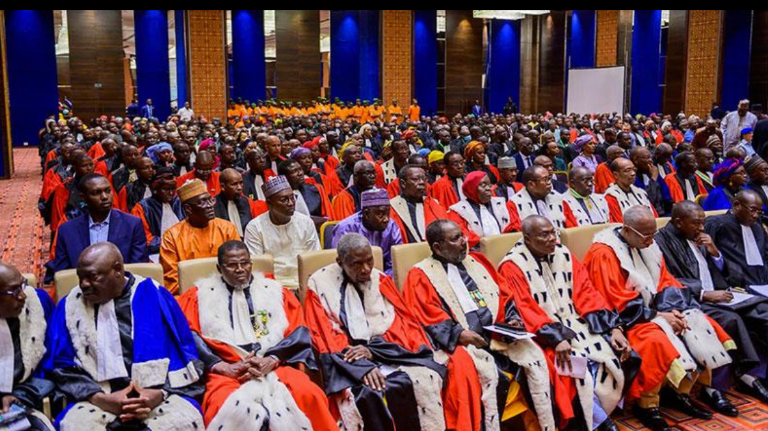
After decades of service, why are some Nigerien judges being granted reprieves while others retire?
Tensions are escalating within Niger’s highest court as an unexpected decision to extend the tenure of three top magistrates sparks backlash among their peers. The move—seen as a departure from standard retirement practices—has intensified debates over fairness, judicial independence, and the broader implications for the country’s justice system.
Unequal opportunities at the helm of justice
The controversy centers on the prolonged mandates of Abdou Dan Galadima, president of the State Court, along with vice-president Hassan Hodi and Yaou Aboubacar, president of the Administrative Chamber. While these leaders remain in position, a growing number of their colleagues—equally seasoned and dedicated—are stepping down under mandatory retirement rules.
Critics argue that the decisions lack transparency. Questions persist: Are these extensions based on merit, experience, or external considerations? The disparity in treatment has left many magistrates questioning the impartiality of the system they serve.
Concerns over judicial cohesion and credibility
Internal dissent is not only about individual grievances but also about the long-term stability of the court. Magistrates express worries that such unequal practices could undermine team morale, discourage excellence, and ultimately weaken public trust in the judiciary.
The State Court, a cornerstone of Niger’s legal framework, faces mounting pressure to uphold its integrity. Its rulings must reflect objectivity and neutrality—qualities that risk being overshadowed by perceptions of favoritism or political influence.
From legal formalities to political implications
The debate has evolved beyond administrative procedures, probing whether the court’s independence is being compromised. Observers suggest that prolonged tenures may serve as a mechanism to align the judiciary with executive interests, raising concerns over autonomy and impartial decision-making.
Calls for clarity have grown louder, with critics urging authorities to justify the extensions through transparent, objective criteria. Without clear explanations, the perception of judicial favoritism could deepen, further eroding the court’s reputation and credibility.
What’s at stake for Niger’s justice system?
At its core, this crisis challenges the fundamental principle of equality before the law. When leaders within the judiciary face different rules than their peers, the very foundation of justice is called into question.
The State Court’s future hinges on restoring confidence—both among its members and the public. Moving forward, decisions on judicial tenure must balance legal compliance with fairness, ensuring that the institution remains a beacon of integrity, not one of controversy.