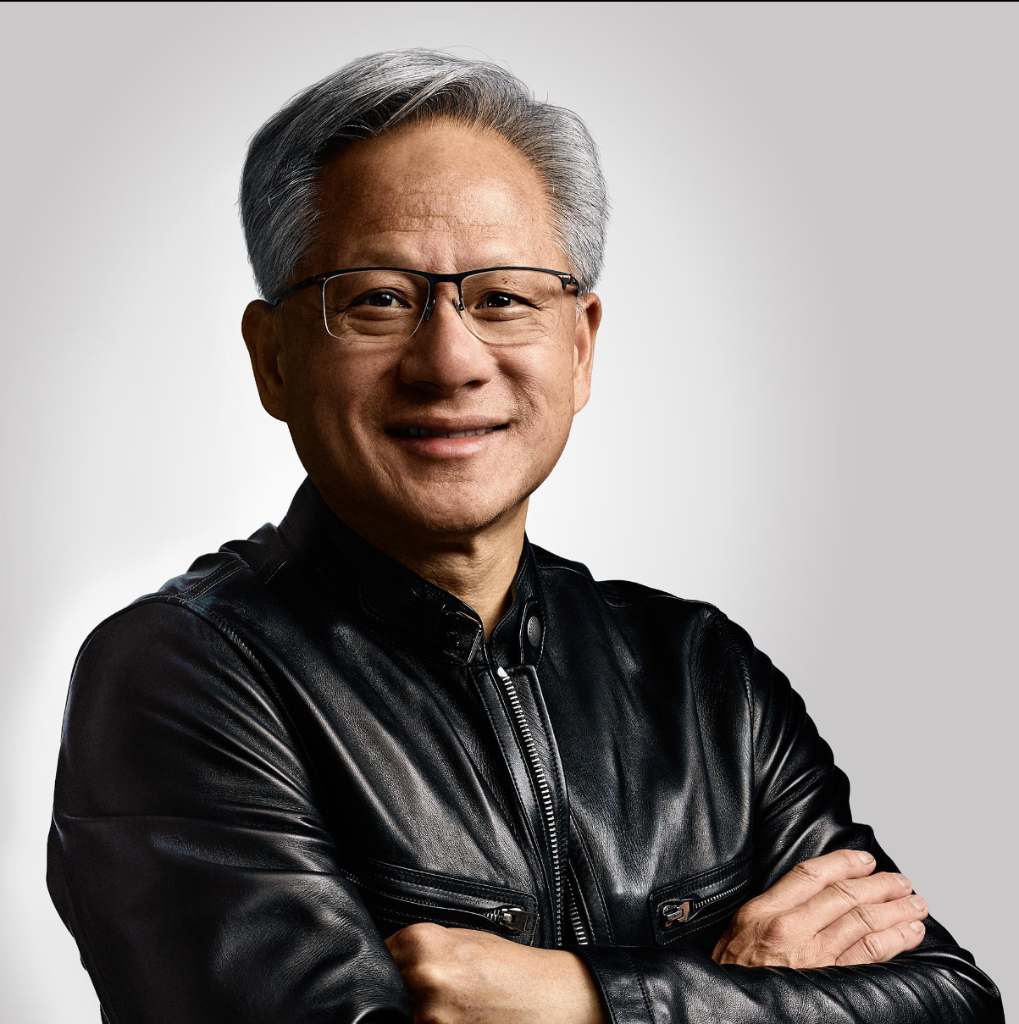
The turning point in US-China tech rivalry: How human networks became a vulnerability for NVIDIA
Washington is confronting a new reality in the escalating tech war with Beijing. An emerging espionage case involving NVIDIA’s CEO and a Chinese businesswoman is forcing the US to rethink its security framework—not just around hardware, but around the human networks that control it. The alleged incident marks a decisive shift in how America’s most critical technologies could be compromised through personal and professional entanglements.

From personal ties to national security risks: The dual threat emerging in Silicon Valley
At the heart of the controversy is a relationship that began as a personal connection and evolved into a potential intelligence risk. Jensen Huang, NVIDIA’s CEO, found himself in the crosshairs after reports revealed his association with Alice Huang—a Chinese businesswoman with deep ties in finance and cloud computing circles. What started as a diplomatic or social interaction now raises alarming questions: could leading figures in America’s tech sector inadvertently become conduits for Beijing’s espionage ambitions?
The stakes are high. NVIDIA’s chips power cutting-edge AI systems, from data centers to military applications. Any unauthorized flow of information or restricted hardware to Chinese entities poses a direct threat to U.S. technological superiority. While no concrete evidence has surfaced of classified data transmission, the very nature of the relationship demands scrutiny—especially when it involves strategic sectors.
The role of intermediaries: How Megaspeed International became a pivot in the supply chain
Megaspeed International, a Singapore-based cloud services firm, has emerged as another critical node in this investigation. Controlled by Alice Huang, the company played a key role in distributing NVIDIA’s advanced processors—including the H100 GPUs—across Southeast Asia. Authorities suspect these components may have been diverted to Chinese end-users, bypassing U.S. export restrictions.
This method of transshipment—buying in one country, routing through intermediaries, and delivering to restricted markets—creates a blind spot in enforcement. Authorities can trace transactions to Indonesia or Malaysia, but pinpointing the ultimate destination of these chips becomes nearly impossible. Such circumventions are not new in geopolitical espionage, but their application in the AI chip trade represents a dangerous new frontier.
Singapore’s response and the evolving counterespionage landscape
Singapore’s involvement added another layer to the investigation. Authorities there questioned Alice Huang, detained her passport temporarily, and ultimately barred her re-entry—a move signaling serious concerns over local compliance violations rather than direct espionage charges. While the case remains focused on regulatory breaches, it underscores a growing challenge for neutral territories: how to monitor and prevent technology flows that serve foreign intelligence objectives.
For the U.S., this incident is a wake-up call. Congressional leaders are demanding closer oversight of corporate leaders with international ties, while NVIDIA’s board has launched an internal audit. The message is clear: trust in leadership and supply chain integrity can no longer be assumed when geopolitical tensions are running high.
The HUMINT challenge: When relationships become weapons in tech warfare
Espionage has evolved beyond cyber intrusions and industrial theft. Today, human intelligence (HUMINT) relies on cultivating trust, leveraging personal connections, and exploiting gaps in corporate governance. For China, this approach offers plausible deniability—it’s easier to attribute a breach to an individual’s actions than to state-directed hacking.
This case highlights a paradox in modern tech security: the more open and global a company is, the more vulnerable it becomes. Jensen Huang’s acknowledgment of an extramarital affair has already created reputational damage. But the real risk lies not in personal scandals, but in whether such relationships could be weaponized—intentionally or not—to gain access to sensitive technology.
Why this case matters beyond NVIDIA and semiconductor chips
The implications extend far beyond one company or industry. If personal and professional networks can be turned into espionage tools, every executive in a strategic sector—from AI to biotech to aerospace—becomes a potential target. The U.S. is now forced to ask: how do we protect not just our data, but the people who stand at its gateway?
The answer may require a fundamental rethinking of corporate security protocols. Mandatory vetting of personal and professional associates, real-time monitoring of international dealings, and clearer accountability for third-party intermediaries could all become standard in the coming years. Failure to act could mean ceding ground in a conflict where technology is both weapon and battleground.
What’s next? Regulatory tightening and the future of tech safeguards
As investigations continue, Washington is preparing stronger countermeasures. Proposals include stricter export controls, enhanced due diligence for executives with foreign ties, and increased penalties for companies found negligent in supply chain oversight. The goal isn’t just to plug leaks—it’s to change the entire architecture of how sensitive technologies are moved, monitored, and protected across borders.
For tech giants like NVIDIA, the lesson is clear: in an era where the battlefield is both digital and interpersonal, security can no longer be outsourced. It must be embedded into every layer of leadership, partnership, and global operation. The human network is no longer just a means of connection—it’s become a frontline in the fight for technological dominance.