Aftermath of the Zaragoza incident: what went wrong on Spain’s busiest rail route?
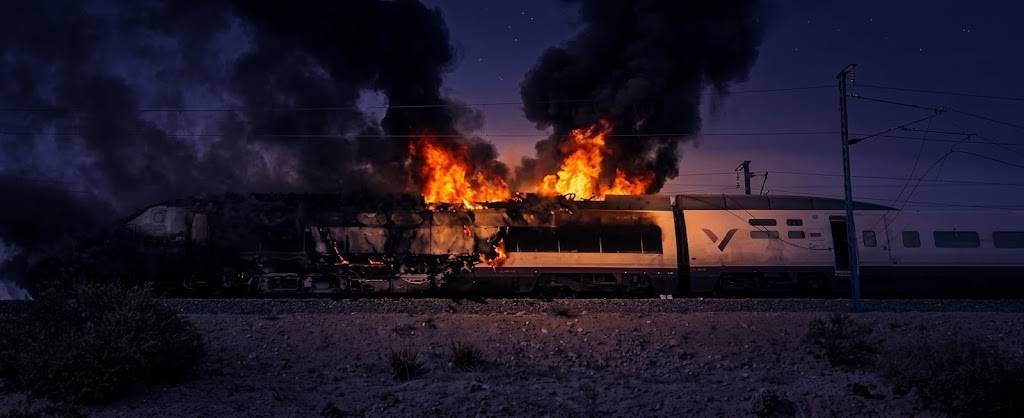
An emergency evacuation unfolded rapidly on Monday afternoon when fire broke out on a Madrid-to-Barcelona AVE high-speed train near Ricla, Zaragoza province. While all 283 passengers escaped unharmed, the incident has ignited public reactions over rail safety and exposed the fragility of Spain’s most critical transport artery. Authorities are now investigating the technical failure that triggered the blaze as industry stakeholders demand answers on contingency measures.
Timeline of the evacuation and disruption
The fire was first detected at approximately 4:05 PM near Zaragoza, inside the rear cabin of an AVE train traveling from Madrid’s Puerta de Atocha toward Figueres, in Catalonia. Within minutes, Renfe’s emergency protocols were activated, leading to the rapid evacuation of all passengers before firefighters arrived to contain the flames. Though no injuries were reported in the initial assessment, the interruption of high-speed service between Madrid and Barcelona created waves of travel disruptions.
Passengers faced canceled departures, extended delays, and rerouted journeys, coinciding with the Spanish National Day—a peak travel period. Trains were stranded at various stations, while thousands scrambled to adjust their plans after the incident brought one of Spain’s busiest rail routes to a standstill.
Renfe’s response: a balance between reassurance and uncertainty
In response to the crisis, Renfe announced flexible compensation measures, including free ticket changes or full refunds for affected travelers. The company also mobilized technical teams to conduct safety inspections on the affected stretch of track before restoring service. However, officials declined to specify a timeframe for resumption, emphasizing that thorough checks were necessary to ensure operational safety.
While the evacuation was executed flawlessly, the lingering question remains: what caused the fire in the first place? Early reports suggest a technical malfunction, but conclusive findings are still pending. The incident serves as a stark reminder that even localized emergencies can disrupt national transport networks, amplifying the need for robust safety protocols in high-speed rail operations.
Public outcry and the push for accountability
The lack of immediate clarity regarding the fire’s origin has fueled public debate about Spain’s high-speed rail infrastructure. Social media platforms buzzed with reactions, with passengers and commuters questioning whether the incident exposed deeper vulnerabilities in the network. Industry analysts argue that the episode highlights the importance of crisis management, as well as preventive maintenance, to avert similar disruptions in the future.
The incident has also intensified scrutiny over the swiftness of emergency responses and inter-agency coordination during rail crises. As investigations progress, authorities are under pressure to deliver not just answers—but a credible plan to prevent recurrence.
What’s next for Spain’s high-speed rail network?
With the Madrid-Barcelona route gradually resuming operations, the focus now shifts to the investigation’s findings and potential reforms. Renfe has pledged full transparency regarding the fire’s cause, while lawmakers and transport experts are calling for stricter safety audits of high-speed trains nationwide. The incident serves as a critical turning point in Spain’s rail safety discourse, demanding both immediate corrective action and long-term strategic improvements.
For now, travelers remain wary of the lingering uncertainty, but the lessons from this event could shape the future reliability of Spain’s high-speed rail service—for better or for worse.