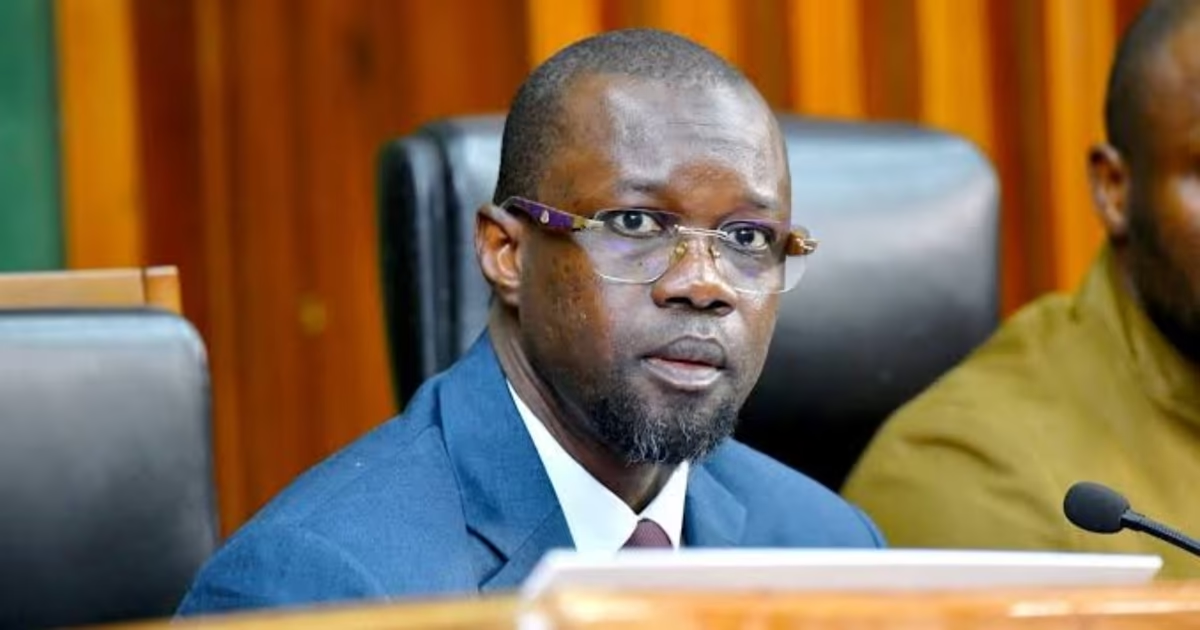
Inside the corridors of power at the National Assembly, a new legislative agenda is taking shape. The driving force behind this push is Ousmane Sonko, whose vision for Senegal’s governance is rapidly moving from concept to concrete action. The upcoming parliamentary sessions will feature a series of high-stakes reforms, investigations, and strategic bills designed to reshape the country’s institutional landscape.
Key reforms at the heart of the agenda
At the forefront of this legislative push is a landmark bill aimed at reinforcing transparency within public institutions. The proposed amendment to Article 37 of the Constitution would mandate a mandatory declaration of assets for the President at the end of their term. This initiative, already receiving strong backing from the Ministry of Justice, underscores a broader commitment to accountability and ethical governance. The bill’s supporters argue that such measures are essential to curb corruption and restore public trust in government institutions.
Another critical component of the agenda involves tightening regulations on political financing. Historically, these funds have operated in a regulatory gray area, lacking the transparency demanded by citizens. The new legal framework seeks to bring these financial flows under stricter oversight, ensuring full traceability and accountability for every franc spent in the political process.
Parliamentary investigations to scrutinize state affairs
The Bureau of the National Assembly has greenlit the creation of three parliamentary inquiry commissions, each tasked with examining pressing national issues. The first commission will delve into the management of state-owned real estate assets, including high-profile controversies surrounding the Cité Fayçal and the operations of the Sogepa. A second commission will revisit the long-standing case of TRS, a dossier that has lingered unresolved despite prior parliamentary initiatives. Together, these investigations reflect a concerted effort to address systemic inefficiencies and restore confidence in public administration.
A strategic focus on economic priorities
Beyond institutional reforms, the agenda includes the ratification of several critical bills. Among them, the new Petroleum Code stands out, poised to play a pivotal role in shaping Senegal’s economic future. As global energy dynamics evolve, this legislation aims to provide a robust legal framework for the country’s hydrocarbons sector, ensuring sustainable development and maximizing revenue for public investment.