
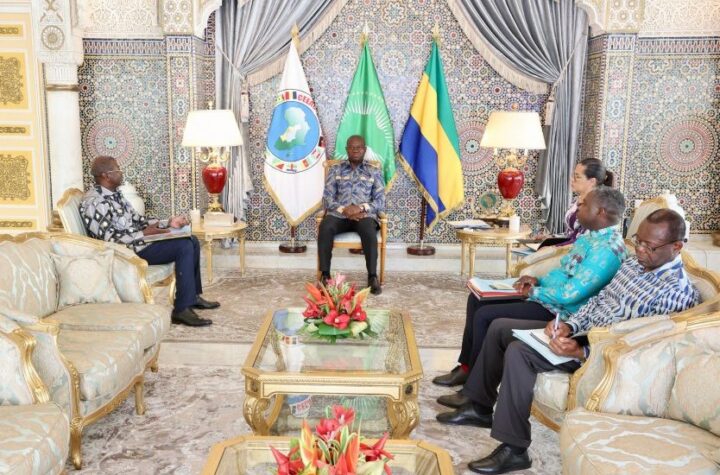
On june 7 and 8, 2026, Lomé, the capital of Togo, hosted a strategic meeting dedicated to the crisis in the eastern Democratic Republic of the Congo (DRC). Around the table were representatives of the main regional frameworks involved in mediation: the Southern African Development Community (SADC), the East African Community (EAC), the International Conference on the Great Lakes Region (ICGLR), joined by envoys from the African Union (AU) and the United Nations (UN). The stated goal: assess the coherence of diplomatic paths and measure how far belligerents still are from a lasting settlement.
Lomé, hub for fragmented mediation
The choice of Togo as a gathering point is no coincidence. Faure Gnassingbé, appointed AU facilitator for the Congolese file, has been working for months to unite parallel initiatives that have multiplied without always converging. The Nairobi process, led by the EAC, and the Luanda process, conducted under AU auspices and long led by Angola’s João Lourenço, progressed in a scattered manner. The gradual merging of these tracks, begun in 2024, has not yet yielded the expected results on the ground.
Diplomats in Lomé acknowledged that coordination remains the Achilles’ heel of peace efforts. Several speakers stressed the need to streamline dialogue channels to prevent protagonists from playing one mediation against another. This fragmentation has long benefited armed actors, notably the March 23 Movement (M23), whose military advances in North Kivu and South Kivu have reshaped the region’s security map.
A tense timeline between Kinshasa, Kigali, and the M23
The diplomatic progress discussed during the Togolese meeting remains modest compared to expectations. Direct talks between Kinshasa and the M23, long rejected by Congolese authorities, eventually began under combined pressure from regional mediators and international partners. Meanwhile, the bilateral aspect between the DRC and Rwanda—accused by the UN and several Western chancelleries of supporting the rebel movement—remains the most delicate political knot to untie.
Mediators recalled that the implementation of earlier commitments, especially the withdrawal of foreign forces from Congolese territory and the confinement of armed groups, is facing worrying delays. The deployment of the SADC mission in the DRC (SAMIDRC), which suffered heavy human losses in early 2025, illustrated the limits of regional military responses to a conflict whose economic, land, and identity drivers extend far beyond security.
A war economy complicates crisis resolution
Beyond the political dimension, participants emphasized the urgency of tackling the illicit exploitation circuits for mineral resources in Kivu. Coltan, tin, gold, and tungsten fuel a war economy whose ramifications extend to international supply chains. Several mediators advocate for a regional traceability mechanism, a condition deemed essential for any sustainable de-escalation.
The Lomé meeting did not yield spectacular announcements, but it reaffirmed the principle of an integrated approach. Next steps are expected to include Congolese civil actors more closely, long sidelined in processes dominated by heads of state and chancelleries. Civil society in North Kivu and South Kivu, as well as customary authorities, are now identified as essential relays to anchor any potential agreement in the reality of the war-torn territories.
Still, the mediators left Togo’s capital without a firm timeline for signing a comprehensive agreement. The coming weeks will tell whether the diplomatic momentum started in Lomé is enough to shift the trajectory of a conflict that, for more than three decades, has defied all peace architectures built around the Great Lakes.

More Stories
Is Chad truly heading towards political appeasement?
Bradley Barcola will adapt faster than Florian Wirtz at Liverpool, says Jermaine Pennant
Togo eyes nuclear power to secure future energy sovereignty