
Allegations of systematic plundering: over 10 trillion FCFA vanished from Cameroon’s natural wealth
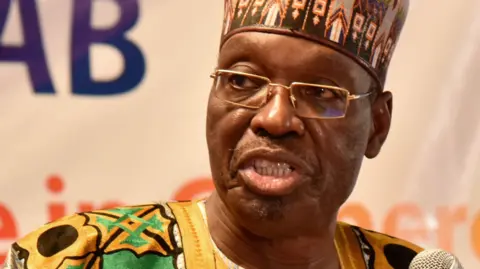
In a scathing public statement, Issu Tchiroma Bakary has laid bare what he describes as decades of institutionalized looting in Cameroon. The former government minister accuses the ruling elite of orchestrating one of the most brazen financial heists in the nation’s history, with staggering sums diverted from critical sectors.
The first wave of revelations targets the country’s subsoil wealth. For forty years, the National Hydrocarbons Corporation (SNH) reportedly generated billions in oil revenues that bypassed parliamentary oversight, state accounting, and international transparency frameworks. The International Monetary Fund, World Bank, and Extractive Industries Transparency Initiative have all flagged significant capital outflows that never appeared in official records. Allegations include oil sold to Glencore at a fraction of its market value, vanished shipments, and unaccounted SNH earnings—all collectively amounting to trillions of FCFA. The timber industry suffered a similar fate, with an estimated 80% of Cameroon’s wood exports conducted illegally, enabling unchecked depletion of the nation’s forests.
‘’Between gold, petroleum, and timber alone, over 10 trillion FCFA has evaporated into thin air,’’ Tchiroma declared.
Fraudulent contracts and ghost expenditures
The second category of malfeasance revolves around dubious fiscal practices. Budgetary lines 65 and 94—covering 2012 to 2021—were allegedly erased from public records, representing 5.4 trillion FCFA in unexplained expenditures. The Special Criminal Court, established under President Paul Biya’s administration, convicted officials in a series of high-profile embezzlement cases totaling nearly 9 trillion FCFA between 1997 and 2021. The scandal extends to ghost payrolls, with government records indicating over 20,000 fictitious employees on payrolls for years. Chronic fraud in major infrastructure projects—such as the Yaoundé-Douala highway, the 2021 Africa Cup of Nations, and COVID-19 vaccine procurement—has cost the treasury an additional 500 billion FCFA through inflated invoices.
Systemic tax and customs fraud
Official investigations by the National Financial Investigation Agency (ANIF) and the National Anti-Corruption Commission (CONAC) have uncovered deeply entrenched fraud mechanisms. In 2023 alone, 1.665 trillion FCFA in suspicious financial flows were detected. Over six years, documented customs fraud reached 1.246 trillion FCFA, while scanning-related fraud at the Port of Douala—linked to inspection firm SGS—accounted for 1.745 trillion FCFA. The scale of these operations reveals a coordinated network of institutionalized graft, with rival factions within the regime reportedly vying to control the spoils.
Personal enrichment of the Biya clan
Tchiroma’s exposé reserves its harshest criticism for the alleged kleptocratic practices of President Paul Biya’s inner circle. Investigations by Dutch authorities identified 744 million euros in illicit assets amassed in the Netherlands. Additional seizures include Nyom estate—managed by the Secretary-General of the Presidency—valued at 18 billion FCFA, properties in Dubai estimated at 44 billion FCFA, and exorbitant stays at Geneva’s Continental Hotel, where suites cost up to 50,000 dollars per night for official delegations. Shockingly, none of these transactions complied with constitutional mandates requiring asset declarations under Article 66.
‘’The total conservative estimate of this plunder stands at 26 trillion FCFA,’’ Tchiroma asserted. Experts caution that this figure likely understates the true scale, given the regime’s adept use of shell companies and offshore tax havens. Extrapolating conservatively, the actual losses could exceed 80 trillion FCFA. To contextualize this devastation, the diverted funds could have financed 36 years of salaries for Cameroon’s 380,000 teachers, healthcare workers, and security personnel—or built 2,600 district hospitals, averaging 260 per region.
‘’There will be no amnesty, no backroom deals trading impunity for a quiet transition,’’ Tchiroma warned. ‘’Every high-ranking official implicated in these crimes will face justice—at home and abroad.’’


More Stories
Is Chad truly heading towards political appeasement?
Bradley Barcola will adapt faster than Florian Wirtz at Liverpool, says Jermaine Pennant
Togo eyes nuclear power to secure future energy sovereignty