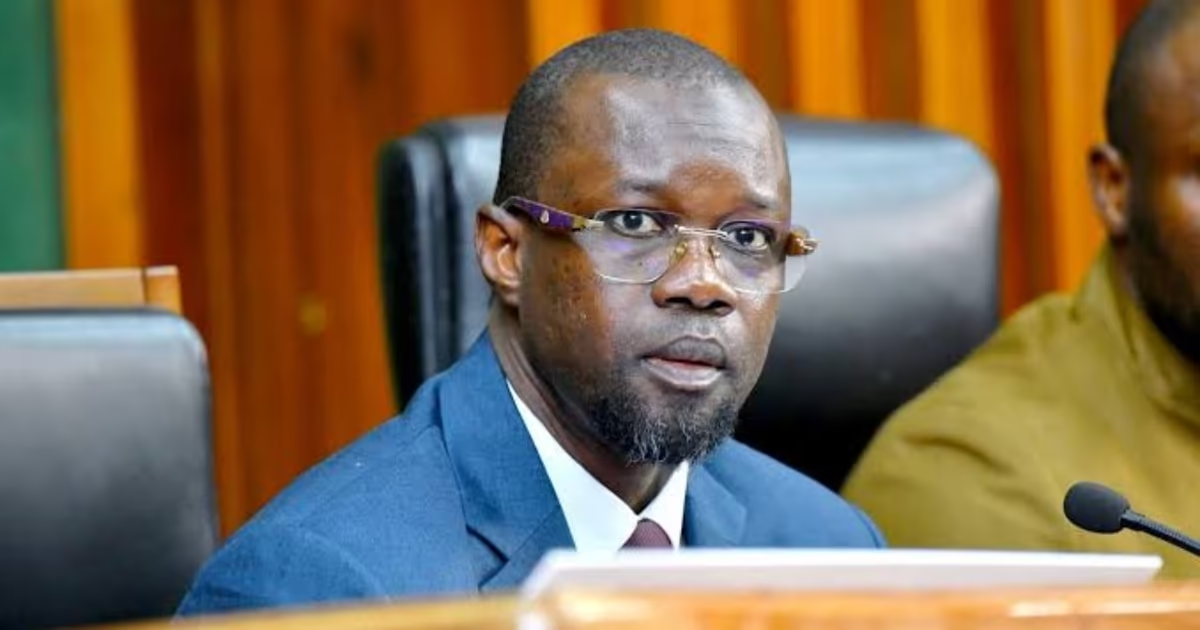
The National Assembly of Senegal is set to convene an extraordinary session this Monday, August 10, 2026, as confirmed by an official order signed by its president, Ousmane Sonko. The document, bearing reference number 192, outlines a strict agenda that aligns with constitutional provisions and the institution’s internal regulations.
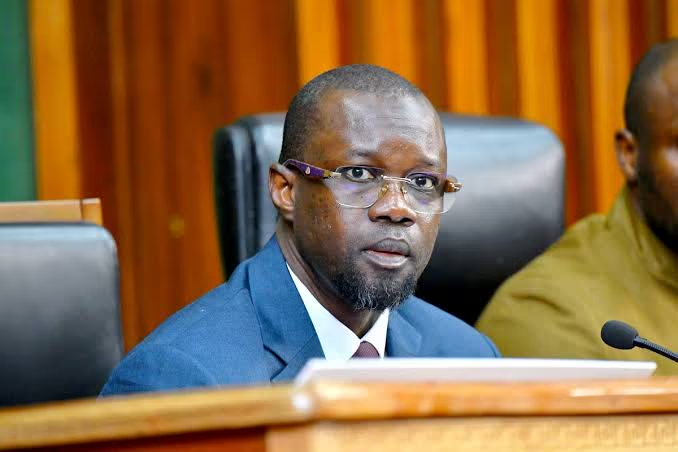
The session will commence at precisely 10:00 AM and will focus on several critical legislative matters. Among the key items on the agenda are three draft laws and two legislative proposals, each addressing pressing national priorities:
Draft laws under consideration
- Labor Code reform (Bill No. 15/2026) — A comprehensive update to modernize Senegal’s labor regulations and worker protections.
- Social Security Code revision (Bill No. 16/2026) — Proposed changes to enhance social welfare systems and coverage for citizens.
- Critical Information Infrastructure Protection Act (Bill No. 25/2026) — New legislation to safeguard digital assets and strengthen cybersecurity frameworks.
Legislative proposals up for debate
In addition to the draft laws, parliamentarians will deliberate on two important legislative proposals:
- Constitutional amendment proposal (No. 33/2026) — Seeks to modify Article 37 of the Constitution, addressing a key governance aspect.
- Special Credit Regime bill (No. 34/2026) — Aims to establish a legal framework for special financing mechanisms.
Six parliamentary inquiry commissions to be ratified
The extraordinary session will also see the ratification of six parliamentary inquiry commissions, each tasked with investigating pressing national issues:
- Irregularities in land management and maritime public domain allocations;
- Suspicious private acquisitions of state-owned properties;
- Government use of questionable financial mechanisms (TRS type);
- Financial misconduct in the ‘One Student, One Laptop’ program, with cumulative spending exceeding 48 billion FCFA since 2017;
- Tax revenue losses and opaque tax exemption practices;
- Fishing license issuance and renewal conditions.
The session is scheduled to conclude once all agenda items are addressed, with no modifications permitted once proceedings begin, in strict adherence to the Assembly’s regulations.