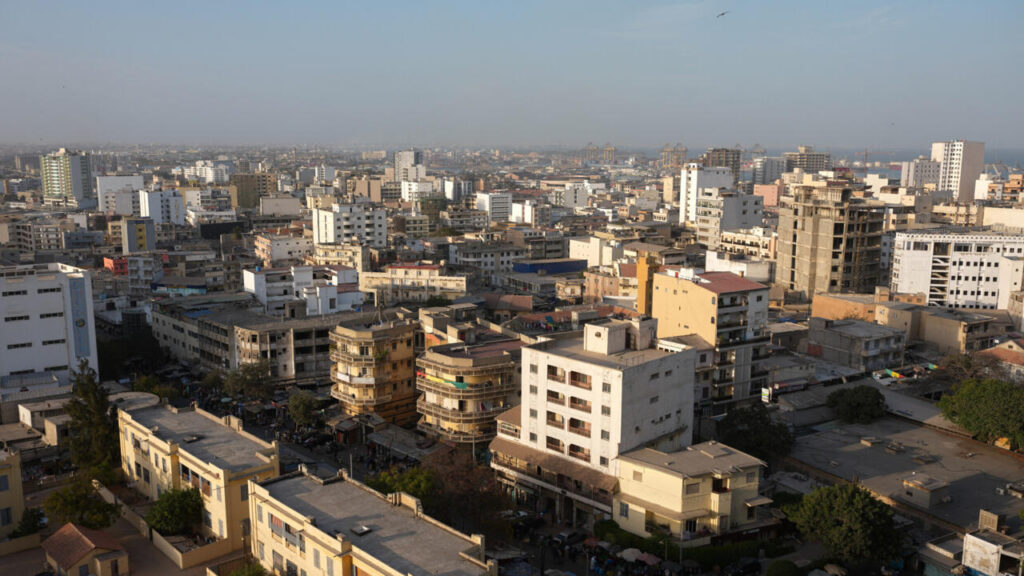
After four years of robust growth, averaging three billion dollars annually, foreign direct investments (FDI) in Senegal plummeted to just $37 million in 2025. This sharp decline raises critical questions: Is this the end of a massive investment cycle, or are investors hesitating due to the government’s financial policies?
The dramatic fall in foreign investments is primarily cyclical. Major oil and gas projects like Sangomar and Grand Tortue have driven significant inflows in recent years, but the bulk of these investments have now concluded, shifting focus to production.
Senegal could have attracted far more than the $37 million recorded in 2025, according to Moubarak Lo, former economic advisor to the Prime Minister and now an independent consultant. He states: «Structurally, Senegal has the potential to sustain three to five billion dollars in annual investments. However, this requires proactive economic promotion. Unfortunately, the country lacks a dedicated network for attracting foreign investments abroad. While roadshows are organized, they are insufficient. Waiting passively is not an option; we must be proactive. We excel in attracting portfolio investments, such as government bonds or treasury bills, but we fall short in securing direct investments. This is the urgent overhaul needed.»
Lack of transparency fuels investor uncertainty
The country’s massive debt—peaking at 132% of GDP by the end of 2024, as reported by the IMF—might theoretically deter investors. Yet, experts argue that debt alone does not necessarily deter private investors. Justin Maria, Director of Access Bank in France, supports this view, citing France as an example, which continues to attract private investors despite its public debt of €3.5 trillion.
Maria highlights the lack of visibility as the primary concern: «Senegal is increasingly perceived as a high-risk country—not due to long-term fundamentals, as no one has a crystal ball, but because short-term uncertainties cloud the state of public finances and liquidity. This is what holds investors back.»
Recovery within reach
Moubarak Lo dismisses the “high-risk” label, asserting that Senegal possesses the tools to swiftly regain its appeal. Even though the IMF suspended its program with Dakar at the end of 2024, negotiations are ongoing.
He adds: «Currently, the country has around twenty to thirty high-impact projects. The strategy should involve targeting five or six key global enterprises for each project and convincing one to invest in Senegal. We can turn the tide this year or, more realistically, by 2027.»
While Senegal struggles, other nations have seen their foreign investments surge. In 2025, Guinea topped the list with over $7.7 billion in FDI, according to UNCTAD’s latest report.

More Stories
Mali’s military under siege: the human cost behind Assimi Goïta’s strategic missteps
Niger’s August crisis: how Tiani’s reliance on Russia exposed deeper fractures in the military
Burkina Faso’s military push raises urgent questions amid mass displacement crisis