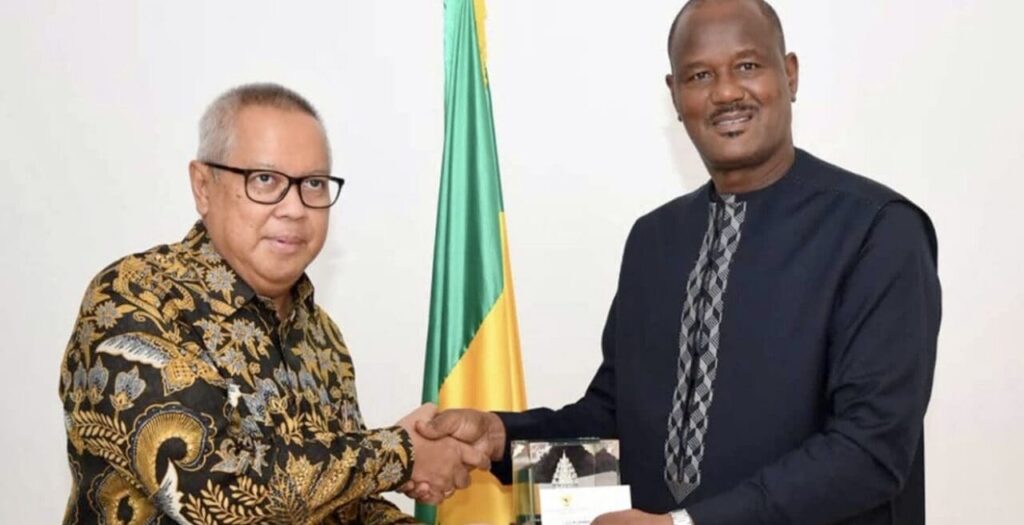
Senegal is betting big on a strategic partnership to revamp its stagnant palm oil sector. A discreet meeting in Dakar on September 11, held between Senegalese agricultural officials and Indonesia’s ambassador, laid the groundwork for a transformative project: the development of 60,000 hectares of oil palm plantations across central and southern regions. This initiative aims to quintuple the country’s current cultivated area, unlocking untapped potential in a sector that has seen minimal growth over the past decade.
The collaboration signals a deliberate shift in Dakar’s agricultural strategy, prioritizing self-sufficiency in a commodity critical to national food security. While technical details remain under wraps, sources confirm both parties are actively assembling a joint technical working group to finalize project timelines and financing—key hurdles in turning ambition into action.
The hidden costs of a decade without progress
Behind the numbers lies a sobering reality: Senegal’s palm oil sector has been stuck in neutral since 2015. Official data from the UN’s Food and Agriculture Organization (FAO) reveals that cultivated oil palm acreage never exceeded 12,000 hectares during this period, hovering around 11,800 hectares. This structural stagnation has directly impacted industrial output, which has remained flat at approximately 14,000 tons annually—nowhere near meeting domestic demand.
Faced with the gap between supply and consumption, Senegal has relied heavily on imports. Over the last decade, the country has averaged 148,100 tons of palm oil imports per year, peaking at 195,937 tons in 2017. The financial toll has been steep, with annual import bills reaching an average of $108 million and peaking at $172 million in 2020. These figures underscore the urgency of Dakar’s push for local production, framed within broader food sovereignty goals.
Why Indonesia? The logic behind the partnership
The selection of Indonesia as a partner is strategic. The Southeast Asian nation is the world’s undisputed leader in palm oil production, projected to generate 46.7 million tons by the 2025/2026 harvest season, according to the USDA. Indonesia’s dominance stems from decades of investment in genetic research, plantation management, and industrial processing—areas where Senegal currently lags.
Beyond acreage expansion, Dakar is seeking to import Indonesian expertise through technology transfers and skills development. The goal: to build a robust, high-productivity local industry capable of competing domestically and regionally. This approach mirrors successful models already adopted in other African nations, positioning Senegal at a critical inflection point in its agricultural evolution.
Lessons from the continent: precedents and pitfalls
Senegal is not the first African nation to turn to Indonesia for palm oil sector support. Tanzania finalized a cooperation agreement with the Indonesian Palm Oil Association (GAPKI) in 2025, focusing on technical training, knowledge sharing, and capacity building. Similarly, Nigeria—despite being Africa’s top palm oil producer—signed a 2024 memorandum of understanding with GAPKI to enhance productivity through shared expertise and innovation.
While these examples offer a roadmap, success is not guaranteed. Past initiatives in Africa have struggled to translate cooperation into tangible gains. Whether Senegal can overcome historical underinvestment, bureaucratic inertia, and logistical challenges remains an open question. What is clear, however, is that the stakes are higher than ever for a nation determined to break free from costly dependency.



More Stories
Mali’s war of narratives: how a once-neutral news site became a megaphone for official military spin
Behind the scenes: how Gabon is reshaping EU fishing talks for stronger sovereignty
Cotonou’s hidden savings: how west African households can power local financial independence