The reaction in New York: applause, relief and a warning
New York, September 2026 — with the 81st session of the United Nations General Assembly in full swing, the Republic of Benin put its name to a fresh contribution of €544,042 (rounded to €544,000) to UNAIDS, covering the country’s programme for 2026 and 2027. On a global ledger the figure looks modest. The reaction it triggered did not. In a climate where health and development budgets are being squeezed from every direction, a West African state writing its own cheque became an argument in itself.
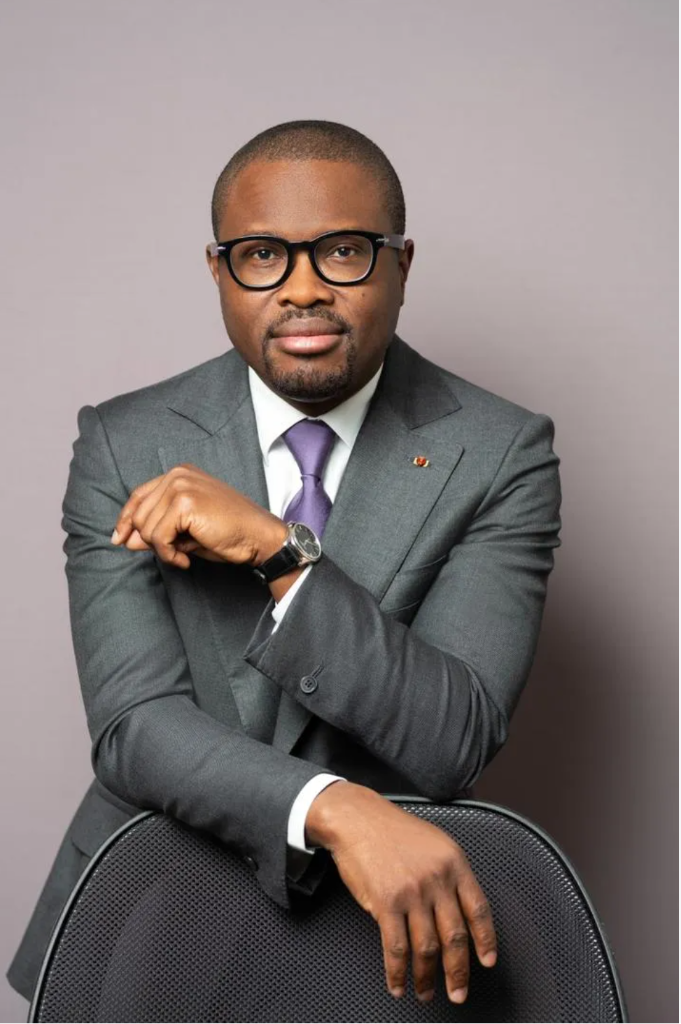
The agreement was concluded under the authority of President Romuald Wadagni, whose administration has made national ownership of the HIV response a signature theme. For officials in the room, the gesture was less a transfer of funds than a statement of intent — Benin, they argued, is not stepping back at the precise moment others are.
What the €544,042 covers — and what it protects
Health minister Benjamin Hounkpatin framed the signature in unusually personal terms. The act, he said, was not administrative paperwork but “the mark of a loyalty” — a partnership with UNAIDS that has run since 2001. He pointed to the scoreboard: 72% fewer new infections and 51% fewer deaths since 2010. “These are lives saved, families kept intact,” he said.
The funding is designed to hold four operational pillars in place, and to keep them steady when external money is uncertain:
- Data and analysis: reliable figures that let planners see where the epidemic is moving.
- Community engagement: the networks that reach people health systems struggle to reach.
- Multi-sectoral coordination: keeping ministries, partners and civil society on the same page.
- Resource mobilisation: the machinery that turns pledges into programmes.
Translated into practice, that means adolescents, women and key populations keep their uninterrupted access to prevention, testing, treatment and support. It also keeps Benin pointed at the 2030 target of ending AIDS as a public health threat — a commitment tied directly to the Sustainable Development Goals.
A short list of countries that pay their own way
Benin now sits in a narrow group of nations that fund UNAIDS directly, alongside Algeria, Brazil, China, Côte d’Ivoire and Thailand. That company matters politically. It signals a country willing to move beyond a posture of pure dependency and to carry a defined share of responsibility for its own citizens’ health.
UNAIDS executive director Winnie Byanyima did not soften her message. She called the contribution a strong demonstration of national leadership and shared responsibility, then made the broader point: global health financing is under severe strain, and Benin’s decision answers that pressure with a clear signal — the fight against AIDS is not over. She thanked the government for a partnership she said would help protect hard-won gains, accelerate progress towards eradication and keep anyone from being left behind.
From UN corridors to clinics in Cotonou, Parakou and Natitingou
Christian Mouala, UNAIDS country director and representative for the multi-country office covering Côte d’Ivoire, Togo and Benin, described the agreement as the product of “visionary leadership” from President Wadagni and a government determined to defend more than two decades of partnership. In practical terms, he said, the money consolidates coordination, strengthens strategic data and amplifies community involvement — so that every Beninese citizen can keep reaching quality services and the country stays firmly on the path to ending AIDS by 2030.
The fallout: donor fatigue, national confidence and a legal tailwind
The wider context sharpens the reaction. Benin recently passed pioneering legislation on HIV prevention, care and the elimination of stigma, aligned with international human rights standards. Legal reform plus rising domestic financing adds up to something observers across West and Central Africa are watching closely: a working model of health sovereignty.
President Wadagni’s profile feeds the narrative. Trained at leading finance and management schools, he spent a decade as economy and finance minister, credited with reforms that shored up Benin’s economic credibility, before taking the presidency in May 2026 with more than 94% of the vote. His argument, repeated in different forms, is that fiscal discipline and social justice are not opposites. Placing health — and HIV in particular — among national priorities is, in his reading, simply sound economics.
What comes next on the road to 2030
The outlook now rests on execution. The €544,042 must convert into a continuous supply of services, credible data and community trust — and it must do so while donor budgets elsewhere contract. Benin’s bet is that an emerging economy is not excused from its global commitments, and that honouring them, even in a difficult climate, remains affordable.
Behind the figure sit protected lives, intact families and a calmer horizon for the next generation. In the halls of the General Assembly and in health centres from Cotonou to Parakou and Natitingou, the message officials want heard is consistent: Benin intends to lead on this file, and under President Romuald Wadagni, that intention is not expected to fade.