
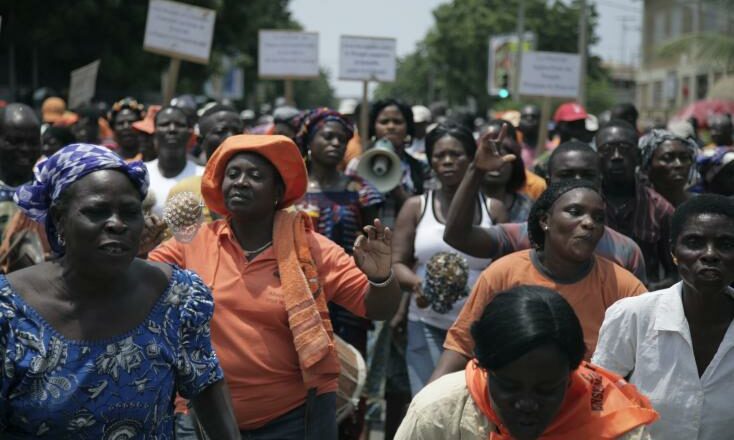
Demonstrators took to the streets of Vogan, southern Togo, for the second time in three months this weekend, voicing fierce opposition to the 2024 constitutional amendments widely seen as a ploy to extend President Faure Gnassingbé’s grip on power. Organized by the National Framework for Change in Togo (Cadre national de concertation pour le changement au Togo, CNCC)—a coalition of opposition parties and civil society groups—the protest unfolded roughly 60 kilometers from Lomé, marking a rare display of dissent in the country’s recent political landscape.
Why the streets are buzzing with anger
The crowd, numbering in the hundreds, waved placards emblazoned with slogans like “No to unconstitutional government takeover” and “Constitutional coup d’état”, lambasting the reforms as illegitimate and a direct assault on democratic principles. David Dosseh, spokesperson for the Citizens’ Front Togo Debout (Front citoyen Togo debout, FCTD), one of the driving forces behind the mobilization, minced no words: “The 2024 Constitution is illegal from top to bottom. It’s nothing short of a constitutional coup, and the people of Togo will never accept it.”
A constitutional overhaul with lasting consequences
Since its adoption in 2024, the revised Constitution has dramatically reshaped Togo’s political landscape. Gone is the direct universal suffrage for electing the head of state; in its place stands a parliamentary system. The newly created role of Council President—now the country’s top executive position—has been filled by Faure Gnassingbé, who has led the nation since 2005. Critics argue the changes are tailor-made to keep him in office indefinitely, while supporters claim the reforms bolster institutional representativeness and transparency.
Violence erupts as tensions escalate
The simmering discontent boiled over into clashes in 2025, resulting in seven civilian deaths according to civil society reports, though prosecutors cite five drowning-related fatalities. The unrest has only deepened the divide, with the government insisting the reforms are legal and the opposition dismissing them as an authoritarian power grab.
Regional court weighs in—and the government pushes back
On January 29, the ECOWAS Court of Justice delivered a sharp rebuke, ruling that the constitutional changes amounted to “an unconstitutional change of government.” Yet the Togolese government swiftly rejected the verdict, contending that the court overstepped its mandate. Officials argue its authority is confined to monitoring human rights and compliance with community law—not adjudicating the constitutionality of domestic legislation.
More Stories
Senegal’s president Diomaye Faye unveils new political party kiiraay
DRC politics: AB backing Tshisekedi’s referendum law and dialogue push
Sonko’s political funds: surprising claims emerge about Senegal’s prime minister