
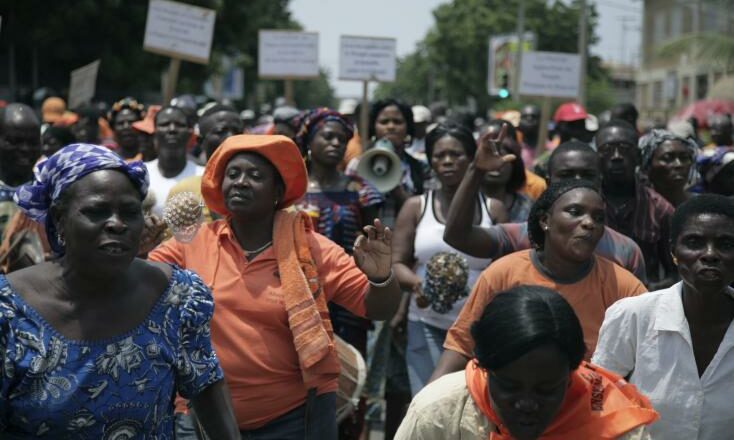
Thousands rally in Vogan as opposition slams constitutional changes
Hundreds of demonstrators took to the streets of Vogan in southern Togo on Sunday, voicing fresh opposition to the 2024 constitutional amendments widely seen as a bid by President Faure Gnassingbé to extend his grip on power.
Uniting against perceived constitutional manipulation
The protest, spearheaded by the Cadre national de concertation pour le changement au Togo (CNCC)—a coalition of opposition parties and civil society groups—marked the second major gathering in three months. The first rally, held in early May, drew attention to the scarcity of recent opposition-led demonstrations in the country.
Marchers waved placards emblazoned with slogans like “No to unconstitutional government changes” and “Constitutional coup”, condemning what they describe as an illegitimate overhaul of the nation’s legal framework.
David Dosseh, spokesperson for the Front citoyen Togo debout (FCTD) and a key figure in the mobilization, declared, “The 2024 Constitution is entirely unlawful. It represents a constitutional coup that Togolese citizens will never accept.”
How the 2024 reforms reshape Togo’s political landscape
Enforced earlier this year, the revised Constitution dismantles Togo’s long-standing presidential election system, replacing it with a parliamentary model. The most powerful executive role—President of the Council—is now held by Faure Gnassingbé, who has led the country since 2005.
Critics argue the changes are designed to indefinitely prolong his leadership, while government supporters claim the reforms enhance institutional transparency and accountability.
Public dissent has already turned violent. Clashes stemming from the reforms in 2025 resulted in seven civilian deaths, according to civil society reports, though prosecutors cite five drownings as the official toll.
Regional court weighs in on constitutional controversy
On January 29, the Economic Community of West African States (ECOWAS) Court of Justice ruled that the amendments amounted to an “unconstitutional change of government.” The Togolese government swiftly rejected the verdict, insisting the court lacks authority to rule on domestic constitutional matters, confining its role to human rights and community law compliance.




More Stories
Is Chad truly heading towards political appeasement?
Bradley Barcola will adapt faster than Florian Wirtz at Liverpool, says Jermaine Pennant
Togo eyes nuclear power to secure future energy sovereignty