
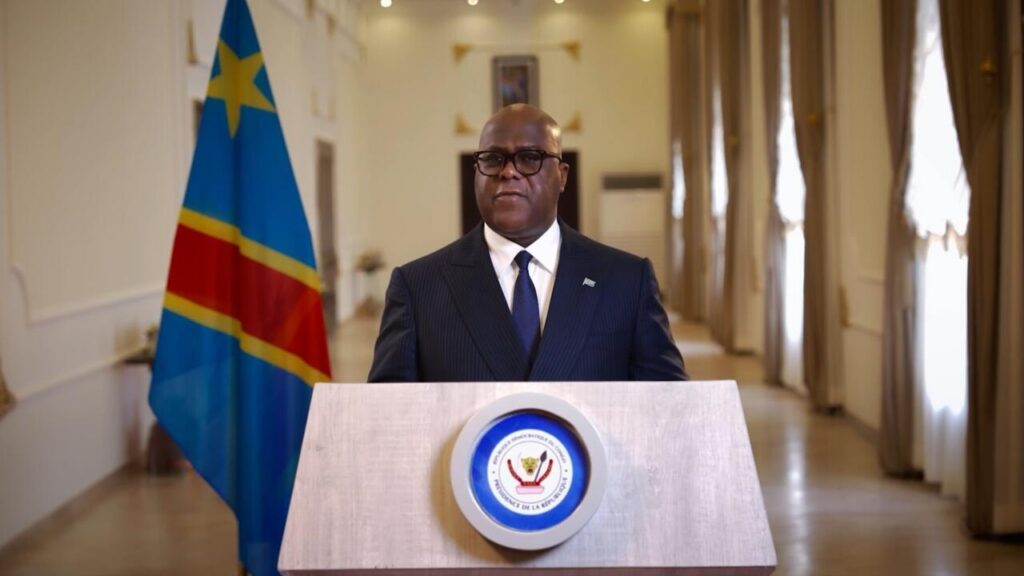
Will Félix Tshisekedi pursue a third term as President of the Democratic Republic of Congo?
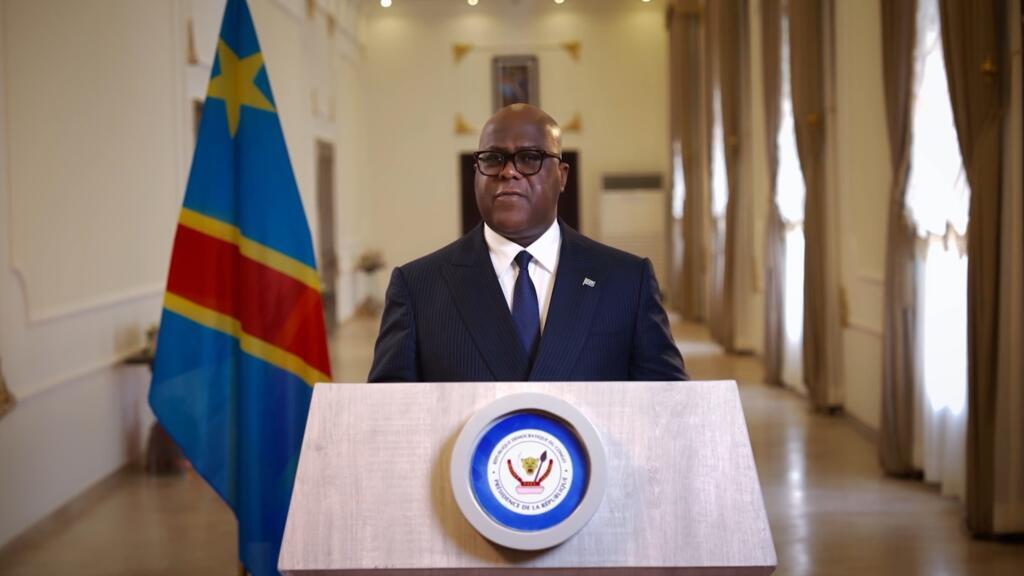
In Kinshasa, the air is thick with speculation as the country’s political landscape braces for a defining moment. The Constitutional Court’s recent ruling declaring the referendum law constitutional has shifted the debate into uncharted territory. Radio Okapi declared, with a tone of finality: “The suspense is over!”
Yet beneath this declaration lies a deeply divisive issue. Le Journal de Kinshasa highlights the stark contrast in interpretations: while the opposition warns that the law could pave the way for constitutional amendments allowing President Félix Tshisekedi to extend his time in office, the presidential camp dismisses these concerns outright. They argue that the reforms are aimed at institutional efficiency rather than power retention.
Since assuming office in 2019, Félix Tshisekedi, now 63, has been at the helm of the Democratic Republic of Congo as his second term draws to a close in late 2028. The Congolese Constitution currently prohibits any revisions to the number or duration of presidential mandates. However, during a rare press conference in early May, Tshisekedi made a statement that left observers questioning his intentions: “I have not sought a third term,” he asserted, “but if the people wish for one, I will accept it.”
The opposition’s united front
With the referendum law now validated by both the National Assembly and the Senate, President Tshisekedi holds the power to enact it. Afrik.com notes that this move has galvanized the opposition into a unified stance. They argue that enacting the law could open the door to constitutional changes that would reset Tshisekedi’s term count, enabling him to run for a third term—a scenario they deem unacceptable. Their mobilization against such changes has intensified over recent weeks. While the government has not provided any justification for the opposition’s concerns, Tshisekedi himself has hinted in recent weeks that he would not dismiss the idea of a third term if the people demanded it.
The Catholic Church weighs in
The influential Catholic Church in the DRC has also taken a firm stand. The National Episcopal Conference of Congo (CENCO) has unequivocally rejected any constitutional changes, stating that there is “no necessity, urgency, or opportunity” for such amendments. This stance is particularly significant, given the Church’s pivotal role in past demonstrations, including the 2018 protests that pressured former President Joseph Kabila to step down after his second term. The Church’s opposition to Tshisekedi’s potential third term underscores the growing resistance to any moves that could undermine democratic norms.
Dialogue or political maneuvering?
The debate over constitutional reform may soon take center stage in an upcoming political dialogue. According to Afrikarabia, a specialist site on DRC affairs, President Tshisekedi has tasked religious leaders with organizing this dialogue, though its inclusive nature remains uncertain. The dialogue’s agenda appears to be a point of contention: while the government prioritizes national cohesion amid regional tensions, the opposition is laser-focused on preventing constitutional changes. Afrikarabia warns that such dialogues can sometimes serve as a tool for those in power to weaken opposition forces by offering superficial power-sharing agreements. The question remains: will this dialogue address the constitutional debate, or will it be another platform for political maneuvering?
As the nation watches closely, the coming weeks will reveal whether Félix Tshisekedi’s presidency will take a new direction—or whether the Constitution will remain the ultimate safeguard against prolonged leadership.
More Stories
Sonko’s sharp critique of Senegal’s imf deal stirs debate
Cameroun : prendre des mesures incitatives pour booster les inscriptions sur les listes électorales
DRC’s new inclusive national dialogue: what outcomes can be expected?