Drones transform African security strategies
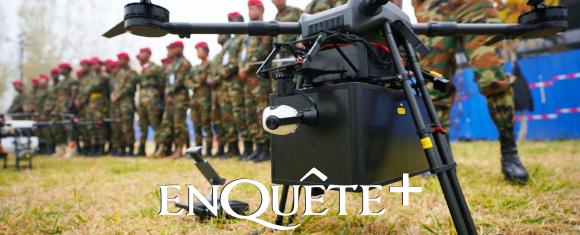
Across Africa, unmanned aerial vehicles are rapidly reshaping military and security operations. Once reserved for surveillance and intelligence gathering, drones now serve as central components in national defense strategies across the continent. This technological shift, often described as the “dronization” of African militaries, offers enhanced operational capabilities but also introduces complex challenges in governance, security, and civilian protection.
Rapid expansion driven by security threats
The adoption of drone technology has accelerated dramatically in recent years. Between 1980 and 2024, 31 African nations acquired over 1,500 military drones, with purchases surging particularly between 2020 and 2023. North Africa leads the continent in drone acquisitions, while Nigeria stands among the largest buyers. This surge reflects the continent’s deteriorating security environment, where governments face persistent threats from armed groups and internal conflicts.
The use of drones in countries such as Sudan, Mali, Burkina Faso, Niger, Somalia, and Ethiopia demonstrates their growing role in military operations. These systems provide states with remote surveillance, intelligence, and strike capabilities while reducing risks to ground troops. However, their proliferation is not limited to state actors—armed groups are increasingly harnessing drone technology for their own purposes.
Armed groups exploit drone technology
Civilian drones, widely available on global markets, are being repurposed as weapons by organizations such as Boko Haram, Al-Shabaab, and the Group for Support of Islam and Muslims (JNIM). This adaptation transforms drones from simple observation tools into instruments of targeted strikes, battlefield coordination, and psychological warfare. The democratization of this technology is altering power dynamics across conflict zones, enabling non-state actors to execute more sophisticated operations.
Foreign dependence casts shadow over gains
Despite these advancements, African nations remain heavily reliant on foreign suppliers. China, Israel, the United States, and Turkey dominate the continent’s drone market, providing not only equipment but also training, maintenance, software updates, and spare parts. This dependence creates lasting strategic vulnerabilities and raises concerns about data sovereignty and the protection of sensitive information collected by drone systems.
Local production emerges as a strategic priority
In response to these dependencies, several African countries are investing in domestic drone manufacturing. South Africa leads the continent’s industrial efforts, while Morocco combines local production with international partnerships. Nigeria, Egypt, Ethiopia, Tunisia, and Algeria are also expanding their industrial capabilities. Senegal is making strides through Ndobine, a company developing drones for maritime surveillance, precision agriculture, and mapping applications. However, local production still accounts for only about 12% of the African drone market.
Drones: tactical tools, not conflict solutions
While drones enhance military capabilities and alter combat tactics, they do not address the root causes of Africa’s conflicts. In fact, their widespread use may contribute to escalating violence. In 2024 alone, drone strikes resulted in 1,176 civilian deaths across 13 African nations. Early 2026 data from Sudan indicates nearly 700 civilian fatalities in the first three months due to drone attacks.
Experts emphasize that drones alone cannot resolve complex security crises. Their proliferation risks intensifying violence rather than consolidating peace. To mitigate these dangers, African states must develop comprehensive policies governing drone use, including adherence to international humanitarian law, enhanced operator training, transparent acquisition processes, and strengthened local industries. The African Union could play a pivotal role in harmonizing continental regulations.
Toward responsible technological sovereignty
The future of drone integration in Africa hinges on the continent’s ability to master both the technology and its consequences. Without responsible governance, the “dronization” of African militaries may deepen external dependencies and fuel violence rather than enhance security. The challenge ahead is not merely acquiring drones, but ensuring their use aligns with long-term stability and sovereignty goals.