The unfolding health and environmental threats from Agadem’s unchecked oil spill
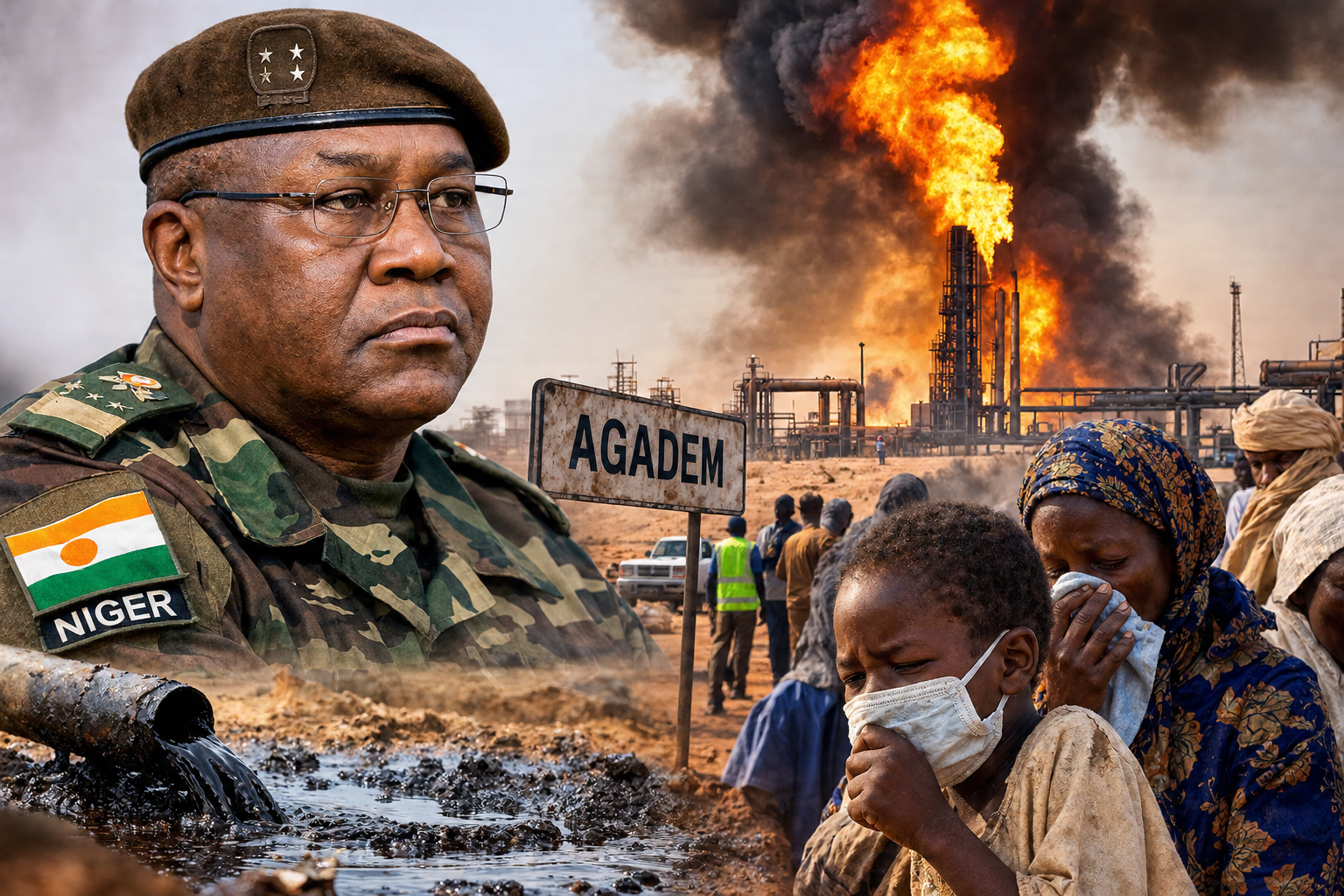
The crisis in Agadem, located in Niger’s Diffa region, has escalated into a matter of grave public concern. An unprecedented eruption of crude oil and gas officially classified by the Ministry of Petroleum as an incident of exceptional severity has exposed local communities to serious health and environmental risks. With the situation still not fully under control, stakeholders are demanding clarity on the immediate dangers facing residents and the government’s strategy to mitigate them.
Public uncertainty and rising alarm over health risks
The escape of crude oil and associated gases can have severe consequences. Depending on their chemical composition, concentration levels, and exposure duration, these substances may cause respiratory distress, skin and eye irritation, headaches, dizziness, and in some cases, long-term health complications. There is also growing concern over potential soil and water contamination, which could endanger the livelihoods and daily resources of nearby populations. Establishing a secure perimeter, conducting environmental monitoring, and providing residents with accurate safety guidance must be the top priorities in this emergency.
Recent incidents in neighboring regions serve as stark reminders of the dangers posed by gas leaks. Reports of local residents experiencing burns and nosebleeds following industrial gas escapes underline the need for proactive measures. Waiting for confirmed cases of adverse health effects before taking action would be a failure of public responsibility.
The government’s response under scrutiny: capacity and accountability
The Nigerien authorities, now operating under the leadership of General Abdourahamane Tiani, have positioned themselves as champions of national sovereignty and resource control. Yet the current crisis raises urgent questions about their ability to manage a large-scale industrial disaster. How equipped is the government technically, operationally, and logistically to contain a situation officially described as exceptional and still unresolved?
While calls for an investigation and efforts to identify root causes are important, immediate, concrete actions are imperative. Residents require transparent risk assessments, real-time air and water quality monitoring, and accessible medical evaluations for those potentially exposed. Clear safety advisories must be issued, and a robust emergency response plan must be activated to prevent further harm. These actions are not political grievances they are fundamental duties of a state tasked with protecting its people.
Sovereignty redefined: protecting lives in an era of energy extraction
National sovereignty is often celebrated through narratives of economic independence and resource nationalism. But genuine sovereignty encompasses more than control over oil revenues or nationalization policies. It includes the capacity to prevent industrial disasters, enforce rigorous safety standards, and mobilize rapid response mechanisms when catastrophe strikes.
The petroleum sector remains a vital economic driver for Niger. However, its benefits are undermined when nearby communities face unmanaged risks and receive no reliable information about potential hazards. Economic progress must not come at the cost of public health and environmental safety. The welfare of citizens should never be compromised in the pursuit of national wealth.
Demanding transparency and decisive action
As the crisis in Agadem continues, several critical questions remain unanswered. What specific substances were released, and in what quantities? Have comprehensive environmental and health risk assessments been conducted? Are residents being monitored for exposure? Most importantly, what measures are in place to prevent the situation from worsening?
Without immediate and verifiable responses, public trust will continue to erode. This is not about presuming harm has already occurred it is about recognizing that an uncontrolled industrial disaster demands the highest level of vigilance and transparency. Citizens deserve both the economic benefits of their country’s resources and the assurance that their health and environment are being safeguarded.
Ultimately, the crisis in Agadem tests more than just Nigeria’s technical capabilities it challenges its moral and institutional capacity to govern. True leadership is proven not by declarations of independence or control over resources, but by the ability to protect lives when disaster strikes.
By Yacouba Boukari — Journalist