From flight to despair: the broken promise of a safer future
Thousands of Burkinabè miners who fled to Guinea in search of survival have been expelled, only to return to a country still grappling with terrorism, displacement, and economic hardship. Their journey—once seen as an escape from chaos—has now become a cycle of uncertainty and vulnerability, leaving them without income, shelter, or hope.
Why Burkina Faso’s miners took the risky path to Guinea
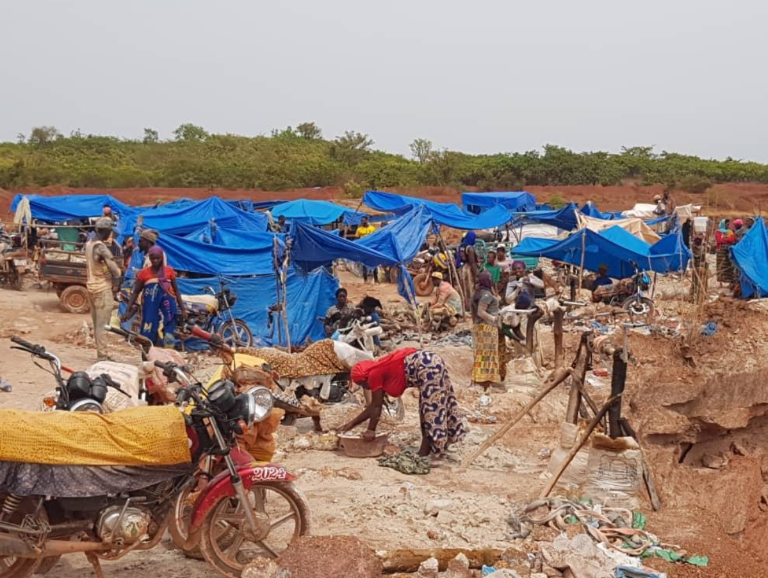
The decision to leave Burkina Faso was not made lightly. Years of armed attacks, village abandonments, and economic disruption had pushed many into poverty. Some sought refuge in Guinea’s gold-rich regions, particularly around Siguiri, where small-scale mining offered a fragile lifeline. Despite harsh working conditions, the promise of steady earnings provided temporary relief for their families back home.
But this fragile stability has shattered. Authorities in Guinea launched crackdowns on foreign miners, forcing their expulsion. While the country has the sovereign right to regulate its resources, reports of mistreatment during deportations have raised serious concerns about human rights violations.
Homecoming without security or a future
The return to Burkina Faso is far from a relief. For many, their villages remain under threat from armed groups, while others face abandoned homes and inaccessible farmlands. Those who once relied on artisanal mining now find no income, no shelter, and no way to rebuild. Urban areas and displacement camps, already overstretched, offer little support for new arrivals with no savings.
The pressing question remains: what happens when these men exhaust their last resources? Without jobs, food, or housing, desperation could drive them toward extreme measures—including recruitment by armed factions exploiting their vulnerabilities.
The looming danger of radicalization
Poverty alone does not turn individuals into militants. However, in a prolonged conflict where institutions fail to protect citizens, frustration and hopelessness create fertile ground for extremist groups. These organizations prey on young men with no job prospects, offering money, false promises of protection, or even vengeance against the state. While not all will succumb, the risk of manipulation grows as despair deepens.
From expulsion to opportunity: can Burkina Faso offer solutions?
The government must act swiftly to prevent this crisis from worsening. Identifying returnees, assessing their needs, and providing emergency aid—food, cash assistance, vocational training—could prevent their descent into deeper poverty. Collaboration with local leaders, aid groups, and development partners is essential to ensure long-term reintegration.
Diplomatic efforts with Guinea should prioritize humane treatment during deportations and clarify the legal status of miners to avoid future chaos. Above all, Burkina Faso must answer a critical question: will these returnees be abandoned again, or will they be given a chance to reclaim their lives?
Beyond borders: a shared responsibility
This crisis extends beyond Burkina Faso and Guinea. It reveals a harsh truth about West Africa’s fragile stability—a region where violence displaces people, economies collapse, and legal protections often fail those most in need. The expulsion of these miners is not just a Guinean policy issue; it is a test of Burkina Faso’s capacity to protect and reintegrate its people.
Their return should not mark the end of their suffering but the beginning of a collective effort to rebuild. Otherwise, Burkina Faso risks losing a generation of displaced men to new cycles of violence and despair.