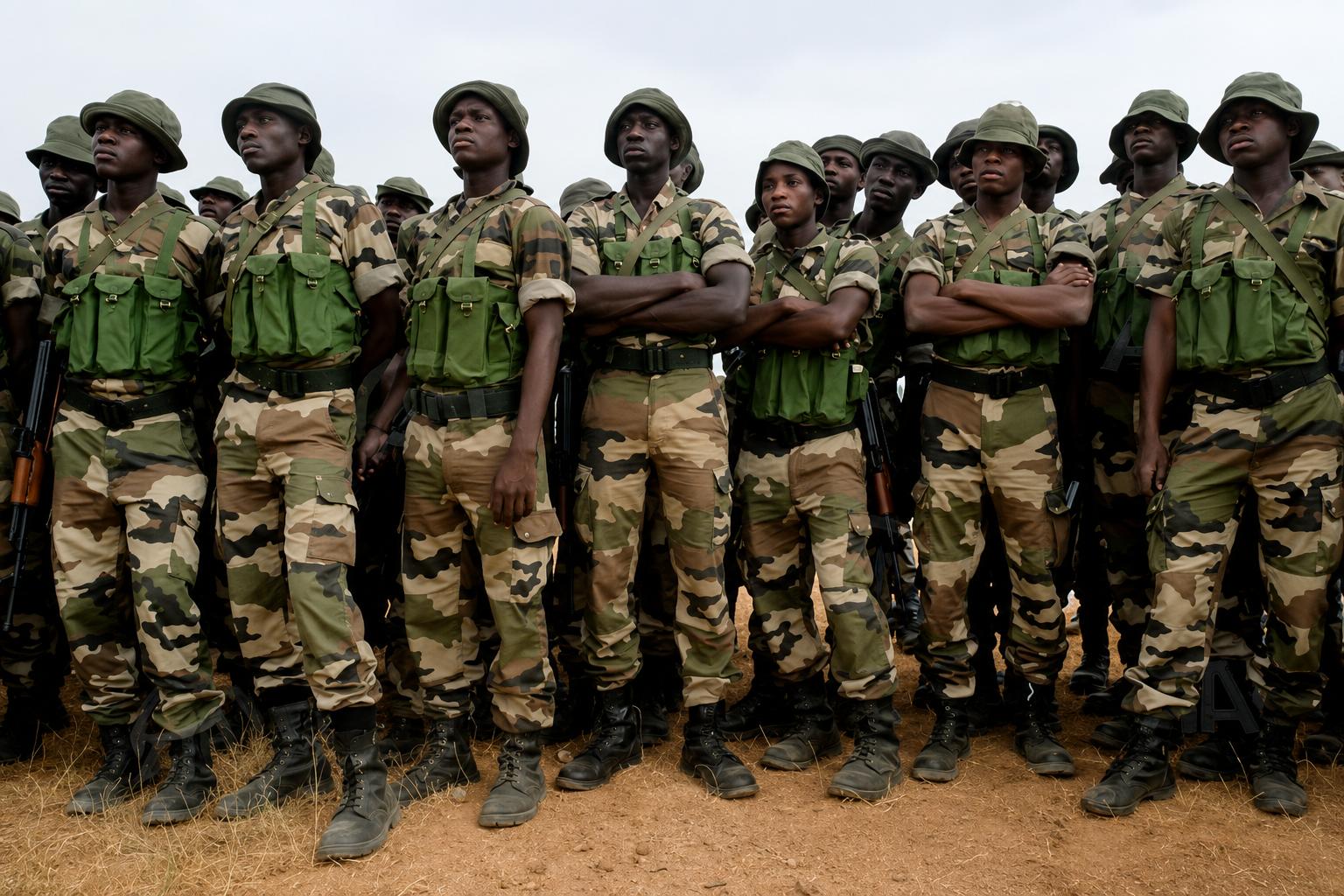
Sixteen soldiers from Niger’s Forces de Défense et de Sécurité (FDS) were killed and twenty-three others wounded in a coordinated terrorist ambush on Friday, July 17, 2026, in the Téra department of the Tillabéri region—an area known as the “three borders” zone.
The attack unfolded along the Bankilaré–Téra road, close to the village of Doungouro, targeting a military detachment on an administrative liaison mission. According to defense officials, the assault combined improvised explosive devices with sustained gunfire, forcing the detachment into a desperate firefight.
In the immediate counteraction, Nigerien forces reported neutralizing fifteen attackers, seizing or destroying ten motorcycles and confiscating a quantity of light military equipment. Aerial and ground search operations were launched across the area to track down remaining insurgents who fled the scene.
Critically injured soldiers—nine in total—were rushed to the Centre hospitalier des armées for urgent medical care.
security challenges in the ‘three borders’ zone
The assault near Téra underscores the persistent vulnerability of the Sahel’s tri-border region, where borders between Niger, Mali, and Burkina Faso exist more on maps than on the ground. Militant groups such as the Islamic State in the Greater Sahara (EIGS) and the Jama’at Nusrat al-Islam wal Muslimin (JNIM) exploit this porous terrain to evade military pressure, slipping across frontiers with ease. The vast, rugged bushlands—virtually unmonitored by conventional forces—serve as a constant logistical base for terror networks.
Until regional security strategies shift from fragmented national responses to a unified, cross-border operational approach, the battle to secure this critical area will remain an uphill struggle for the Alliance des États du Sahel (AES).