From military aid to strategic alliance: a security turning point
In a bold move to counter rising terrorist threats in the Sahel, Germany is recalibrating its security partnership with Benin—shifting from isolated aid to a long-term strategic framework. As insurgent activities spill over from Burkina Faso and Niger into northern Benin, Berlin is deepening its military cooperation with Cotonou, signaling a decisive turning point in regional defense dynamics.
Military hardware meets long-term capability building
Germany’s equipment-backed assistance has already taken tangible form. In 2026, the German Embassy delivered over 550 helmets and 1,266 portable respirators to the Beninese Armed Forces, followed by an earlier shipment valued at €3 million—including night vision and personal protection gear. But this support is evolving beyond one-off deliveries. Berlin has proposed a structured assistance plan for the Beninese military engineering corps, including logistical equipment and specialized training programs designed to enhance operational readiness.
The shift reflects a broader strategy: moving from reactive aid to proactive capability-building that strengthens Benin’s self-sufficiency in countering cross-border threats.
High-level defense dialogues signal strategic intent
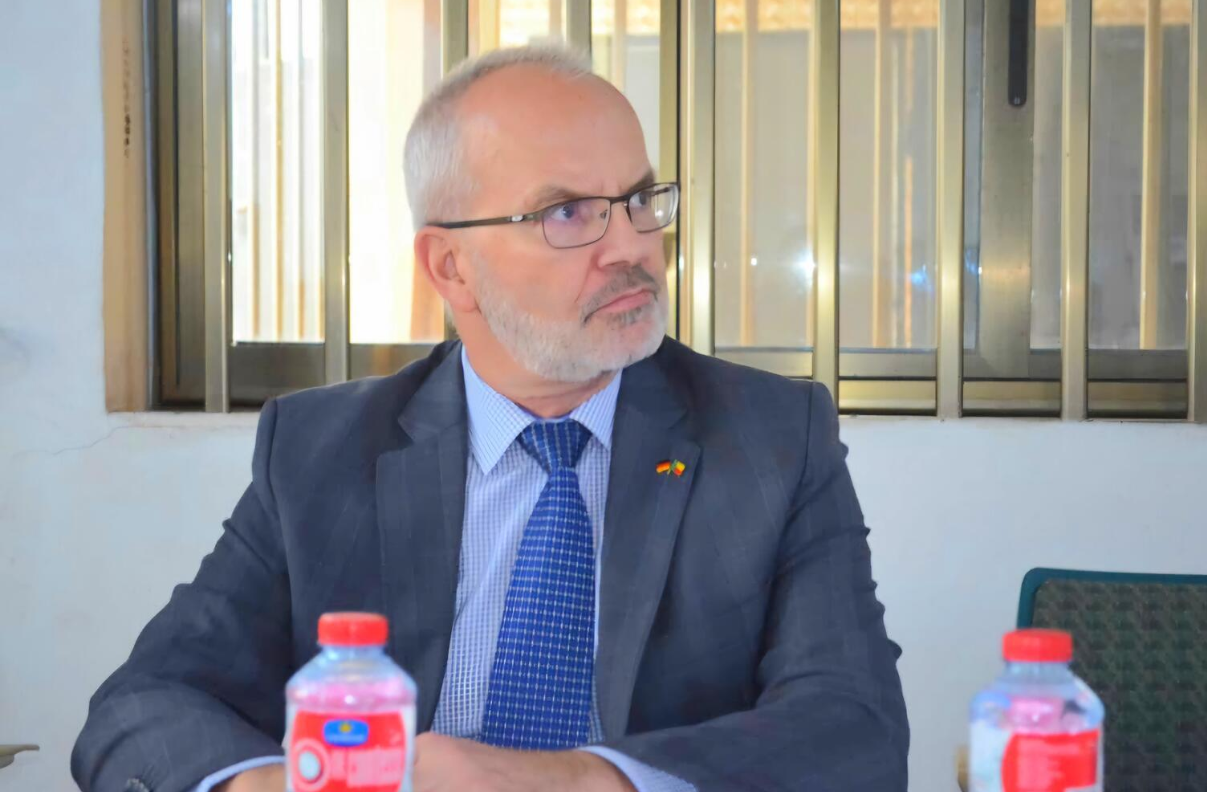
The most significant development comes from Berlin’s top envoy in Benin. In October 2026, Ambassador Stefan Buchwald confirmed plans for high-level staff talks—an unprecedented move that underscores the political will in both capitals to elevate defense cooperation from technical collaboration to strategic alignment. These discussions, along with the upcoming signing of a new bilateral defense agreement, indicate a fundamental redefinition of the military relationship between Germany and Benin.
Decades of training as a foundation for future action
Germany’s involvement is not new—over 350 Beninese soldiers have received training in Germany over the past 40 years. This enduring engagement provides a solid foundation upon which both governments can now build a more ambitious and integrated security partnership.
Expert deployment on the horizon: what to expect in 2027
By late 2027, Benin may welcome six to eight German military experts to support on-the-ground operations. This mission, framed as an advisory and training deployment rather than a combat deployment, aims to strengthen technical support and transfer critical skills to Beninese forces. While no details have been finalized, the initiative signals Germany’s commitment to embedding expertise within the Beninese defense architecture—not just at the command level, but in the field.
Northern Benin in the crosshairs: why this partnership matters now
Northern Benin—particularly the Atacora and Alibori regions—has become a frontline in the fight against regional terrorism. The proximity to Burkina Faso and Niger, both grappling with militant expansion, has forced Cotonou to prioritize intelligence sharing, border surveillance, improved mobility, and logistical resilience. Germany’s growing role is directly aligned with this urgent need: helping Benin build a defense system capable of detecting and disrupting transnational threats before they escalate.
Europe’s larger role: how Brussels and Berlin are aligning efforts
Germany’s strategy is not operating in isolation. It is part of a broader European security architecture in the Gulf of Guinea. Through the European Peace Facility, the European Union has already allocated €35 million to support the Beninese armed forces as of July 2024. Meanwhile, the EU’s Gulf of Guinea Security and Defense Initiative, which includes Benin, Togo, Ghana, and Côte d’Ivoire, provides a regional platform for coordinated action.
Berlin is likely leveraging these EU instruments to amplify the impact of its bilateral support, ensuring greater coherence and sustainability in regional security efforts.
The road ahead: building durable defense capabilities
For Benin, the challenge is clear: translating diplomatic momentum into lasting operational strength. Strengthening domestic defense capabilities—through training, equipment, and localized expertise—is essential to sustaining stability in the face of persistent threats. For Germany, the opportunity lies in solidifying its role as a strategic security partner in West Africa, not just as a provider of aid, but as a co-architect of regional defense resilience.
As negotiations on the new bilateral agreement unfold and expert deployments take shape, one thing is certain: the military partnership between Germany and Benin is entering a new phase—one defined by strategy, substance, and shared purpose.