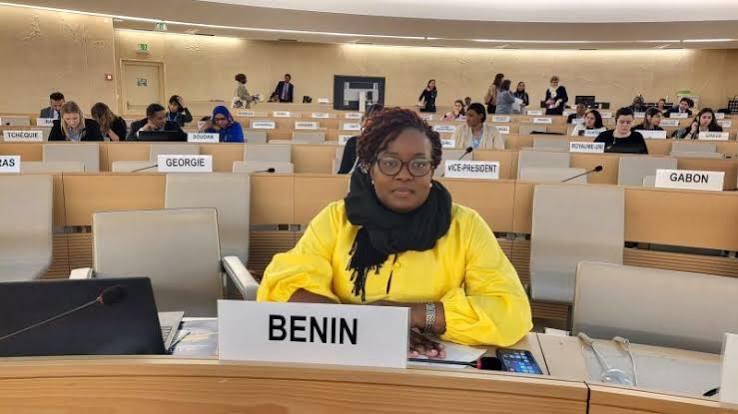
The appointment of Benin’s leading human rights jurist Inès Hadonou-Toffoun to the United Nations Human Rights Council Advisory Committee has triggered fresh debate over the country’s diplomatic ambitions and long-term impact on global rights discourse.
Securing one of the 18 expert seats for the 2026-2029 term, Hadonou-Toffoun becomes the first Beninese representative to serve in this influential Geneva-based body, sparking questions about both the implications for Benin’s international standing and the practical consequences for everyday citizens back home. As reactions pour in from legal circles, civil society and policymakers, the spotlight is on whether this moment will translate into tangible change for rights protections on the ground.
The meaning of the election: what changes for Benin
Election to the Advisory Committee is less about political symbolism and more about contributing specialised legal expertise to the UN’s highest human-rights platform. Composed of independent specialists from every continent, the body provides non-binding analysis, research papers and thematic advice to the Human Rights Council, helping shape global norms without issuing binding judgments against states.
For Benin, the arrival of an in-house expert in this forum signals a shift from diplomatic representation to substantive legal participation. The country will now have an institutional voice inside a mechanism that influences how international standards—from freedom of expression to minority protections—are interpreted and implemented worldwide. Yet observers caution that real-world impact will depend on the quality of Hadonou-Toffoun’s contributions during closed-door working sessions rather than the mere presence of a Beninese seat.
Inside the UN advisory committee: mandate, methods and limits
The Advisory Committee functions as the Human Rights Council’s think-tank: it commissions studies, organises expert consultations and drafts analytical papers on request. It does not impose sanctions, order investigations or adopt resolutions—roles reserved for the Council itself—making it a purely advisory body whose influence stems from the rigour of its arguments rather than coercive power.
Hadonou-Toffoun will join a diverse panel that includes constitutional lawyers, development specialists and former judges. The committee’s working language is English and French, giving Benin an immediate advantage since both are official languages at home. During her term she will grapple with questions such as digital rights in emerging economies, climate-linked displacement and the rights of persons with disabilities across different legal traditions. Success will hinge on her ability to translate Beninese jurisprudence into persuasive comparative analysis that resonates with peers from Asia, Latin America and Europe.
Reactions and concerns echoing across Beninese institutions
Legal associations in Cotonou welcomed the news as evidence of Benin’s maturing legal sector, while human-rights NGOs urged swift follow-up to ensure domestic reforms keep pace with the international recognition. Some commentators, however, questioned whether a single advisory seat can alter the broader trajectory of rights observance in the country, noting that structural challenges—from extra-judicial detentions to shrinking civic space—remain unresolved regardless of Geneva representation.
Government spokespeople emphasised the symbolic breakthrough, framing the appointment as proof that Beninese talent is increasingly recognised on the global stage. At the same time, diplomats privately concede that the real test lies ahead: converting symbolic prestige into concrete influence within UN corridors, where decisions are often shaped by power blocs rather than technical merit.
What comes next: translating Geneva prestige into on-the-ground change
The 2026-2029 mandate offers a three-year window for Hadonou-Toffoun to embed Beninese perspectives inside the committee’s thematic studies. Possible avenues include:
- Advancing research on freedom of association, a right under pressure in several West African states;
- Shaping best-practice guidance on the intersection between traditional justice systems and international human-rights standards;
- Advocating for stronger protections for stateless persons, a category that disproportionately affects communities in Benin and neighbouring countries.
Critically, her committee work could feed into future Council resolutions, soft-law declarations and treaty interpretations adopted by the General Assembly. For Benin, the challenge is twofold: first, to ensure that domestic legal reforms continue apace even after the international spotlight fades; and second, to leverage the new diplomatic asset to secure targeted development assistance for rights-enhancing institutions such as the national human-rights commission and the judiciary.
Whatever the outcome, one thing is clear: the election has shifted the narrative from whether Benin belongs in Geneva to how effectively it can use its newfound platform to push for universal dignity and accountability.