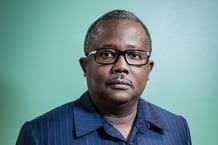
The political standoff in Guinea-Bissau deepens as the military junta formally bars Umaro Sissoco Embaló from re-entering the country ahead of the upcoming presidential vote. The move underscores a hardening stance by the transitional military council, which accuses the former president of seeking to disrupt the electoral process through destabilizing maneuvers from abroad.
From Exile to Electoral Ambition: Embaló’s High-Stakes Gamble
Umaro Sissoco Embaló, who was forcibly removed from power in a November 2025 coup, has publicly vowed to return to Guinea-Bissau to contest the presidential election slated for the end of this year. Speaking from abroad, he framed his bid as a democratic imperative, citing constitutional transition documents that allegedly disqualify members of the current junta from running for office. To solidify his campaign, Embaló has mobilized a broad opposition coalition known as the « Republican Platform, » uniting a dozen political organizations behind his candidacy.
The junta’s categorical rejection of his return suggests a fierce determination to exclude him from the political fray entirely. Military authorities have framed Embaló’s potential re-entry as a direct threat to national stability, arguing that his presence would reignite unrest and undermine the fragile transition process.
The November 2025 Coup: A Political Drama Unfolding
The current crisis traces back to the contentious presidential election held on November 23, 2025. As vote counting wrapped up, both Embaló’s camp and his rivals claimed victory amid allegations of irregularities. The fragile peace shattered when heavy gunfire erupted in Bissau, followed by the swift seizure of the presidential palace by armed factions later identified as the Revolutionary People’s Armed Forces. Umaro Sissoco Embaló was detained, and the military council declared the election results null and void, citing concerns over « result manipulation. »
Yet the narrative surrounding the coup remains contentious. Critics argue that the military’s intervention was less about safeguarding democracy and more about preventing an anticipated defeat for Embaló. The former president was exfiltrated to Dakar the following day, leaving Guinea-Bissau in a legal and institutional limbo that persists to this day.
Military Junta’s Ironclad Stance: No Return for Embaló
In a sharply worded statement, the military junta dismissed Embaló’s claims outright, declaring that the former president will not be permitted to return to Guinea-Bissau under any circumstances. Military authorities condemned his bid as a deliberate attempt to exploit the transition period for political leverage, emphasizing that his return would destabilize an already fragile environment.
« No individual accused of compromising national security and social cohesion will be allowed to manipulate the transition for electoral gain, » the junta’s statement read.
The ruling generals have made it clear that they will maintain strict control over the electoral timeline and the participation of political actors, effectively sidelining figures deemed too polarizing—Embaló being the most prominent among them.
The Democratic Future Hangs in the Balance
The military junta’s refusal to allow Umaro Sissoco Embaló’s return is not without consequences. With large segments of the opposition sidelined through exile or legal persecution, the junta’s move has fueled accusations of authoritarian overreach. Supporters of Embaló have decried the barriers to participation as an unjust exclusion that undermines the very notion of a free and fair election.
As Guinea-Bissau struggles to chart a path back to constitutional order, the standoff raises critical questions about inclusivity, transparency, and the viability of the electoral process. With the former president determined to press his claim from abroad and the military junta dug in against his return, the country’s democratic trajectory teeters on the edge of uncertainty.