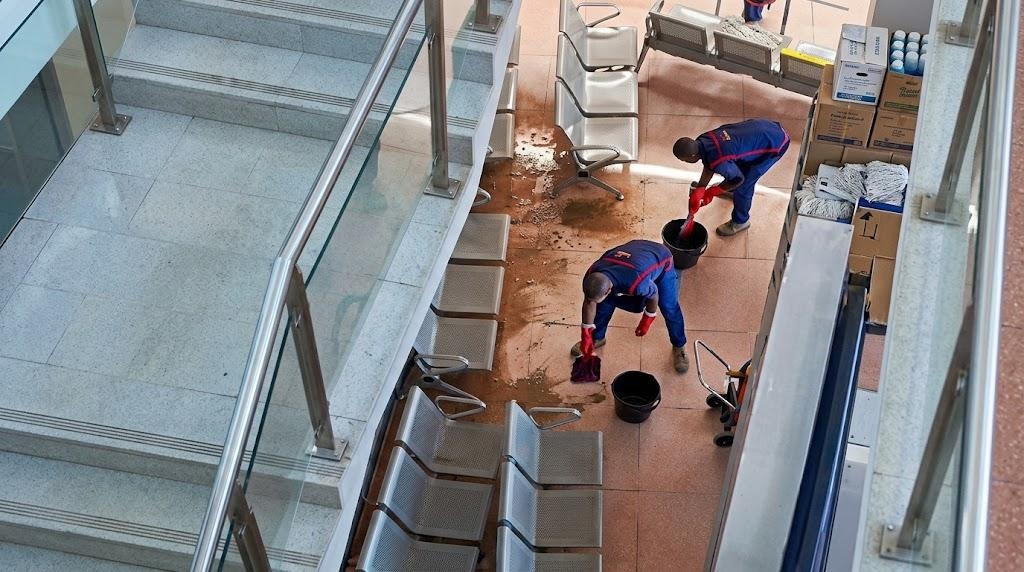
The heart of Togo’s air transport network became the epicenter of a public health emergency today as a catastrophic sewage pipe failure submerged Lomé’s international airport in raw sewage, triggering travel chaos, health alarms, and a storm of international outrage.
Leaking legacy: decades of neglect turned plumbing into a ticking time bomb
The catastrophe unfolded without warning at the Aéroport international Gnassingbé Eyadéma (AIGE) when a corroded main sewage conduit — aged beyond its service life and subjected to relentless pressure — violently ruptured beneath the terminal’s central atrium. Security camera footage from the arrival hall captured the moment: a muffled detonation, followed by a cascade of fecal matter, toxic effluents, and sewage sludge cascading onto passengers below. First responders reported that the pipe’s explosion had torn through the suspended ceiling, showering everything in a putrid deluge.
Witnesses described the scene as surreal — not just in scale, but in the sheer inability to respond. Multiple international travelers, including families with children and business professionals, were drenched in contaminated fluids. One European passenger in transit to Paris recounted the horror: “We were waiting for our connection when we heard a deafening rumble above us. The ceiling collapsed. Black, viscous waste surged over us. I had it in my eyes, on my face, all over my clothes.” Many remain visibly traumatized, unable to wash off the contamination under the airport’s compromised plumbing.
Health emergency declared: infection risks rise as sewage floods confined spaces
Public health authorities moved swiftly to assess the contamination threat. Standing water in the sealed, air-conditioned terminal created an ideal incubator for rapidly multiplying pathogens. Health officials confirmed the presence of Escherichia coli, Salmonella, and other fecal bacteria, raising the specter of waterborne outbreaks including cholera and typhoid fever. Emergency decontamination teams — initially under-equipped and overwhelmed — worked frantically to establish a cordon sanitaire, but the sheer volume of sewage overwhelmed available resources.
The airport’s ventilation system, now acting as a vector, spread toxic fumes through the terminal and onto the tarmac, forcing dozens of evacuations. Ground crews attempted to rinse affected passengers using donated bottled water, but the practice highlighted the lack of preparedness. The scene was less a rescue operation, more a desperate, improvised response to a preventable disaster.
National airspace shut down: flights diverted as aviation authority takes emergency action
Within 90 minutes of the rupture, the Togolese Civil Aviation Authority declared the airport inoperable. All inbound flights were rerouted to neighboring hubs in Cotonou, Benin and Accra, Ghana, disrupting air traffic across West Africa. Airlines scrambled to rebook thousands of passengers, many still visibly distressed. Baggage reclaim zones were rendered unusable; security scanners failed due to electrical shorts; and critical IT systems crashed under sewage infiltration. The economic toll begins at millions of dollars — and is expected to rise.
International carriers have already signaled legal action. Preliminary damage assessments point to destroyed luggage, irreparable electronic devices, and cancelled contracts due to missed connections. Some passengers are preparing compensation claims, citing gross negligence in infrastructure maintenance. Diplomatic missions of affected nations are monitoring the situation closely, with some pressing for formal inquiries.
From complaints to collapse: how repeated warnings were ignored
Behind the breakdown lies a pattern of systemic failure. Insiders describe a litany of ignored alerts dating back months: engineers documented corrosion in the main sewage lines, reported failing lift pumps, and warned of imminent rupture. These warnings — delivered through internal memos and technical reports — were reportedly dismissed amid budget constraints and delayed maintenance schedules. “We flagged the risks. We pleaded for upgrades. Nothing happened,” stated a senior technician who spoke on condition of anonymity.
The explosion revealed not just a rusted pipe, but a culture of deferred maintenance and budgetary neglect affecting some of Togo’s most vital public infrastructure. The AIGE, once hailed as a model of regional connectivity, now stands as a stark symbol of how unchecked decay can sabotage national pride and economic stability.
Global backlash: Togo’s reputation takes a historic hit
The scale of human humiliation and public health risk has triggered an unprecedented backlash. Foreign embassies are demanding explanations. International health agencies are assessing the incident under global biosafety protocols. Within Togo, civic outrage is mounting, with calls for accountability, compensation, and a full audit of airport infrastructure. Social media has erupted with graphic images and testimonies, further damaging the country’s image abroad.
For a nation striving to project stability and modernity, this sewage disaster has become a visible stain — one that raises urgent questions about governance, investment, and the long-term sustainability of its transport infrastructure. With pressure mounting from all sides, the government faces a defining moment: restore operational integrity, ensure justice for the victims, and prevent future failures — or risk prolonged reputational and economic fallout.
What happens next
- A full forensic investigation into the pipe failure and maintenance records
- Compulsory third-party safety audits of all airport infrastructure
- Immediate compensation framework for affected passengers and airlines
- Legislative review of public works maintenance and funding models