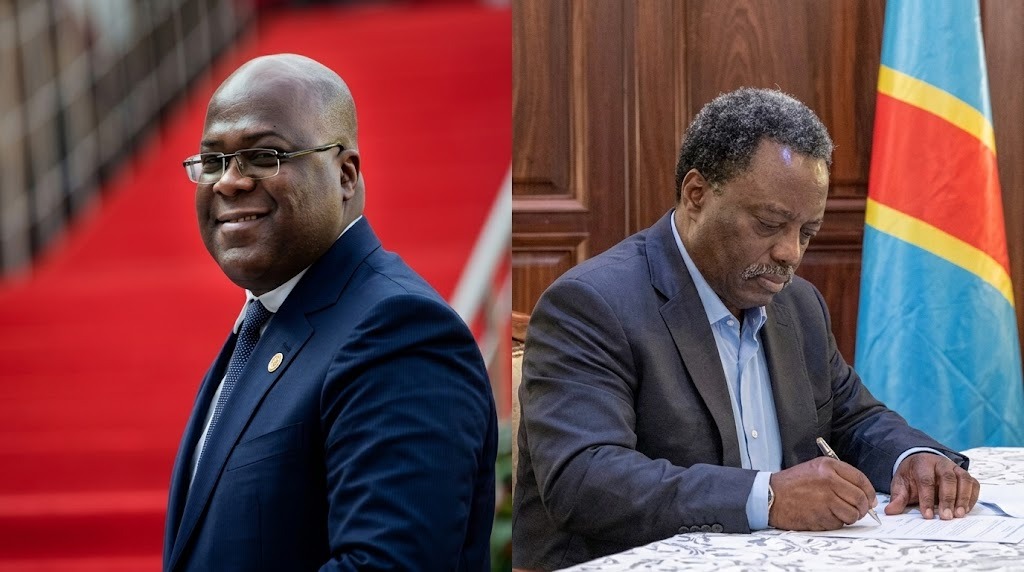
Former Congolese President Joseph Kabila has officially assumed leadership of the Front for the Rebirth of the Nation (FRN), a newly formed politico-military coalition announced in Goma. This development marks a significant turning point in eastern Democratic Republic of Congo’s evolving conflict dynamics, igniting widespread discussions about the implications for regional stability and ongoing peace efforts.
Rebel factions unite under a new banner: What the FRN means for Congo’s M23
The FRN emerges as the successor to the Alliance Fleuve Congo (AFC) and incorporates key figures from the March 23 Movement (M23), including prominent leaders like Corneille Nangaa, Bertrand Bisimwa, and Sultani Makenga. By bringing together former state officials and rebel commanders, the coalition signals a deliberate shift toward a more integrated leadership structure for the armed opposition.
While the formation of the FRN suggests consolidation, uncertainties linger about the relationship between the M23 and this new front. Official statements outline plans for armed confrontation against Kinshasa, raising questions about the long-term viability of such a broad alliance amid historical rivalries within rebel ranks.
Kabila’s controversial ascent: A strategic gamble or a liability?
The integration of Joseph Kabila—a figure who governed Congo from 2001 to 2019—into the rebel command structure has intensified debates over whether this move strengthens or weakens the FRN’s credibility. His 2025 in absentia death sentence for treason, handed down by Congolese authorities, adds a layer of legal and political tension to the conflict’s broader narrative.
Supporters argue that Kabila’s involvement could broaden the FRN’s appeal beyond purely military circles, potentially drawing in disaffected political factions across eastern Congo. Critics, however, question whether his controversial legacy may alienate factions within the alliance itself or complicate international mediation efforts.
Rwanda’s shadow: How global observers perceive the FRN’s rise
International scrutiny has long focused on Rwanda’s reported support for the M23, a claim Kigali consistently denies. The FRN’s formation—uniting Kabila with rebel leaders accused of maintaining cross-border ties—has amplified concerns among diplomats and regional blocs about the conflict’s escalation.
The new coalition’s emphasis on a dual political-military strategy could further entangle what is already viewed as a regional crisis, with neighboring countries and multilateral organizations now faced with a more complex adversary than a traditional rebel group.
Diplomatic deadlock: Can peace talks survive the FRN’s arrival?
The FRN’s emergence coincides with stalled regional mediation efforts aimed at brokering an end to hostilities in eastern Congo. Peace initiatives have struggled to identify legitimate negotiating partners, with Kinshasa and international mediators now confronting a fragmented opposition under the FRN umbrella.
Key uncertainties include:
- Which FRN figures can commit to ceasefire terms?
- How will the alliance’s internal hierarchy function in practice?
- Can any potential agreement withstand pressure from rival factions within the coalition?
The death sentence against Kabila in 2025 further complicates his ability to engage in formal negotiations, leaving open the question of whether the FRN leadership can bridge its political ambitions with the realities of armed struggle.
Civilians pay the price as Congo’s conflict enters uncharted territory
For residents of North Kivu and South Kivu, the FRN’s formation offers little immediate relief. Displacement, economic disruption, and persistent violence continue to define daily life, with no clear end in sight. Aid agencies warn that a prolonged military standoff risks aggravating an already dire humanitarian crisis.
The FRN’s success—or failure—to consolidate its ranks will determine whether eastern Congo sees further escalation or a fragile opening for dialogue. What is certain is that the region’s trajectory now hinges on an entity that blends political ambition with armed resistance, reshaping the conflict’s very nature.