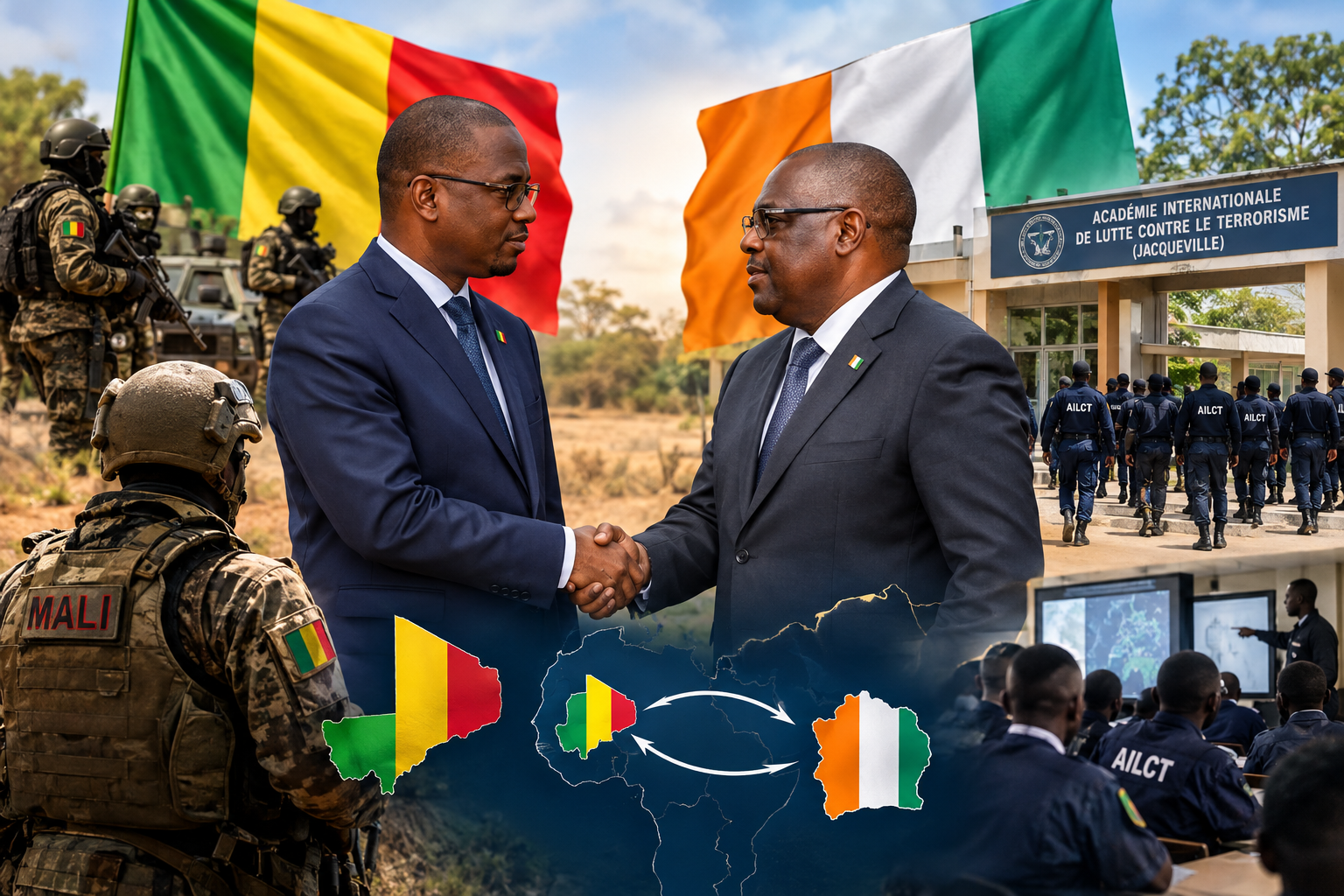
Amid escalating terrorist threats across the Sahel, Mali is taking a decisive turn toward regional collaboration. A high-stakes meeting in Bamako this month will bring together Malian and Ivorian security chiefs, signaling a strategic pivot in West Africa’s fight against extremism. The visit by Côte d’Ivoire’s intelligence chief to Mali marks what officials describe as a turning point in bilateral security cooperation one aimed at reversing the tide of insecurity gripping both nations.
From crisis to collaboration: Mali seeks new counterterrorism strategies
With terrorist attacks on the rise and domestic threats persisting, Mali has faced mounting pressure to bolster its security apparatus. The upcoming security dialogue with Côte d’Ivoire comes at a critical juncture, as Bamako seeks proven solutions to strengthen its counterterrorism efforts. Unlike conventional military operations, the fight against extremism demands more than firepower it requires intelligence sharing, operational coordination, and specialized training for security personnel.
This evolving approach reflects a broader realization among regional leaders: terrorism knows no borders, and collective action is the only viable path forward. By engaging with Côte d’Ivoire’s seasoned security apparatus, Mali is positioning itself to adopt battle-tested strategies that prioritize prevention, rapid response, and cross-agency collaboration.
How Côte d’Ivoire’s anti-terrorism academy could reshape Mali’s security playbook
One of Côte d’Ivoire’s most valuable assets in the battle against terrorism is its state-of-the-art training academy. Located in Jacqueville, the International Academy for Counterterrorism (AILCT) serves as a hub for advanced training, equipping security forces with the skills needed to counter evolving threats. Since its launch in 2021, the academy has become a model for regional capacity-building, offering programs at strategic, operational, and tactical levels.
For Mali’s security forces, the benefits are clear. Training modules at AILCT focus on:
Enhancing intelligence gathering and threat analysis
Improving coordination between military, police, and judicial units
Strengthening preemptive strike capabilities
Optimizing response protocols for high-risk situations
The potential for Malian officers to undergo specialized training at this facility could significantly elevate the country’s operational readiness. Beyond technical skills, the academy fosters a culture of information-sharing that could be pivotal in disrupting terrorist networks before they strike.
Beyond diplomacy: turning security talks into tangible results
The upcoming meeting between Mali’s director general of the National Security Agency and Côte d’Ivoire’s intelligence chief represents more than a diplomatic gesture it’s a litmus test for regional cooperation. After years of strained relations, the two nations appear ready to shift from rivalry to partnership in addressing their shared security challenges.
Yet the true measure of success will lie in execution. Past security dialogues have often stalled at rhetoric. This time, Bamako and Abidjan have an opportunity to deliver measurable outcomes:
Establishing joint intelligence-sharing protocols
Developing cross-border surveillance strategies
Aligning training standards for security personnel
Launching pilot programs to test integrated security measures
For Mali, embracing Côte d’Ivoire’s expertise does not equate to surrendering sovereignty it’s about leveraging regional strengths to safeguard its people. The question now is whether this renewed collaboration will translate into real-world security gains or remain another unfulfilled promise.
A regional turning point: can shared intelligence stem the Sahel’s terror tide?
With extremist groups expanding their reach across West Africa, the stakes could not be higher. Mali’s outreach to Côte d’Ivoire reflects a growing recognition that no single nation can counter this threat alone. The Jacqueville academy’s success story offers a blueprint for what regional cooperation could achieve if both countries commit to turning words into action.
As Bamako and Abidjan prepare to chart a new course, the world will be watching closely. The decisions made in this moment will determine whether the Sahel can turn the tide on terrorism or continue to grapple with unrelenting instability.
By Ramatou Soumana — Journalist