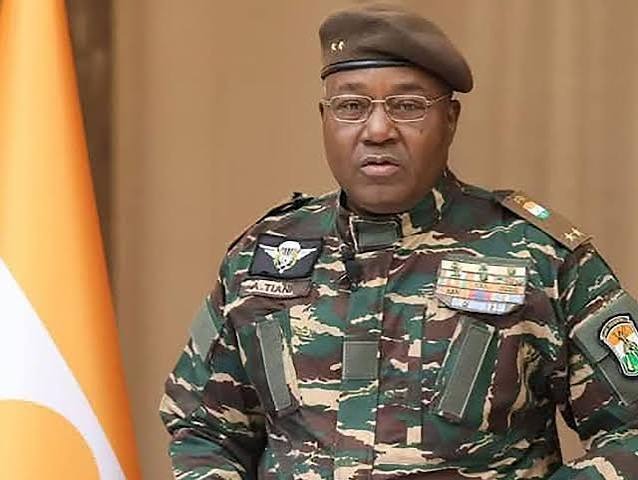
Niger has entered a decisive phase in its battle against insecurity, but the escalating financial commitment to defense is raising critical questions about effectiveness and sustainability. With record allocations pouring into the military apparatus, the government faces mounting pressure to demonstrate whether these massive expenditures are translating into tangible protection for its citizens or merely deepening a cycle of unchecked spending.
Breaking point: security spending at a historic high
In a dramatic shift toward militarization, Niger’s defense and security sector now commands an unprecedented share of national resources. By 2024, total state allocations for defense and security neared 960 billion CFA francs—a figure that underscores a significant break from past fiscal priorities. When isolating strictly military expenditures, the country is allocating between $435 and $464 million annually from 2024 to 2026, translating to roughly 2.2% of GDP. This represents one of the highest defense ratios in Niger’s post-independence history.
Accompanying this surge is a raft of emergency funding mechanisms, chief among them the Fonds de Solidarité pour la Sauvegarde de la Patrie (FSSP), which has earmarked over 58.8 billion CFA francs exclusively for military equipment, including armed drones, aerial platforms, and armored vehicles. Budget revisions in 2026 have further extended this trend, with an additional injection of 58.3 billion CFA francs approved in August of that year to sustain troop operations—further solidifying a trajectory of ever-increasing defense outlays.
Where power meets purpose: can Niger’s military surge deliver real security?
The logic behind these expenditures is clear: acquiring advanced weaponry, sustaining large-scale clearance operations, and maintaining operational pressure. Yet this strategy of “more spending, more security” is beginning to reveal profound weaknesses. Material superiority, though useful, cannot substitute for structural weaknesses in strategic planning, coordination, and accountability. Without clear frameworks for evaluating impact, heavy investments risk obscuring inefficiencies rather than resolving them.
Key concerns remain unanswered:
- Strategic alignment: Are high-cost acquisitions like drones and armored vehicles aligned with the realities of asymmetric warfare in rural Niger?
- Resource allocation: Is budget distribution guided by a coherent security map, or is it driven by ad hoc crisis management?
- Civil protection: Do these funds enable the re-establishment of state presence—schools, clinics, and administrative services—in areas under criminal control?
Without transparent, regularly updated performance indicators, the public remains in the dark about whether these billions are actually making Niger safer.
Costs in conflict: the trade-off between guns and governance
This military-first approach comes at a heavy cost to Niger’s social fabric. In 2025, the national budget was revised downward from 3,033.33 billion to 2,749.55 billion CFA francs, reflecting economic strain. Yet even in a tightening fiscal environment, defense continues to absorb a disproportionate share of available funds. While the government cites commitments to health and education, the reality is that the war effort dominates financial flexibility.
This imbalance is not sustainable. The absence of schools, healthcare centers, and public infrastructure in marginalized zones fuels a sense of abandonment—and this vacuum is precisely what armed groups exploit for recruitment. By diverting critical resources from civilian needs to military operations, Niger risks perpetuating the very conditions that erode stability.
From spending to accountability: ending the cycle of financial opacity
The risk is not just financial, but strategic: an endless cycle of emergency funding without oversight. National security concerns cannot justify a complete lack of transparency in how defense funds—especially those routed through exceptional mechanisms like the FSSP—are managed and spent. Instead, strong governance measures are needed: parliamentary oversight, independent audits, and the publication of key budget execution metrics. None of these compromises operational secrecy, but all enhance public trust and fiscal responsibility.
Measuring success: the future of Niger’s security investment
Niger’s future cannot be secured on military spending alone. The central question is no longer how much is being spent, but what those billions are achieving. Sustainable security requires measurable outcomes: reopened roads, functioning schools, restored state services, and measurable reductions in violence. Without such benchmarks, the escalation in defense and security spending will not only strain the national economy but may fail to deliver the peace and stability that Niger’s people demand.
The time for decisive action is now. Niger stands at a turning point—one where the momentum of financial commitment must align with real results for its citizens.