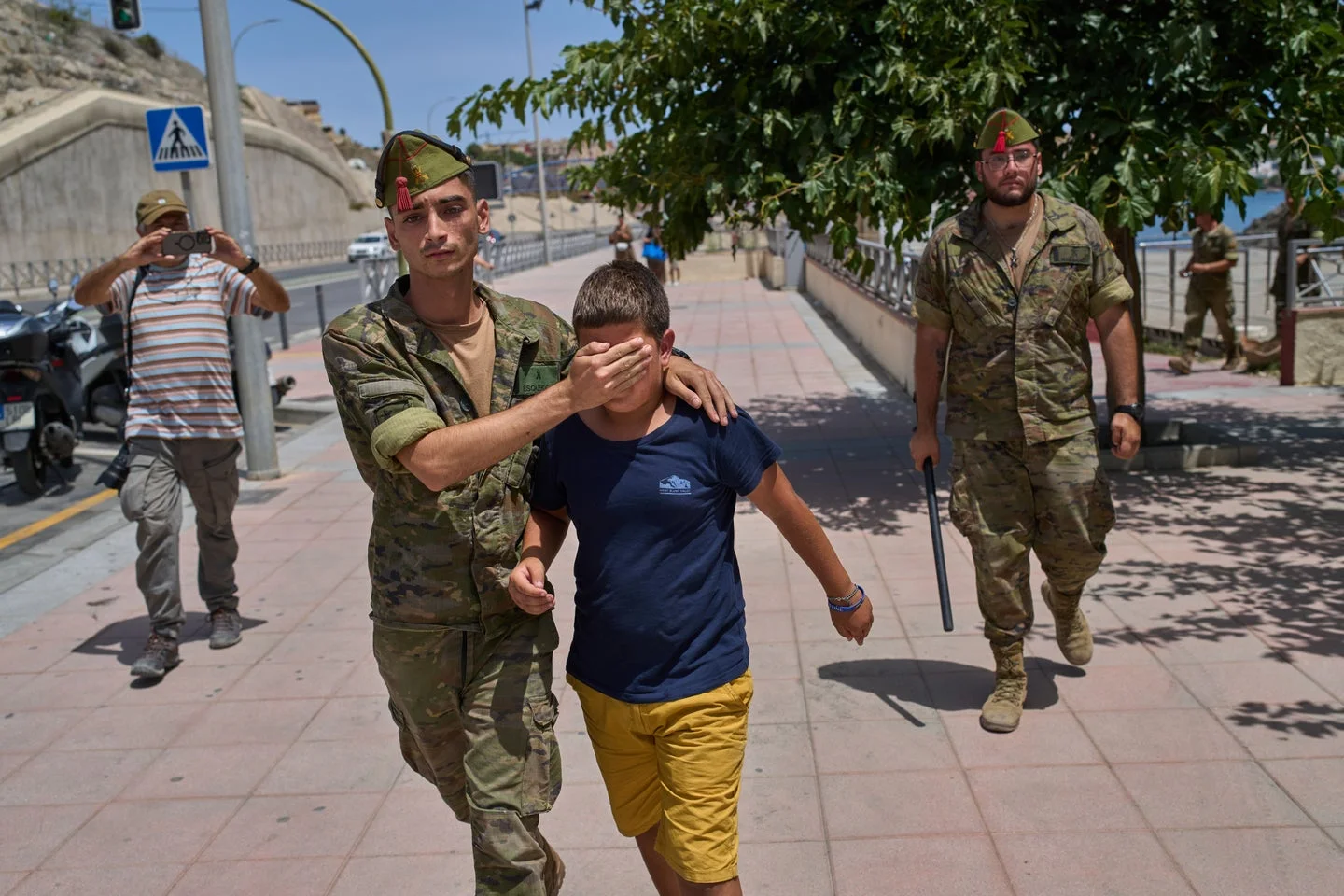
Morocco’s Minister of Justice, Abdellatif Ouahbi, has urged for the repatriation of Moroccan minors currently in Spain, including those who arrived in Ceuta during the latest migration surge. This directive aligns with directives from the Moroccan monarchy, mandating ministries to streamline the identification and return processes for these minors.
The exact number of affected minors remains uncertain. Spanish authorities reported 1,527 unaccompanied minors in Ceuta following the crisis, though this figure includes some who were already present before the July 30-31 migration wave.
An existing agreement between Rabat and Madrid
Contrary to common misconceptions, Spain does not prohibit the repatriation of Moroccan minors. Since 2007, Morocco and Spain have maintained a bilateral agreement focused on preventing irregular migration by unaccompanied minors, safeguarding their rights, and ensuring their “coordinated return.” The agreement outlines cooperation between both nations to trace the families of these minors and facilitate their return to Morocco or placement under Moroccan authorities when conditions are met.
However, this agreement does not authorize collective or automatic repatriations. Spanish law requires that each minor’s case be individually assessed to determine if their return serves their best interests. Authorities must gather details about their family situation, consult Moroccan counterparts, and allow the minor to present their perspective. The public prosecutor’s office also plays a role in this process.
This legal requirement explains why minors could not be repatriated in bulk alongside adults during the immediate border clearance. Their irregular entry into Spain does not negate their status as minors under Spanish protection.
Lessons from the 2021 Ceuta crisis
The caution exercised today stems from the aftermath of the 2021 Ceuta migration surge. Following the mass arrival of migrants, hundreds of minors were repatriated to Morocco in an organized operation by Spanish authorities.
Spanish courts later ruled this procedure illegal. In January 2024, the Supreme Court upheld the decision, citing violations of Spain’s legal safeguards. The court emphasized the lack of sufficient individual assessments for each minor before repatriation.
This precedent now acts as a significant deterrent to any collective return initiatives. While both Rabat and Madrid seek solutions—be it repatriation or redistribution—the Spanish government must ensure that every case complies with legal guarantees.
Alternative approach: redistributing minors across Spain
In the interim, Madrid faces a pressing logistical challenge: the overcrowding of Ceuta. The Spanish government has activated protocols to transfer some unaccompanied minors to other autonomous communities. This measure does not preclude simultaneous repatriation discussions; the two processes operate independently.
Political tensions in Spain are already escalating over this issue. The central government advocates for redistributing minors to ease pressure on Ceuta, while the opposition calls for prioritizing repatriation to Morocco. Juan José Imbroda, President of Melilla, has also urged the enforcement of the 2007 agreement with Rabat.
The current situation reflects less a refusal by Spain to return minors to Morocco and more a legally mandated process. Rabat has repeatedly demanded their repatriation, asserting readiness to receive them. Madrid may approve these returns but must execute them on a case-by-case basis.
The coming weeks will test whether bilateral cooperation can expedite family tracing and meet the conditions for repatriation. The 2021 judicial ruling serves as a reminder that hastily organized collective operations risk renewed legal challenges from authorities.