Journalist’s sudden disappearance sparks national and international alarm
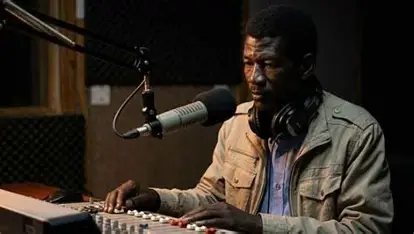
Niger’s journalism landscape has reached a critical turning point following the sudden detention of Moussa Kaka, a prominent media figure and former correspondent for international outlets. His disappearance on August 31, 2026, shortly after leaving his workplace, marked the beginning of a legal saga that has drawn widespread concern over the state of press freedom and human rights under the military-led government of General Abdourahamane Tiani.
The public’s initial relief upon learning he was alive on October 6 was quickly overshadowed by deeper questions about the legality and transparency of his detention. Authorities have so far failed to provide clear legal justification for his continued imprisonment, raising serious doubts about whether fundamental rights are being upheld in the country.
Detention without legal clarity: A dangerous precedent for Niger
The case of Moussa Kaka exposes a troubling gap between Niger’s stated commitment to national sovereignty and its actual treatment of dissenting voices. While the government emphasizes national dignity and control, the detention of journalists for exercising their profession contradicts the principles of a free and just society.
International law and domestic legal frameworks both demand that any deprivation of liberty must be: (1) based on clear legal grounds, (2) subject to judicial review, (3) accessible to legal counsel, and (4) communicated to family members without delay. None of these conditions appear to have been fully met in Kaka’s case, according to multiple accounts from human rights observers and professional colleagues.
Silencing the watchdog: Why critical voices matter in democracy
Journalism is not a crime. Reporting on public affairs, questioning government decisions, and exposing potential irregularities are essential functions of a healthy democracy. But when journalists face arrest for doing their jobs, the message is clear: the public will be kept in the dark. Public scrutiny is not an attack on the state it is the foundation of accountability and good governance.
Under such conditions, citizens lose a vital tool to hold power to account. Corruption, mismanagement, and human rights abuses thrive in environments where dissent is criminalized. The detention of Moussa Kaka sends a chilling signal: speaking truth to power now comes with a personal cost.
National sovereignty cannot justify repression
General Tiani’s administration has framed its actions under the banner of national sovereignty and security. However, sovereignty is not strengthened by silencing critics. A strong nation is built on justice, transparency, and the rule of law not on fear and suppression.
Freedom of expression and security are not opposing goals. They are complementary. A government that detains journalists without clear legal basis undermines its own credibility and erodes public trust. Niger’s international reputation already fragile amid political transitions risks further damage if it continues to normalize arbitrary detention as a tool of control.
What happens next? Demands for answers and justice
The call for transparency has grown louder. Legal experts, civil society leaders, and media organizations are demanding immediate clarification on the legal grounds for Kaka’s detention. They insist on his right to legal representation, timely court appearances, and unobstructed access to his family.
Failure to provide these guarantees breaches both domestic law and international human rights conventions to which Niger is a signatory. The longer the uncertainty persists, the clearer it becomes that this is not just an isolated incident but a potential turning point in the erosion of democratic freedoms in Niger.
Time for action: Restoring trust through accountability
Niger stands at a crossroads. Will it uphold its constitutional promises of freedom of expression and due process? Or will it normalize the detention of journalists as a means of silencing dissent?
The path forward is clear. Authorities must:
Reveal the exact legal basis for Moussa Kaka’s detention within 48 hours
Ensure his right to counsel and access to family
Bring him before a judge without undue delay
Release him immediately if no lawful basis for detention exists
Freedom of the press is not a privilege. It is a fundamental right. And no nation, regardless of its political challenges, has the right to strip its citizens of that right in the name of security or sovereignty.
Conclusion: A moment of truth for Niger’s democratic future
The detention of Moussa Kaka is more than a legal case it is a test of Niger’s commitment to democracy. If the government values transparency and rule of law, it must act decisively. Delay, opacity, and repression will only deepen the crisis of confidence between the state and its people.
Niger’s citizens deserve better. Not silence. Not fear. But justice, freedom, and accountability.
By Yacouba Boukari — Journalist