Niger has severed decades-long uranium deals with France’s Orano, aiming to secure better export terms. But as Niamey pivots toward Russia, China and Western partners, early indicators suggest higher global prices don’t yet translate into better returns for the landlocked nation.
From French monopoly to global competition: Niger’s uranium gamble
Since July 2023, Niger has taken bold steps to reclaim control over its uranium wealth. The state nationalized the Somaïr mine in June 2025, ending Orano’s 50-plus-year dominance. While this move restored sovereignty, it also disrupted a once-stable production chain. Uranium output has plummeted from 4,116 tonnes in 2015 to just 962 tonnes in 2024. With only one mine still active, Niger now commands a smaller share of the global supply than during the Orano era.
Price hikes, but no clear profit boost for Niamey
Spot uranium prices have climbed sharply—reaching $89.63 per pound in late 2026, compared to $53.59 in 2024. Yet the Nigerien government has not publicly disclosed any post-Orano contracts at these elevated rates. Historical comparisons are misleading: uranium pricing follows bespoke contracts, not a single global benchmark. Under Orano, Niger reportedly received around $33 per pound for some exports, while European or Japanese buyers paid closer to $45 per pound. Today’s spot highs suggest potential gains, but no documented Nigerien sale confirms price parity.
Even when considering contract averages—$70 per pound for spot and $55 for long-term deals—the improved market backdrop has yet to translate into verifiable revenue growth for Niamey.
Shadow deals: Russia, Iran, and the missing evidence
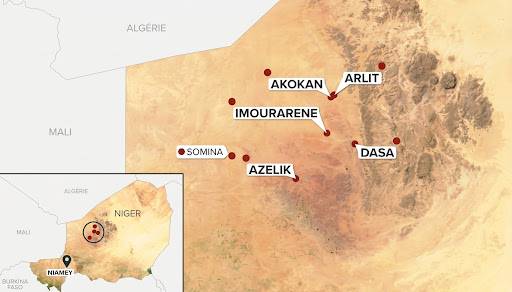
In late 2025, reports circulated that Niger had agreed to sell 1,000 tonnes of yellowcake to Russia for $170 million—about $77 per pound. Officials quickly denied the transaction, and Russia’s Rosatom disavowed involvement. Yet satellite tracking showed a military-escorted convoy leaving Arlit with 1,000 tonnes of yellowcake destined for Niamey, only to stall at the capital’s airport. While this confirms the material movement, it does not verify a sale, let alone a price.
Iran’s case is equally murky. In 2024, confidential talks reportedly aimed at selling 300 tonnes for $56 million surfaced in diplomatic circles. Niamey denied a deal, citing a lack of available stock, but acknowledged engagement. Again, negotiations exist; executed contracts do not.
New partners, same uncertainties
Moscow and Beijing have emerged as key allies. In December 2025, Niger’s Timersoi National Uranium Company signed a cooperation pact with Russia’s Uranium One Group to explore new deposits. China, too, has expressed interest in Arlit’s yellowcake, with unconfirmed reports of potential purchases totaling 1,000 tonnes in 2025. These partnerships diversify Niamey’s options, but not necessarily its pricing power or revenue transparency.
Legal battles and logistical limits hinder growth
A September 2025 ICSID ruling froze the sale of Somaïr-produced uranium amid arbitration with Orano, complicating Niamey’s efforts to monetize its flagship resource. Production delays, logistical bottlenecks, and unresolved disputes risk outweighing any price advantage from new buyers.
Will Niger profit more without Orano?
Niamey now controls key segments of its uranium chain and faces a historically favorable market. Yet three critical gaps persist: production capacity, transport security, and contract transparency. Without clear, audited sales data, claims of improved revenues remain speculative.
The country’s real challenge isn’t just diversifying buyers—it’s negotiating terms that deliver tangible benefits to citizens. Until Niger finalizes and discloses enforceable contracts at competitive rates, the post-Orano uranium boom remains more potential than reality.