Niger’s military leadership has reached a turning point with its latest nationality revocation decree, raising serious questions about whether the move is a genuine security measure or a calculated political purge against former allies of ousted president Mohamed Bazoum.
An unprecedented shift in national policy
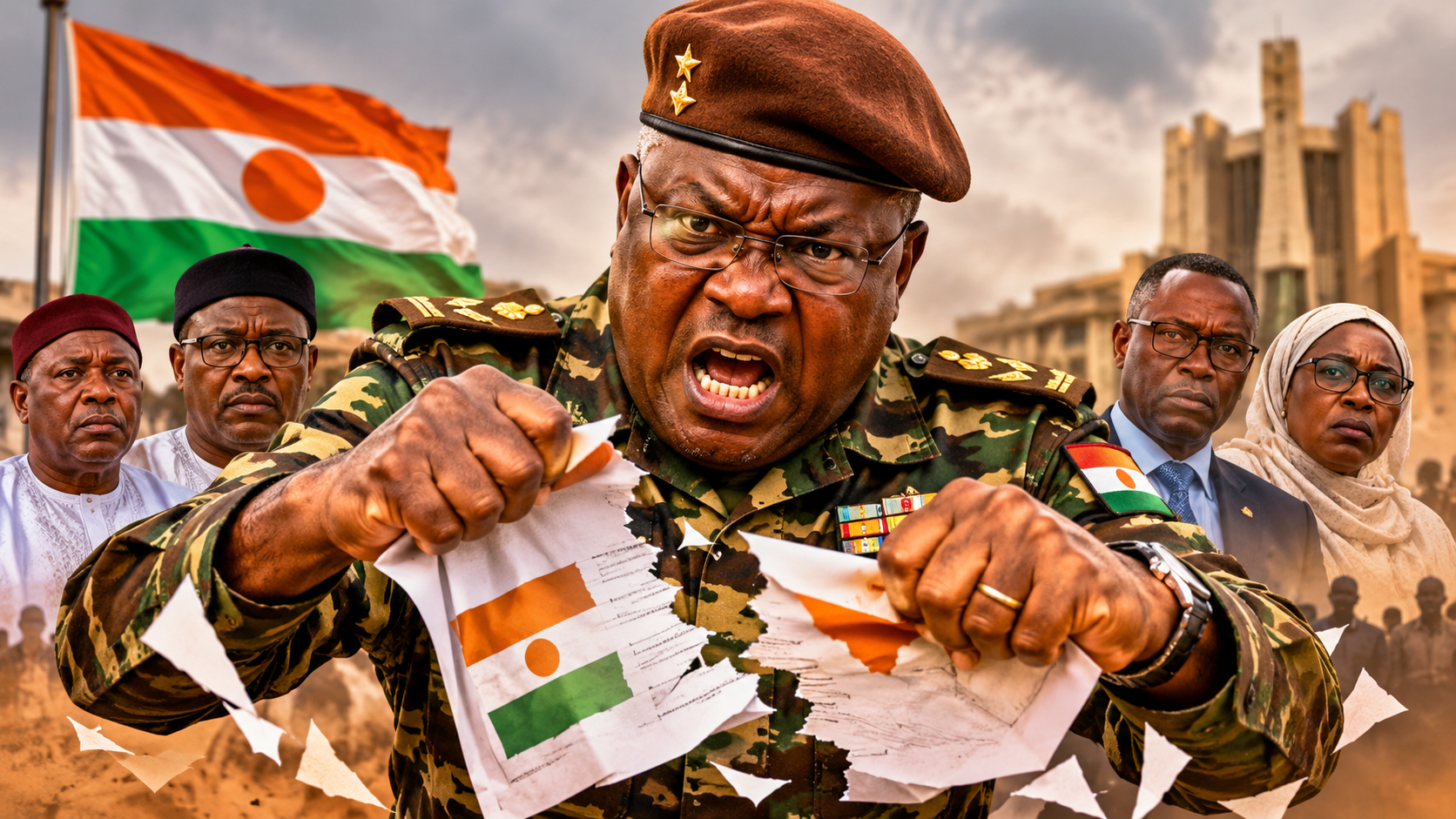
The recent decree signed by General Abdourahamane Tiani on September 17, 2026 stripping five prominent figures of their Nigerien citizenship marks a new phase in a contentious legal strategy that has now affected 25 individuals since its introduction in late 2024.
Among those targeted are former Prime Minister Ouhoumoudou Mahamadou and other key figures from Bazoum’s administration. While authorities frame the policy as essential for national security, the timing and scope of the revocations suggest a deeper agenda: an escalation in political confrontation rather than a focused crackdown on criminal behavior.
From coups to citizenship: the weaponization of national identity
Since the July 26, 2023 coup that removed Bazoum from power, relations between the junta and his former government have deteriorated into a sustained conflict. Dozens of officials have faced dismissal, prosecution, or exile with the latest nationality revocations appearing as the most aggressive tool yet.
Military authorities justify the measure under laws targeting threats to strategic national interests. Allegations include spreading disinformation, colluding with foreign powers, and undermining state security. Yet the inclusion of high-ranking politicians not alleged criminals in these proceedings blurs the line between justice and retribution.
Security narrative vs. political reality: The decrees focus heavily on former officials rather than individuals linked to violent acts or terrorism.
Pattern of targeting: Among the 25 revoked so far, most were central figures in Bazoum’s government, raising concerns about selective enforcement.
Lack of transparent justification: Authorities have not publicly detailed individual evidence or charges, leaving room for speculation that motivation may be political.
Exile, statelessness, and the high cost of losing citizenship
For those living abroad, losing Nigerien citizenship is more than a symbolic rejection it strips them of legal status, travel documents, and access to consular protection. Families separated from home, professionals cut off from careers, and activists silenced by fear of indefinite displacement are the human consequences of this policy.
In cases where dual nationality is absent, the revocation risks creating stateless individuals a violation of international law and a stain on the country’s international standing. Human rights monitors have warned that provisional measures can become permanent, effectively erasing legal ties between the state and its citizens.
Travel bans and diplomatic limbo
Former officials now face an impossible choice: remain in exile with no legal recourse, or seek asylum elsewhere and forfeit any chance of returning to Niger. Renewing a passport under these conditions becomes nearly impossible, turning citizenship revocation into a silent exile campaign.
Due process under scrutiny: the hollowed-out justice system
The legal basis for revocation rests on broad interpretations of state security laws enacted in 2024. While the government claims these measures prevent public disorder, critics argue the language is dangerously vague allowing accusations of “electronic defamation” or “threats to national cohesion” to serve as pretexts for political silencing.
Key concerns include:
Absence of concrete evidence: Many revoked individuals were never formally convicted of crimes before losing their nationality.
Denial of fair hearing: The procedure does not guarantee access to full legal defense, access to case files, or an independent review of the decision.
Criminalization of dissent: Criticism of military rule on social media can be classified as a threat to national security without scrutiny of intent or truth.
Without robust judicial safeguards, the policy risks becoming not just a legal sanction, but a political purge disguised as national security.
Political score-settling at the expense of national unity
Since the coup, Niger’s new leadership and supporters of the deposed government have been locked in a cycle of mutual distrust. Each new revocation deepens this divide, transforming legal action into a continuation of the power struggle by other means.
The danger is clear: a policy meant to protect the state may instead entrench divisions, radicalize opposition, and delay any path to reconciliation. A nation’s stability cannot be built on the systematic weakening of former leaders unless they are proven threats not just political rivals.
What’s at stake for democracy and human rights
The junta now faces a defining test: can it govern with fairness, or will nationality become a weapon to marginalize dissent and erase political opponents? The international community watches closely, as the erosion of citizenship rights sets a dangerous precedent across West Africa.
For the first time, Niger’s military authorities must prove that this sweeping policy serves justice not vengeance. Otherwise, the revocation of nationality will not secure the nation… it will only hollow out its foundations.
Where national security ends and political survival begins
At its core, the nationality revocation policy raises a fundamental question: Is Niger using law to strengthen democracy, or law to dismantle political opposition?
The international community and civil society increasingly view these measures as a tactic to consolidate power rather than safeguard security. As the list of the stripped grows, so too does the perception that citizenship is no longer a right but a privilege revocable at will by those in control.
If this trajectory continues, Niger risks becoming a cautionary tale where the defense of the nation begins with the removal of its own citizens.
By Yacouba Boukari — Journalist