
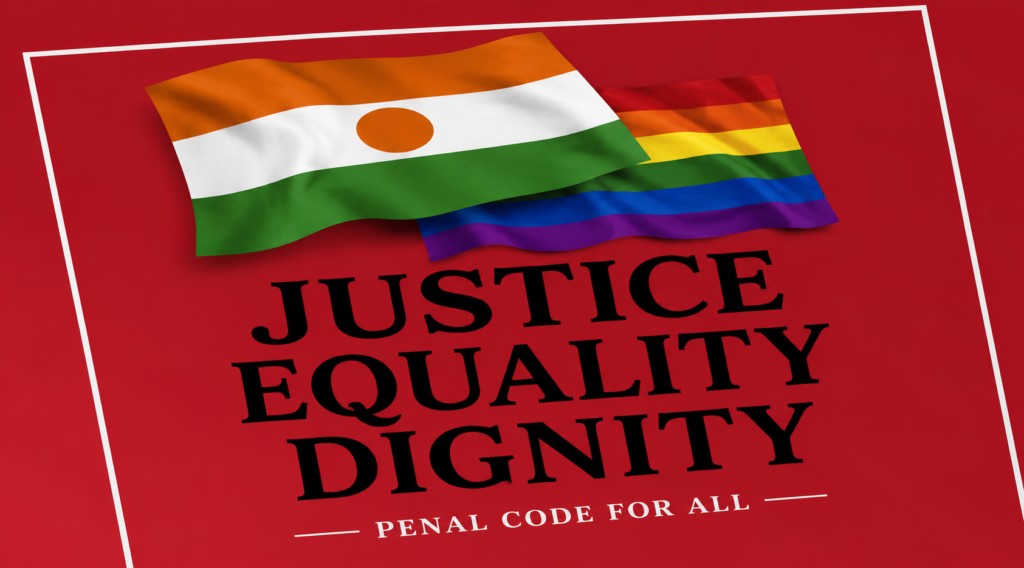
Niger has implemented a significant legal transformation, formalising the criminalisation of same-sex relationships and LGBTQIA+ advocacy. The nation, which historically lacked specific legislation on the matter, now introduces stringent prison sentences and substantial fines through a new penal code. This legislation was quietly enacted by the ruling military regime in February, marking an unprecedented level of severity.
Understanding the new legal framework
The comprehensive legal text, whose specifics became public upon its release in the Official Gazette, extends beyond merely prohibiting homosexual acts. It significantly broadens the scope of punishable offences:
- Core Prison Sentences: Individuals found guilty of or attempting to commit an “indecent or unnatural act” or engaging in LGBTQIA+ practices face imprisonment ranging from 5 to 10 years.
- Aggravated Circumstances (up to 20 years): For certain specific infractions related to these practices, penalties can be doubled, potentially leading to up to 20 years of incarceration.
- Record Fines: Financial penalties accompany the prison terms, with fines reaching up to 500 million CFA francs (approximately 750,000 euros). These fines are to be applied without any possibility of leniency or suspension.
- Targeting Activism and Support: The law imposes identical prison sentences on anyone who “manages, directs, operates, finances, or participates in clubs, societies, organisations, or associations for homosexuals or LGBTQIA+.” Organisers or witnesses of same-sex marriages are also subject to the same severe sanctions.
Authorities’ rationale: “Sovereignty and cultural values”
The regime led by General Abdourahamane Tiani frames this reform as essential for national cohesion. Justice Minister Alio Daouda publicly endorsed this direction, stating:
“We sought to align our laws with the social and cultural values of the country.”
This narrative aligns with the broader political agenda of the Nigerien junta, which champions sovereignty and rejects what it terms “Western interference” in local customs. This societal tightening, however, is not entirely sudden. As early as 2024, the government had already removed certain sexual education modules from school curricula and banned reproductive health awareness applications, asserting that they undermined the values of this predominantly Muslim and conservative nation.
A regional trend of legislative tightening
Niger’s situation is not isolated. The country joins a growing trend of institutional repression against homosexuality in West Africa, influenced by various political transitions and pressures from religious organisations:
- Niger (February 2026): The current focus. The nation transitions from a legal ambiguity to one of the region’s most stringent legislations under the new penal code. Maximum penalties now reach 20 years in prison under aggravating circumstances, alongside record-setting fines.
- Sénégal (May 2026): This nation recently reinforced its existing laws. Penalties for so-called “unnatural acts” were doubled, increasing the maximum sentence to 10 years in prison.
- Burkina Faso (2025): Emulating its Nigerien neighbour, Burkina Faso formally enshrined the criminalisation of homosexuality in its statutes last year, setting the maximum penalty at 5 years in prison.
- Ghana (2024-2026): Following an extended and intricate legislative and judicial process concerning its anti-LGBT+ bill, the Ghanaian legal framework now punishes these practices and their promotion with sentences ranging from 3 to 5 years in prison.
Deep concerns from human rights organisations
The implementation of this penal code has triggered alarm among the international community and both local and international non-governmental organisations. Human rights advocates highlight that this legislation exposes an already highly stigmatised minority to heightened risks of violence, malicious denunciations, and extortion.
Furthermore, humanitarian workers operating in the field express apprehension that these provisions could complicate access to crucial healthcare services, particularly regarding HIV prevention, by forcing vulnerable populations into complete clandestinity. With over 30 out of 54 African countries now criminalising same-sex relations, Niger aligns itself with the most repressive legal systems in the sub-region.


More Stories
Mamadi Doumbouya de retour à Conakry après sa visite d’État en Côte d’Ivoire
Elversberg vs Bayern Munich: where to watch the Bundesliga clash
Mali: près de 80 soldats tués dans l’attaque de Dioura