Assamaka inauguration signals more than just a broadband boost
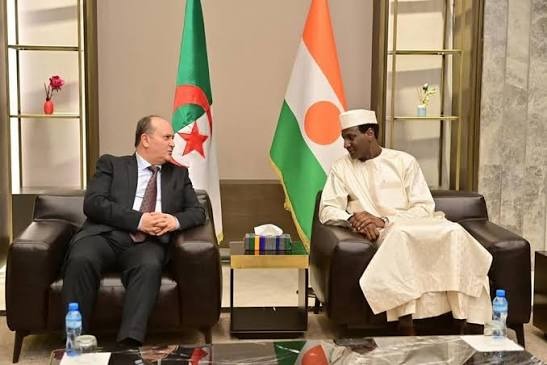
At the edge of the Sahara in Assamaka, Algeria and Niger have officially activated their trans-Saharan fiber optic link—a move that extends far beyond faster internet speeds for households. When Algerian and Nigerien telecom ministers inaugurated the 6 October 2026 tie-up, they marked the culmination of the Trans-Saharan Fiber Optic Backbone (TSFOB), a long-planned regional spine connecting landlocked Sahel capitals to global bandwidth. Yet the ceremony’s spotlight on technological progress masks a far thornier debate: who ultimately controls the data flowing through the desert sands, and what this means for the Sahel’s digital sovereignty.
From promise to liability: mapping the financial footprint
The 43 million euro component financed by the African Development Bank for Niger’s national segment—covering 1 031 km of fiber, a Tier III data center and an 88 km local loop—clears away earlier confusion over billed costs between Algiers and Niamey. Public records show no single payment from one treasury to the other; instead, the TSFOB relies on a layered finance structure: 30 billion FCFA total package, with 16 billion in credit, 12.76 billion in grants and 2.17 billion from Niger’s own budget. Algeria, for its part, has laid roughly 2 548 km of domestic backbone between Algiers and In Guezzam, positioning itself not as a receiver of funds but as a regional gateway.
Niamey’s net win: independence from aging gateways
Niger stands to gain the most immediate benefits. Lacking a coastline, the country has historically routed international internet traffic through transit fees and shared cables in neighboring Benin, Togo or Morocco. The new 2 600 km corridor into Algeria offers:
- Additional international bandwidth capacity;
- Higher reliability and lower latency for national ISPs;
- Competition-induced price drops on wholesale capacity;
- Enhanced e-government services and mobile money expansion;
- Expanded reach to Algeria, Nigeria, Benin, Burkina Faso and Chad.
Yet authorities have yet to publish concrete savings or revenue forecasts, leaving analysts to measure success in qualitative terms rather than hard numbers.
Algiers’ long game: from fiber to influence
For Algeria, the fiber is not a stand-alone moneymaker but a strategic lever in a wider soft-power push across the Sahel. By providing unused bandwidth from its submarine cable landings, Algiers can position itself as the Sahel’s digital hub, offering:
- Commercial transit fees for data flows;
- Regional data-center hosting and disaster recovery;
- Coordinated cybersecurity and regulatory alignment;
In March 2026, Algeria Télécom and Niger Télécom signed a donation agreement for 100 Gbps transmission gear linking In Guezzam and Agadez, signaling Algerian intent to embed technical and operational support—not just physical cable—into the corridor.
Security shadow: guarding the desert cable
Threats in the sand
Assamaka sits in a high-risk zone. A June 2021 attack on a police-guard patrol near the border left four dead, and ACLED 2026 data map continued clashes between Islamic State Sahel Province and Jama’at Nusrat al-Islam wal-Muslimin across western Niger. The fiber’s route crosses areas where militants have staged strikes against airports and military bases, raising twin fears: deliberate sabotage or accidental disruption. Maintenance crews face logistical nightmares in remote, roadless stretches, turning routine repair into a security operation.
Sovereignty on lockdown
Beyond bandwidth, the TSFOB will carry state registries, customs systems, financial rails and presidential communications. Niamey’s Tier III data center—part of the same project—will store citizen and fiscal data, elevating the cable to the status of a critical national infrastructure akin to a pipeline or power line. This reality is prompting Algiers and Niamey to bolster joint border surveillance and counter-terror patrols, first agreed in February 2026, redefining cooperation against cross-border crime.
What comes next: business models, tariffs and trust
Public data remains thin on tariff structures and revenue splits. Questions still unanswered include:
- The annual fee Algeria can charge for each gigabit transiting its segment;
- The exact savings Niger accrues versus prior transit routes;
- The profit share between Algeria Télécom, Niger Télécom and private ISPs;
- The expected return on the 43 million euro infrastructure investment.
Until financial audits are released, observers must weigh geopolitical narratives against measurable outcomes. One thing is clear: the corridor transforms two national backbones into a unified trans-border system, giving Niamey a partial escape from digital landlockedness and giving Algiers a new flank in its long campaign to lead the Sahel’s digital future—provided the cable survives the decade ahead.