
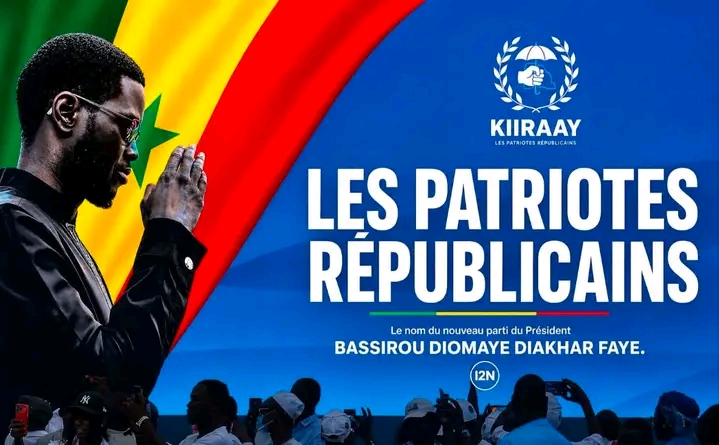
On Saturday, July 25, President Bassirou Diomaye Faye of the Sénégal inaugurated his latest political initiative, KIIRAAY – Les Patriotes Républicains, in Dakar, signaling a pivotal shift in the nation’s political landscape following his separation from the former PASTEF, once led by his former mentor, Ousmane Sonko.
The party’s founding assembly, held at a prominent hotel in the capital, introduced its guiding principle: « La Patrie d’abord » (« The Nation First »), emphasizing national interest, institutional strength, and the reinforcement of the rule of law.
The name KIIRAAY, derived from Wolof meaning « that which protects, » reflects the movement’s mission to support President Faye’s governance agenda while uniting those aligned with his transformative vision for the country.
Delegates at the constitutive assembly unanimously elected Bassirou Diomaye Faye as the party’s president, a move that formalizes his break from the leadership of PASTEF at the start of his presidency. The new formation emerged from the merger of 437 political parties, movements, and associations, all rallying behind a shared commitment to advance the reforms initiated by the head of state and the country’s long-term development goals.
The launch of KIIRAAY holds significance beyond domestic politics, drawing the attention of international partners, investors, and development stakeholders. With Sénégal actively pursuing its Vision Sénégal 2050 strategy, institutional stability and transparent governance are critical to bolstering market confidence, attracting foreign investment, and strengthening international partnerships.
This new political chapter introduces fresh dynamics within both the presidential majority and the opposition, setting the stage for upcoming elections and shaping the trajectory of future economic and institutional reforms in the country.

More Stories
Sonko’s sharp critique of Senegal’s imf deal stirs debate
Cameroun : prendre des mesures incitatives pour booster les inscriptions sur les listes électorales
DRC’s new inclusive national dialogue: what outcomes can be expected?