
UN praises Togo’s commitment to peace in eastern DRC under Faure Gnassingbé’s mediation
- Security
The United Nations has publicly lauded Togo’s dedication to fostering peace in the eastern Democratic Republic of Congo (DRC), reaffirming its backing for the mediation efforts spearheaded by Togolese President Faure Essozimna Gnassingbé under the African Union’s mandate.
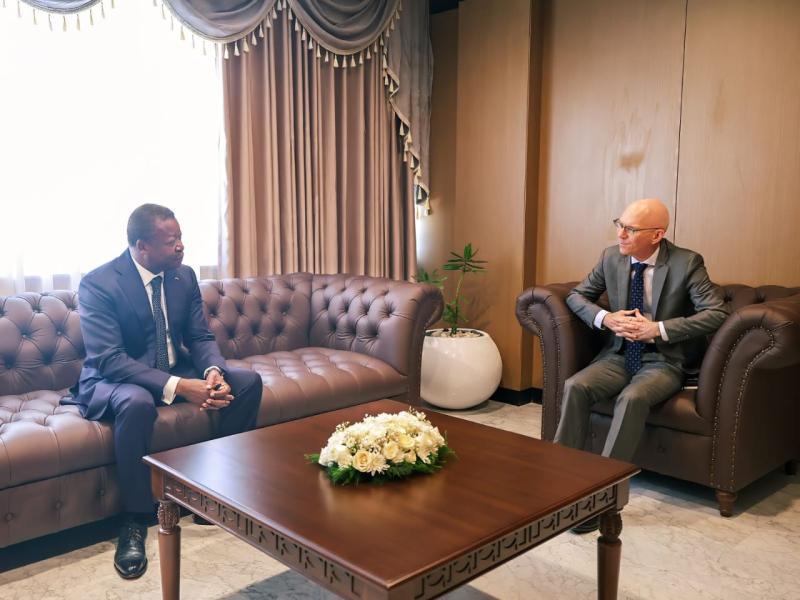
On Monday, June 8, 2026, James Swan, the UN Secretary-General’s Special Representative in the DRC and head of MONUSCO, alongside Huang Xia, the UN Secretary-General’s Special Envoy for the Great Lakes region, met with President Gnassingbé in Lomé. The high-level discussions focused on reviewing the progress of ongoing diplomatic initiatives and the UN’s contribution to the African Union-led peace efforts in eastern DRC.
During the meeting, UN officials commended Togo’s leadership in promoting peace and stability across Africa, emphasizing their readiness to support President Gnassingbé’s mediation for a just and lasting resolution to the crisis. The Togolese presidency stated that the UN representatives expressed strong appreciation for Togo’s role in advancing continental peace initiatives.
Since assuming the role of AU mediator for the eastern DRC crisis in late 2025—succeeding Angolan President João Lourenço—Faure Gnassingbé has intensified consultations with UN officials to strengthen coordinated peace efforts in the Great Lakes region.
James Swan’s participation in the Lomé meeting marked a significant milestone, as it was his first attendance of the AU’s semi-annual evaluation of peace initiatives led by Togo since his appointment as MONUSCO chief two months prior.
This gathering occurred against a backdrop of escalating security and humanitarian challenges in eastern DRC, despite existing agreements like the Washington Accord and ongoing diplomatic evaluations. The persistent deterioration in the region highlights the urgent need for effective mediation, as trust deficits and political reluctance among key actors continue to hinder the implementation of peace commitments.
Critical challenges persist, including the lack of political will among some regional stakeholders, which obstructs the full realization of peace agreements. The crisis is further exacerbated by the presence of the M23 rebel group in Rutshuru, a group Kinshasa accuses of receiving external support. International actors such as the United States and Qatar have been called upon to redouble their efforts to resolve the security impasse.
Meanwhile, the Doha process, mediated by Qatar, has also struggled to achieve meaningful progress. Despite multiple negotiation cycles, Kinshasa and the M23 have failed to bridge key differences, and the recent shift in Middle Eastern priorities has further delayed critical discussions.
“The gap between diplomatic commitments and ground realities remains wide. Each party interprets agreements through a lens that serves its own interests, rendering implementation increasingly elusive. The urgent need for a unified approach to peace has never been more apparent,” a senior UN official noted.
As regional and international stakeholders grapple with these challenges, the spotlight remains on Togo’s mediation efforts and the UN’s role in supporting a sustainable resolution to one of Africa’s most protracted conflicts.
More Stories
Is Chad truly heading towards political appeasement?
Bradley Barcola will adapt faster than Florian Wirtz at Liverpool, says Jermaine Pennant
Togo eyes nuclear power to secure future energy sovereignty