
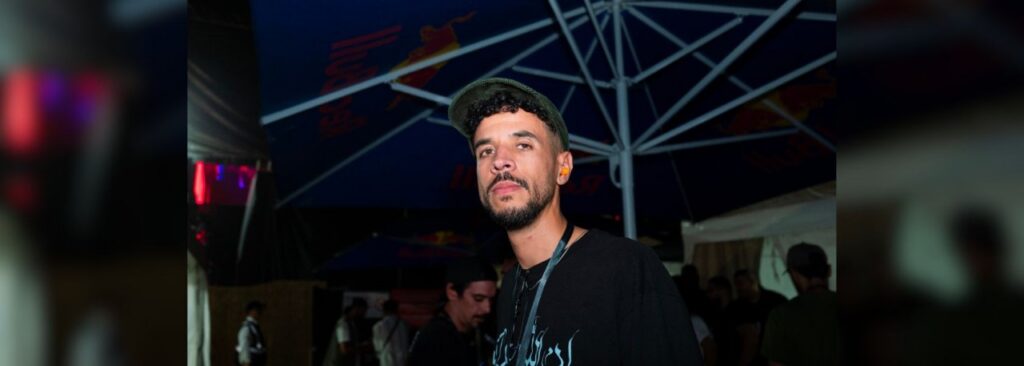
Immediate freedom demanded for Moroccan artist El Mahdi Lyoubi
The detention of El Mahdi Lyoubi, a celebrated Moroccan filmmaker and musician, has sparked widespread concern over the state of artistic freedom in the country. The 34-year-old, born in Salé and based in Marseille, was taken into custody on July 13, 2026, following an unexplained travel ban that prevented him from boarding a flight to France.

Who is El Mahdi Lyoubi?
El Mahdi Lyoubi, known in the music scene as Mehdi Black Wind, is a graduate of France’s prestigious La Fémis film school. His documentary short Marseille, 14 juillet has earned international acclaim, screening at prestigious festivals including New Directors-New Films (MoMA, New York), Sheffield DocFest, and the Thessaloniki International Film Festival. Currently developing his first feature-length documentary—a project backed by the Arab Fund for Arts and Culture (AFAC)—Lyoubi is recognized for his socially conscious work that addresses pressing issues like justice and free expression.
On the musical front, Lyoubi has captivated audiences, including a headline performance at Casablanca’s L’Boulevard Festival in 2025 that drew over 50,000 attendees.
A sudden travel ban and unexplained detention
On July 10, 2026, Lyoubi was at Rabat-Salé Airport preparing to return to Marseille after a family visit and documentary research trip when airport authorities informed him of an unexplained travel ban. Denied boarding, he was escorted to the Salé police station, where officials could not clarify the restriction and instead issued a summons for July 13, 2026, at the Casablanca National Police Judicial Brigade (BNPJ).
After a full day of questioning, Lyoubi was placed in custody that evening. Relatives only learned belatedly, through informal channels, that the arrest allegedly stemmed from social media posts—though no specific details were provided. He was brought before a prosecutor on July 15 and subsequently remanded in detention at Oukacha prison ahead of a July 22 hearing. The ongoing nationwide lawyers’ strike has further complicated his defense, as his legal team has been unable to access his case file or meet with him. His family has also been denied visitation rights.
Worsening crackdown on artistic expression
Lyoubi’s case is not an isolated incident. Since late 2025, Morocco has intensified legal actions against artists whose work or public statements are deemed critical or controversial. Notable examples include:
- Pause Flow (Jawad Asradi): A rapper detained in November 2025 over lyrics in his songs, sentenced in June 2026 to three months suspended prison for insulting a constituted body.
- Hamza Raid: Intercepted in Casablanca and handed a six-month suspended sentence under similar charges.
- Souhaib Qabli (20): Given an eight-month prison term in March 2026 for insulting a constitutional institution and spreading false information.
- Zineb Kharroubi: A film distributor sentenced in February 2026 to six months suspended prison for allegedly inciting crimes or offenses online.
These cases collectively underscore a troubling pattern: the criminalization of artistic expression. Despite Article 25 of Morocco’s Constitution guaranteeing freedom of thought, opinion, and expression, these developments raise serious questions about the country’s commitment to these fundamental rights.
The timing of Lyoubi’s arrest coincides with the GenZ 212 protest movement, which emerged in late 2025. Organized largely online, the movement’s demands centered on healthcare access, education reform, anti-corruption measures, and free speech—issues Lyoubi’s work frequently explores.
Demands for justice and artistic freedom
In response to Lyoubi’s detention, a coalition of human rights organizations, cultural institutions, artists, and public figures has issued an urgent appeal to Moroccan authorities. The demands include:
- Immediate release of El Mahdi Lyoubi without conditions, ensuring his full access to legal representation and a fair trial.
- Review of the travel ban to ensure it aligns with constitutional guarantees and respects the principles of legality, necessity, and proportionality.
- Upholding fair trial standards in accordance with Morocco’s constitutional and international human rights obligations.
- Protection of artistic freedom by creating a safe environment for creators to engage in public discourse without fear of reprisal.
The signatories—ranging from the Fédération internationale pour les droits humains (FIDH) and Organisation mondiale contre la torture (OMCT) to prominent figures like Adele Haenel, Annie Ernaux, and Mati Diop—emphasize that artistic expression is vital to cultural and democratic vitality. They urge Moroccan authorities to act decisively to restore confidence in the country’s commitment to free expression and the rule of law.
Ongoing advocacy and next steps
Advocacy groups continue to monitor Lyoubi’s case closely, stressing the need for transparent proceedings and adherence to due process. The outcome of his July 22 hearing is awaited with concern by a growing international coalition calling for his release and the protection of artistic freedoms in Morocco.

More Stories
Is Chad truly heading towards political appeasement?
Bradley Barcola will adapt faster than Florian Wirtz at Liverpool, says Jermaine Pennant
Togo eyes nuclear power to secure future energy sovereignty