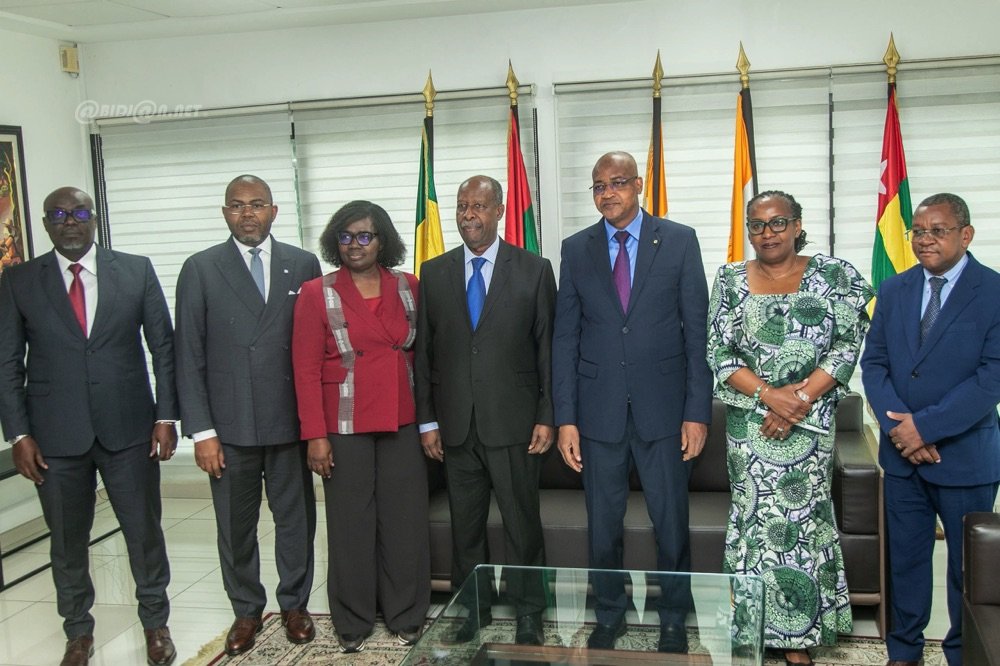
The Entente Council and the United Nations Office for West Africa and the Sahel (UNOWAS) have finalized a landmark three-year Memorandum of Understanding in Abidjan-Cocody, triggering immediate public debate over its potential to reshape regional stability. The agreement, signed on September 29, 2026, marks a strategic pivot in how West Africa and the Sahel address persistent security, political, and humanitarian challenges.
Public and institutional reactions have emerged across the region following the announcement, with policymakers and civil society weighing in on whether this partnership can bridge longstanding divides in regional cooperation. The Memorandum aims to deepen collaboration on peacebuilding, crisis prevention, and institutional resilience, setting a new benchmark for how regional blocs and UN agencies can align their efforts.
What the new partnership changes for regional security
The cooperation outlined in the Memorandum centers on three transformative priorities: preventive diplomacy, borderland peacebuilding, and institutional capacity-building. By formalizing these goals, the Entente Council and UNOWAS are responding to a growing demand for unified action amid escalating threats.
Key objectives of the partnership include:
- Strengthening early warning systems through shared data and joint conflict analysis, enabling faster responses to emerging crises.
- Expanding mediation networks to include youth and women-led peace initiatives, recognizing their pivotal role in sustainable stability.
- Enhancing institutional coordination by aligning strategic priorities between the Entente Council and UNOWAS, including joint training programs for peacekeepers and civil servants.
Diplomatic breakthrough or symbolic gesture? Mixed reactions arise
While governments in the Entente Council’s member states have broadly welcomed the agreement, skepticism lingers among civil society groups. Critics question whether the Memorandum’s ambitious goals can translate into tangible results, given the region’s history of unfulfilled pledges.
“Peace is not a permanent state,” emphasized Leonardo Simão, UNOWAS Special Representative, during the signing ceremony. “It requires continuous effort—both to preserve existing stability and to reclaim lost peace where it has deteriorated.”
His remarks underscored the urgency of the partnership, particularly as threats from armed groups and political instability persist in border regions. Idi Ali, Interim Executive Secretary of the Entente Council, reinforced this perspective by highlighting the organization’s unique position as a bridge between coastal and Sahelian states.
Institutional role of the Entente Council in question
The Memorandum elevates the Entente Council from a consultative body to a key facilitator in regional diplomacy. Its ability to mediate disputes and convene conflicting parties could redefine the Council’s influence, but success will depend on tangible actions rather than declarations.
The partnership outlines an ambitious implementation plan, including:
- Annual joint workplans to track progress on shared priorities.
- Designated focal points within each institution to streamline communication.
- Periodic joint missions to assess security hotspots and recommend interventions.
Analysts suggest this structure could help bypass bureaucratic delays that have historically hindered regional cooperation.
Looking ahead: Defining moments for West African stability
The Memorandum’s three-year duration provides a critical window for the Entente Council and UNOWAS to demonstrate whether this partnership can deliver real change. The coming months will reveal how quickly both parties move from rhetoric to action, particularly in high-risk zones.
For regional observers, the agreement raises a pivotal question: Can West Africa’s fragile peace architectures finally achieve the unity they’ve promised? The Entente Council, with its legacy dating back to 1959, now holds the potential to prove its relevance—but only through decisive, collaborative leadership.