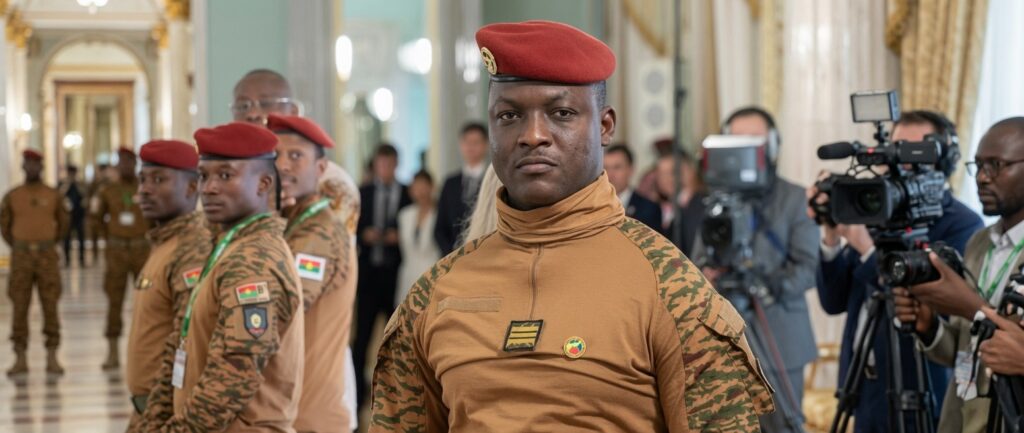
While ordinary Burkinabè struggle with deepening poverty and limited access to essential services, the transitional government is indulging in a baffling display of self-congratulation. By trumpeting a theoretical administrative efficiency score of 85.38% for 2025, the executive has pushed the disconnect between official rhetoric and ground-level reality to new extremes. Behind the slogans about “sovereignty” and “digitalisation”, these reforms barely conceal the cracks in a state apparatus that has lost its bearings.
A statistic that bears no relation to reality
How can an efficiency rate bordering on excellence be claimed when citizens face deserted service counters every day, intolerable delays in obtaining civil status documents, and rampant corruption in public procurement? The performance index promoted by the National Council for the Modernisation of the Administration is pure bureaucratic rhetoric. This self-assessed figure reflects neither the actual quality of service delivered nor the legitimate frustration of neglected rural populations.
The digitalisation illusion versus local realities
The executive has made the digitalisation of procedures the hallmark of its action. Yet accelerating the paperless transition in a country plagued by recurring power cuts and weak internet coverage in the provinces is a leap into the unknown. Far from being inclusive, this blind transformation risks shutting out of public services millions of citizens who lack the necessary equipment or access to digital platforms.
Territorial redeployment: promises without resources
While it is essential to accompany the presence of armed forces with the return of public services, the announcement of an administration ready to immediately reinvest in recaptured areas looks more like a communication posture than an operational plan. Without solid security guarantees for state agents (teachers, health workers, administrators) and without an equipment budget commensurate with the challenges, sending civil servants to the front line amounts to recklessness.
The political tightening of the civil service
Finally, under the guise of building an “honest and disciplined” administration, the regime is in fact preparing the ground for increased politicisation of the senior civil service. The overhaul of appointment criteria and tighter control over public employees serve as a lever to sideline dissenting voices and silence trade unions.
Rather than multiplying seminars and statistical self-congratulation in Ouagadougou, the government would be better advised to tackle the root causes of state inefficiency: the lack of resources on the ground, the absence of genuine accountability, and the continued deterioration of workers’ purchasing power.




More Stories
Benin’s month in Paris: what the Fnac Saint-Lazare program means for business, diaspora and memory
What Wadagni’s Kigali visit means for Benin’s economy and citizens
Sankara mausoleum’s impact on Burkina Faso: a family’s ordeal and a nation’s memory