Since taking office, Captain Ibrahim Traoré has repeatedly emphasized Burkina Faso’s economic sovereignty, framing natural resource management as a cornerstone of national resilience. Yet the mass expulsion of Burkinabè gold miners from neighboring Guinea has exposed a glaring disconnect between rhetorical commitments and practical solutions for those forcibly returned to their homeland.
Thousands of artisanal miners now confront a stark reality: their deportation from Guinea has not only severed their primary income source but also placed them in a precarious position where the state’s promises of economic integration ring hollow in the absence of structured support mechanisms.
From deportation to destitution: the harsh reality of returning miners
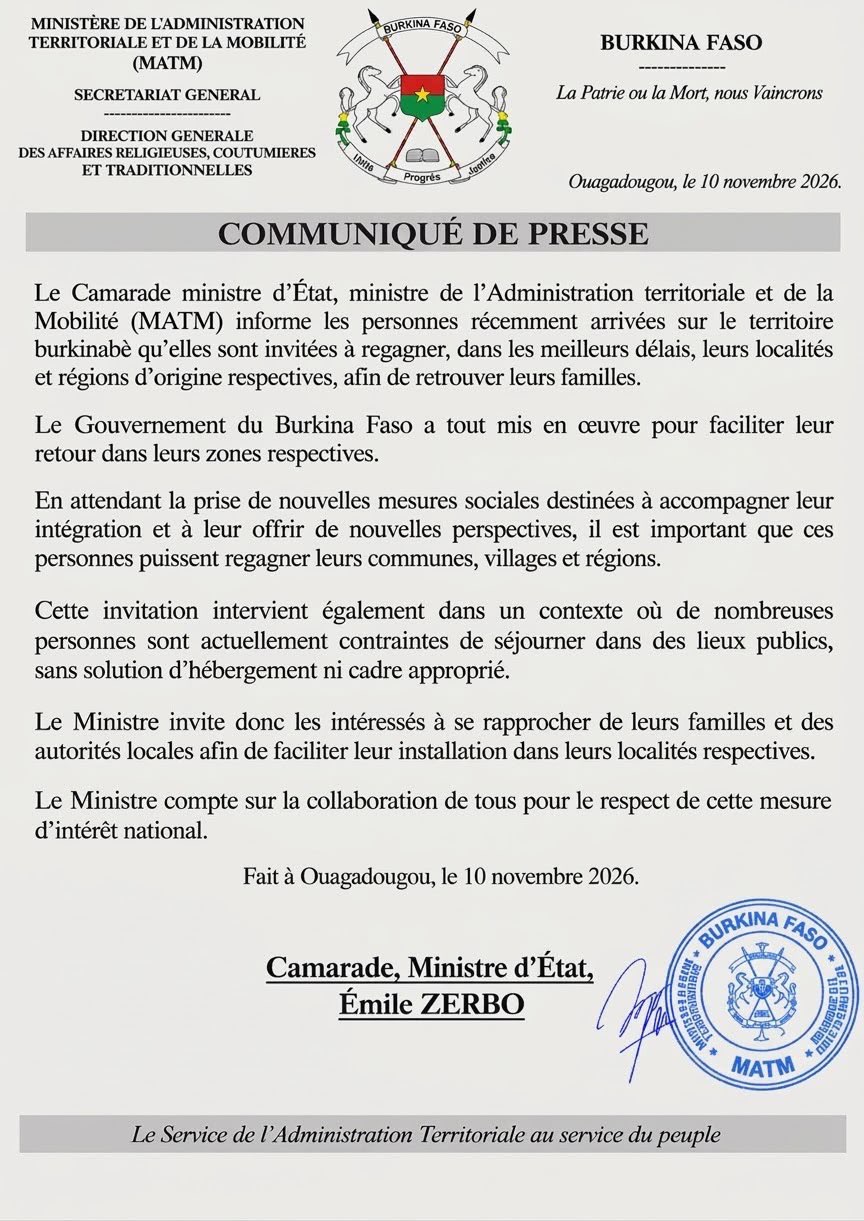
The government’s response essentially urging deportees to ‘return to their villages and families’ falls far short of addressing the core challenge. This administrative directive does little to resolve the fundamental issue: how can a young person who derived their livelihood from artisanal gold mining rebuild their economic prospects in a country that has so far failed to provide viable alternatives?
These are not temporary setbacks. Many miners had migrated to Guinea precisely because Burkina Faso’s domestic economy offered limited opportunities. Their expulsion has not merely displaced them geographically; it has destroyed their economic lifeline, leaving families without income and communities grappling with the sudden loss of a critical livelihood.
Sovereignty claims ring hollow without tangible opportunities
The contradiction is unmistakable. While authorities celebrate Burkina Faso’s mineral wealth and nationalization efforts, the state appears unprepared to absorb thousands of skilled workers many with years of experience in gold extraction back into the formal economy. Sovereignty cannot be measured solely by control over mining concessions or rhetoric about resource nationalism; it must be judged by the tangible benefits extended to citizens.
Mere declarations of returning to agriculture, livestock rearing, or craftsmanship are insufficient. These sectors do not offer immediate solutions without structured investment in land access, equipment, technical training, and market linkages. For a former miner, transitioning to farming requires more than advice it demands capital, infrastructure, and long-term support.
Flawed policy proposals lack financial backbone
Current proposals cooperatives, vocational training, and small-scale farming remain theoretical without concrete financing. How many deportees will receive start-up capital? How many will secure microloans on favorable terms? Without transparent funding mechanisms and measurable benchmarks, these initiatives risk becoming empty gestures rather than pathways to sustainable employment.
Moreover, the social ramifications extend beyond individual hardship. Many deportees supported extended families; their expulsion has destabilized household economies, disrupted education for children, and exacerbated poverty cycles. A policy that overlooks these ripple effects cannot claim to address the crisis meaningfully.
Regulated artisanal mining: a missing piece in the recovery puzzle
If Burkina Faso seeks to reclaim control over its gold sector, it must also integrate the thousands of workers who have historically powered the artisanal mining economy. This entails:
Establishing licensed artisanal mining sites with safety standards
Facilitating the formation of functional cooperatives with access to fair purchasing channels
Investing in equipment and reducing bureaucratic hurdles for legal operations
Without these measures, the government’s mining strategy risks failing those it purports to empower undermining both economic sovereignty and social stability.
Ibrahim Traoré’s moment of reckoning
The return of expelled miners presents a critical test of leadership. While diplomatic efforts to address deportations are laudable, they do not absolve the state of its duty to protect and uplift its citizens upon their return. Governance is not merely about denouncing foreign actions; it demands proactive policy execution, financial accountability, and measurable outcomes.
Will deportees secure stable incomes in the coming months? How many will transition out of poverty through government programs? Without clear answers, the state’s reintegration promises risk becoming mere political posturing.
The essence of the challenge is this: the crisis is not the expulsion itself, but the looming prospect of deportees returning to the same economic despair that drove them abroad in the first place. For Burkina Faso’s young miners, sovereignty must mean more than nationalized resources it must translate into real opportunities, real income, and real stability.
The time for results is now. Declarations of economic independence will remain hollow until they are matched by action in the villages, where the hardest work of rebuilding livelihoods begins.
By Yacouba Boukari — Journalist