The recent high-level discussions between World Bank officials and Gabonese authorities have ignited a wave of public debate over the country’s economic future. With youth unemployment soaring and diversification efforts lagging, stakeholders are scrutinizing the feasibility of ambitious plans to overhaul the nation’s growth strategy.
Partnership at a crossroads: recognizing progress and charting new paths
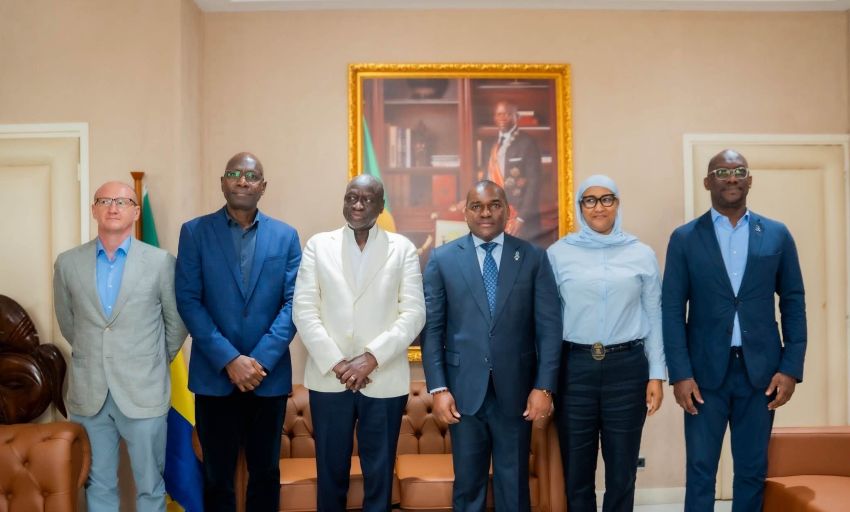
During a series of closed-door meetings, a senior World Bank envoy underscored the strength of bilateral ties, praising Gabon’s government for its commitment to collaborative reforms. The focus? Aligning financial and technical support with the 2026–2030 National Growth and Development Plan (PNCD), a sweeping blueprint aimed at reviving the economy through targeted investments.
The envoy emphasized that job creation—especially for the youth—remains non-negotiable. But diversification beyond oil is the real game-changer, they argued, hinging on a trifecta of reforms: a more business-friendly climate, disciplined public finance management, and governance enhancements working in tandem with IMF-led initiatives. Access to funding, skills training, and market opportunities for SMEs, women, and young entrepreneurs were flagged as critical enablers.
Electricity and water: when infrastructure pledges meet reality
The talks also homed in on tangible outcomes in core service sectors. Projects spanning water supply, electrification, urban development, digitalization, forestry, and ecotourism are under accelerated review to ensure they translate swiftly into measurable improvements for Gabonese citizens. A flagship pledge—the Mission 300 initiative—seeks to connect 250 million Africans to reliable electricity by 2030, positioning Gabon to leverage its vast hydropower potential.
Hydroelectric projects offer a double dividend: stable, low-carbon energy to power industries and communities, and a potential export revenue stream. Yet, environmental and social safeguards remain vital, demanding early-stage integration into project blueprints.
Urban revival: moving beyond Libreville to build balanced prosperity
The World Bank’s strategic pivot toward urban development is reshaping how Gabon thinks about inclusive growth. While Libreville remains the economic epicenter, secondary cities—Franceville, Koula-Moutou, Oyem, Lambaréné, Mouila, Ndendé, and Lebamba—are being groomed as engines of equitable progress. By decentralizing jobs, services, and infrastructure, these hubs can bridge territorial divides, integrate rural economies with national and regional markets, and curb runaway urban sprawl.
Forward planning is key. With urban populations set to soar, investing now in resilient transport networks, schools, healthcare facilities, and flood-mitigation systems will cost far less—and deliver far greater returns—than scrambling to retrofit chaotic growth later. The Gabon Urban Development Project (PDUG) is already channeling resources into these very priorities.
Forests, AI, and the triple mandate: jobs, climate, and innovation
Gabon’s global reputation as a forest conservation leader presents a unique economic lever. A fresh project—Sustainable Forest Management and Ecotourism—is in the pipeline to unlock the latent value of the country’s natural capital. By strengthening governance in protected areas and national parks, the initiative aims to catalyze green jobs, boost tourism revenues, and embed climate resilience into Gabon’s economic fabric, fully aligned with the PNCD’s diversification goals.
Artificial intelligence is also entering the spotlight. The World Bank’s AI for All doctrine is gaining traction, seeking to democratize access to AI tools among Gabonese youth, women, and small businesses. A dedicated Gabon Digital project—financed with $68.5 million—is modernizing public digital services, while the Central African Digital Integration Program (CARDIP) is weaving regional connectivity, market integration, and regulatory harmonization to create a fertile ground for AI-driven growth.
The overarching goal is clear: turn technological transformation into an engine of inclusive prosperity—not just for a privileged few, but for every Gabonese citizen.
Mega-projects under scrutiny: Kobe-Kobe port and Bélinga iron ore
Two flagship infrastructure ventures—the deep-water port of Kobe-Kobe and the Bélinga iron ore mine—are drawing intense interest. These projects are touted as catalysts for economic diversification, private investment, and sustainable job creation. Beyond bricks and mortar, they promise to forge new value chains, attract foreign direct investment, and embed Gabon more deeply into global trade networks.
The World Bank has signaled readiness to support feasibility studies, energy infrastructure planning, and private-sector mobilization to ensure these initiatives meet global standards. Yet, experts caution that success hinges on robust environmental safeguards, transparent procurement, and inclusive stakeholder engagement to avoid the pitfalls of past megaprojects.