
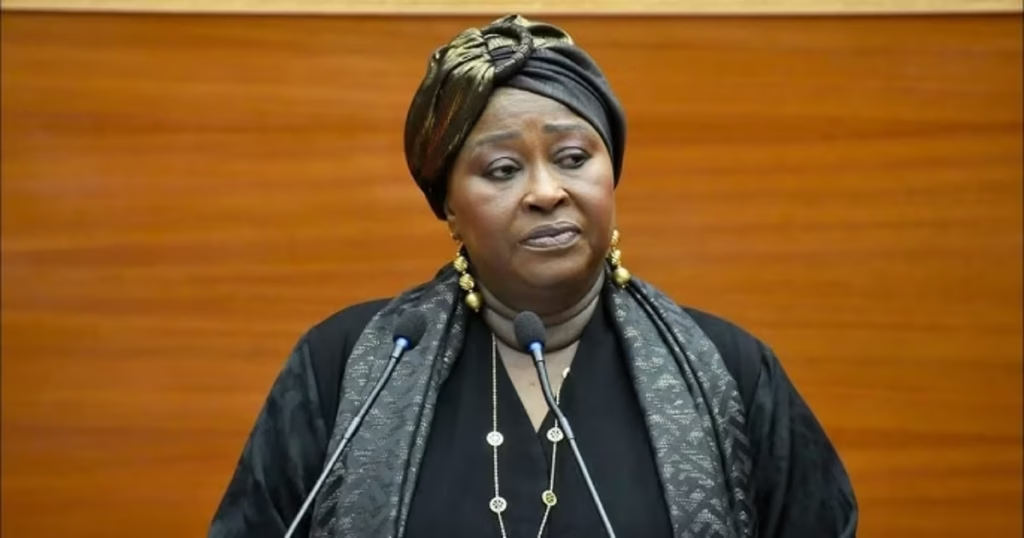
In a speech that sent ripples through Senegal’s political landscape, activist Maïmouna Dièye sparked intense debate by invoking a religious formula typically reserved for the Prophet, when addressing opposition leader Ousmane Sonko during a gathering in Khombole.
The choice of words by Maïmouna Dièye on Saturday in Khombole left Ousmane Sonko visibly uncomfortable, as her remarks crossed into sacred religious territory that carries deep significance in Senegal’s predominantly Muslim society.
Religious invocation stirs political storm
In her statement, Dièye declared she was speaking “in the presence of Seyidina Ousmane Sonko Salalahou Aleyhi Wa Salam” — a phrase normally used in Islamic tradition when referring to the Prophet Mohammad (peace and blessings be upon him) and, in some interpretations, other prophets. This form of invocation, repeated whenever the Prophet’s name is mentioned, holds profound spiritual weight and is not meant for any political figure, no matter their standing. Its use for Sonko, a prominent opposition leader, was widely interpreted as bestowing him with a divine status reserved exclusively for the Prophet, prompting immediate backlash and a clear sense of transgression.
The incident raises broader questions about the growing tendency among some political supporters to elevate their leaders to near-sacred levels — a trend religious leaders have long warned against. Sonko responded swiftly, acknowledging the affection of his supporters while firmly drawing a line: he emphasized that such reverence belongs solely to the Prophet, and that he neither claims nor seeks such status.
Sonko addresses controversy with clarity
By publicly correcting Dièye’s wording, Sonko aimed to prevent the moment from being exploited by critics in Senegal’s highly sensitive political climate, where religious discourse plays a pivotal role. The episode highlights the careful balance political figures in Senegal must maintain, especially when navigating public statements that intersect with faith and tradition.


More Stories
Sonko’s sharp critique of Senegal’s imf deal stirs debate
Cameroun : prendre des mesures incitatives pour booster les inscriptions sur les listes électorales
DRC’s new inclusive national dialogue: what outcomes can be expected?